
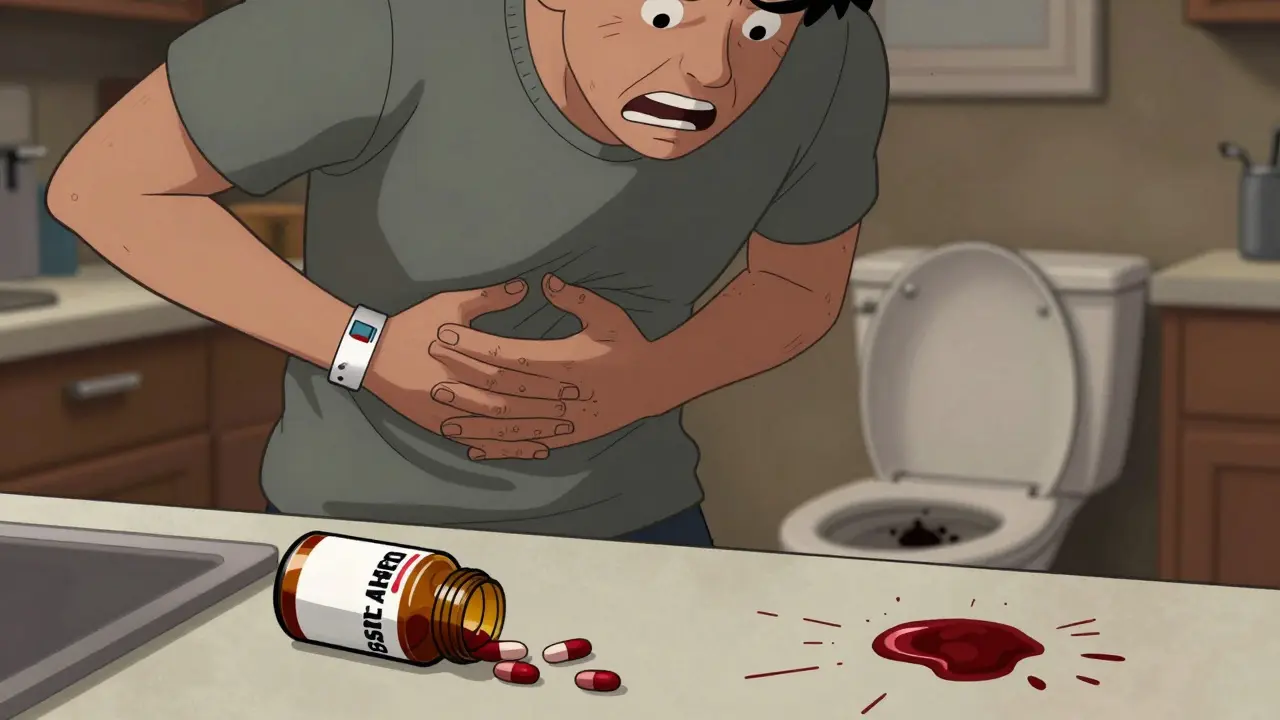
When you're on a blood thinner, you're not just taking a pill-you're managing a delicate balance. These medications save lives by preventing clots that could cause strokes or heart attacks, but if you take too much, they can turn deadly. Internal bleeding doesn’t always come with a warning sign. It can creep in quietly, and by the time you feel it, it might already be too late. Every hour matters. If you suspect an overdose, waiting to see if it gets worse is not an option.
What Happens When You Take Too Much
Blood thinners like warfarin, apixaban, rivaroxaban, and dabigatran work by slowing down your blood’s ability to clot. That’s good when you need to prevent a clot. But if you overdose, your blood can’t clot at all-even when it should. The result? Internal bleeding. This isn’t a cut you can bandage. It’s bleeding inside your body-into your brain, stomach, kidneys, or muscles-and it can kill you before you even realize what’s happening. Warfarin, the oldest and still most common blood thinner, takes days to fully affect your blood. Even if you take a single extra pill, your INR (a test that measures how long your blood takes to clot) can keep climbing for up to 9 days. For newer drugs like apixaban or rivaroxaban, the effects are faster but still dangerous. An INR above 3.0 is considered high risk. Above 3.5, especially if you have a mechanical heart valve, and you’re in emergency territory.Signs You’re Bleeding Internally
These aren’t vague symptoms. They’re clear red flags:- Black, tarry stools or blood in your poop
- Pink, red, or dark brown urine
- Vomiting blood or material that looks like coffee grounds
- Coughing or spitting up blood
- Unexplained bruising-especially large, spreading bruises
- Petechiae: tiny red or purple spots under your skin that don’t fade when you press on them
- Severe headache, dizziness, or confusion
- Sharp pain in your back, abdomen, or chest
- Heavy menstrual bleeding that’s new or much worse than usual
- Extreme fatigue, weakness, or feeling like you’re about to pass out
What to Do Right Now
If you or someone you know has taken too much blood thinner and shows any of these signs, do this:- Call emergency services immediately. Don’t wait. Don’t text a friend. Don’t check online. Call 911 or your local emergency number. Internal bleeding doesn’t wait.
- Do not take another dose. Even if you think you missed one, don’t double up. You’ve already taken too much.
- Write down what you took. Name of the drug, how many pills, and when you took them. Bring the bottle with you if you can.
- Do not take aspirin, ibuprofen, or any NSAID. These make bleeding worse. Even a single extra pill can tip you over the edge.
- Apply pressure to external bleeding. If you’re bleeding from a cut or nosebleed, press firmly for at least 10 minutes. Don’t check every 30 seconds. Keep pressure on.
- Lie down and elevate the bleeding area. If it’s safe, raise the injured area above your heart. This slows blood flow to the area.
What the Hospital Will Do
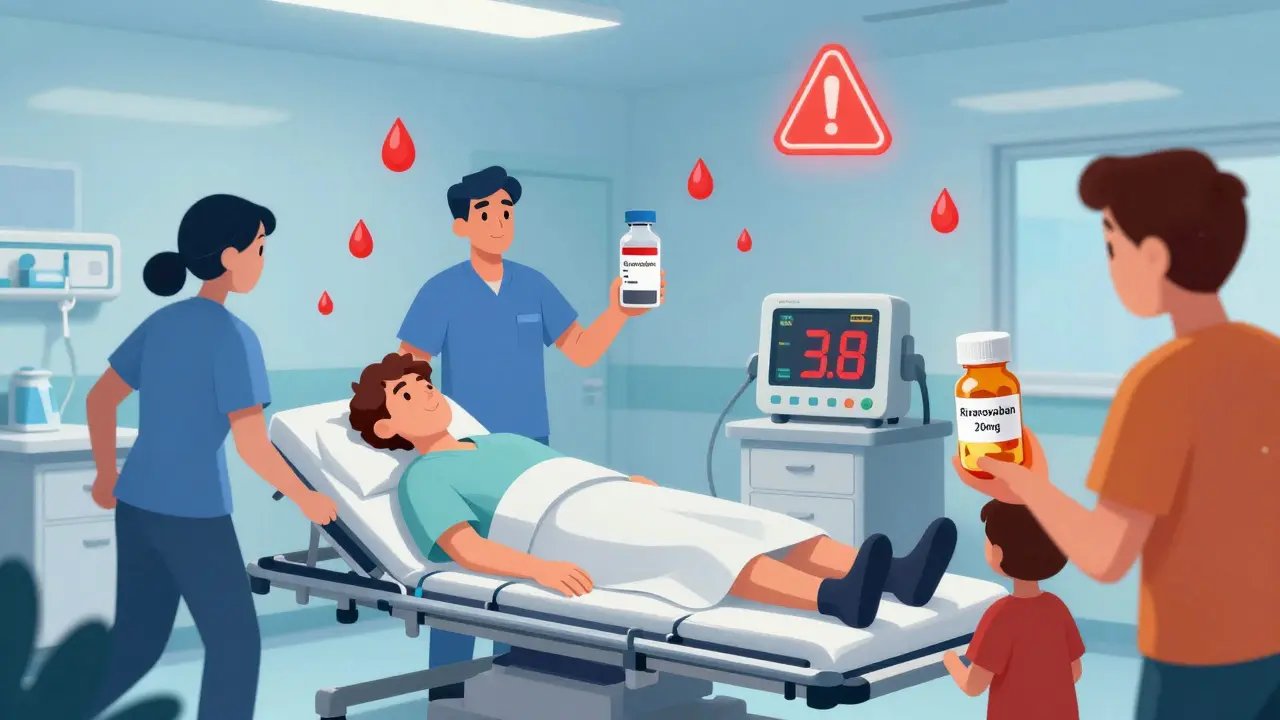
The treatment depends on what kind of blood thinner you’re on.If it’s warfarin: Doctors will give you vitamin K to reverse the effect. If you’re actively bleeding, they’ll give you 4-factor Prothrombin Complex Concentrate (PCC)-a concentrated clotting factor product. It works in minutes. FFP (fresh frozen plasma) is used if PCC isn’t available, but it’s slower and carries more risk. A single dose of PCC can cost $1,500-$3,000, but it’s worth it. You’re not paying for a pill-you’re paying for your life.
If it’s a DOAC (apixaban, rivaroxaban, dabigatran): There are specific antidotes. Idarucizumab reverses dabigatran. Andexanet alfa reverses apixaban and rivaroxaban. These drugs are expensive-up to $10,000 per dose-but they work fast. In one case, a man who took 20 times his daily dose of rivaroxaban was given andexanet alfa. His bleeding stopped within 15 minutes. He walked out of the hospital three days later.
If the overdose was recent (under an hour): Activated charcoal might be given to stop the drug from absorbing. But once it’s in your bloodstream, charcoal does nothing.
Why People Delay-And Why That’s Deadly
Most people don’t realize they’re bleeding internally until it’s severe. A 2022 survey found that 28% of emergency visits for warfarin overdose happened because patients waited more than 12 hours after symptoms started. Many thought bruising was just aging. Black stools? Must be the steak they ate last night. Blood in urine? Maybe they’re dehydrated. The truth? These symptoms don’t go away on their own. The longer you wait, the more blood you lose. Survival rates drop sharply after 6 hours. Patients who got help within 2 hours had a 97% survival rate. Those who waited 6+ hours? Only 76% made it.Prevention: Know Your Numbers
If you’re on warfarin, you need regular INR tests. Most people get tested every 4-6 weeks. But if your dose changes, you’re sick, or you start a new medication, you may need it weekly. Keep a log. Know your target range: 2.0-3.0 for most people, 2.5-3.5 if you have a mechanical heart valve. For DOACs, you don’t need regular blood tests-but you still need to be careful. These drugs interact with other medications. Antibiotics, antifungals, seizure meds, even St. John’s wort can change how they work. Always tell your doctor what else you’re taking.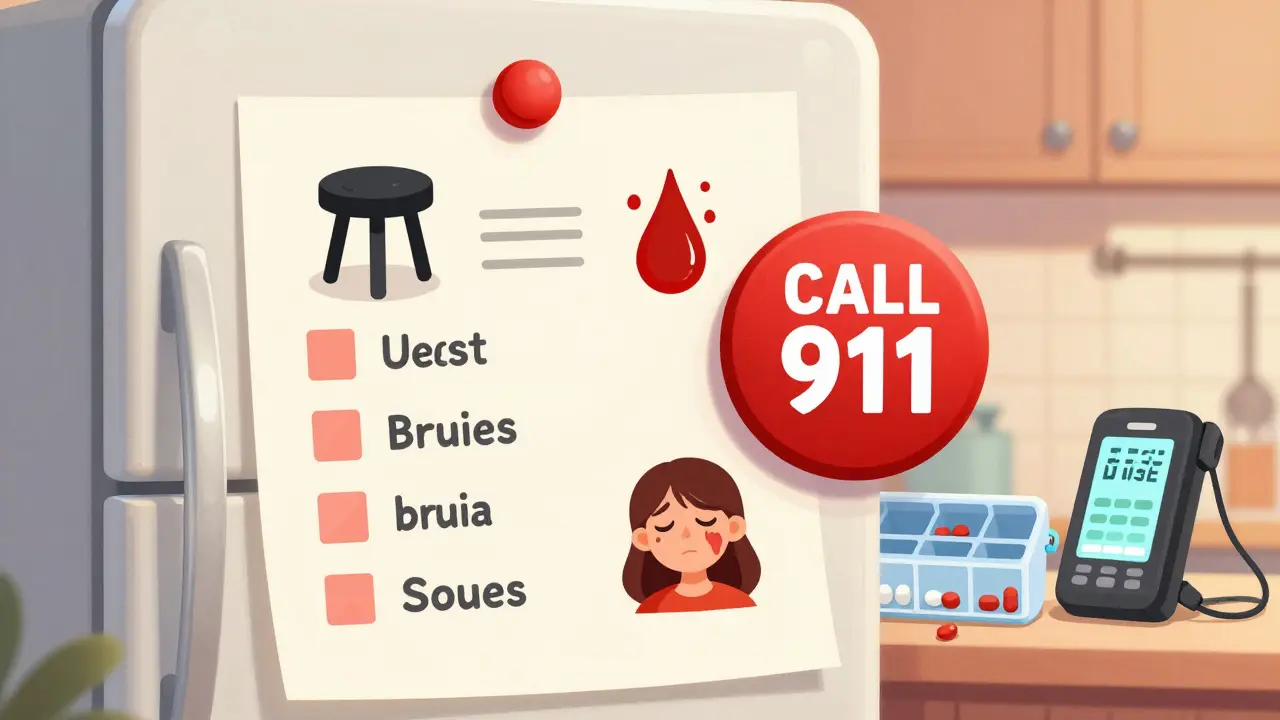
What You Can Do Today
- Keep a printed bleeding risk checklist taped to your fridge. Include all the warning signs listed above.
- Wear a medical alert bracelet that says you’re on a blood thinner.
- Store your pills in a pill organizer with clear labels. Don’t guess.
- Set phone alarms for doses. Missed doses are dangerous, but double doses are worse.
- Ask your pharmacist to review all your meds every 6 months. They spot interactions you might miss.
- Know your local ER’s phone number. Don’t wait for Google to load in a panic.
What’s Coming Next
There’s new hope. Ciraparantag, a universal reversal agent now in late-stage trials, could reverse any blood thinner in minutes-not hours. It’s not available yet, but it’s coming. In the meantime, point-of-care INR devices (costing $200-$300) let high-risk patients test their INR at home. One study showed a 34% drop in major bleeding events among users.Final Reality Check
Blood thinners are powerful. They’re not like painkillers. You can’t just “take one more” and feel better. One mistake can cost you your life. But if you know the signs, act fast, and stay informed, you can live safely with them.Don’t wait for the next bruise. Don’t hope the blood in your stool is just from diet. If something feels wrong-especially if you’re on a blood thinner-call for help. Now.
Can I reverse a blood thinner overdose at home?
No. There is no safe or effective way to reverse a blood thinner overdose at home. Vitamin K works for warfarin, but it takes hours to days to act-and it won’t help if you’re actively bleeding. DOACs like apixaban or dabigatran require hospital-administered antidotes. Delaying care increases the risk of death. If you suspect an overdose, call emergency services immediately.
What should I do if I accidentally take two pills?
Call your doctor or go to the ER immediately. Don’t wait for symptoms. Even if you feel fine, your INR could rise dangerously over the next 24-72 hours. Bring the pill bottle with you. If you’re on warfarin, they may check your INR right away. For DOACs, they’ll assess your risk based on the dose and timing. It’s better to be safe than sorry.
Do all blood thinners cause the same kind of bleeding?
The symptoms are similar-internal bleeding can happen anywhere-but the timing and reversal methods differ. Warfarin takes days to reach full effect and lasts up to 5 days after stopping. DOACs work faster but wear off quicker-usually within 12-24 hours. Warfarin is reversed with vitamin K and PCC; DOACs need specific antidotes like idarucizumab or andexanet alfa. The bleeding risk is high with all of them, but the treatment is not the same.
Can I take ibuprofen or aspirin while on a blood thinner?
No. Ibuprofen, naproxen, aspirin, and other NSAIDs increase bleeding risk by affecting platelets. Even a single dose can make internal bleeding more likely. For pain relief, acetaminophen (Tylenol) is usually safe-but always check with your doctor first. Never take OTC painkillers without asking.
How often should I get my INR checked if I’m on warfarin?
Once your dose is stable, most people get tested every 4 to 6 weeks. But if your dose changes, you’re sick, you start a new medication, or you change your diet (especially vitamin K-rich foods like leafy greens), you may need testing weekly. If your INR fluctuates often, your doctor may recommend a home testing device. Keeping your INR in range (usually 2.0-3.0) cuts your risk of bleeding by over 50%.
Is there a way to prevent an overdose before it happens?
Yes. Use a pill organizer with labeled compartments. Set phone alarms for your doses. Keep a written log of when you take each pill. Never refill your prescription without checking with your doctor. Tell every new doctor or pharmacist you’re on a blood thinner. Avoid herbal supplements like ginkgo, garlic, or ginger-they can increase bleeding risk. And always carry your medication list in your wallet.
Cheryl Griffith
This post saved my life. My dad was on warfarin and ignored a black stool for three days. He ended up in the ER with a hemoglobin of 5.8. We didn’t know any of this until we read something like this. Please share it with everyone you know who’s on blood thinners.
I keep a printed copy taped to the fridge. Every morning I check it before I take his meds. It’s not paranoia-it’s survival.
swarnima singh
people these days think medicine is like amazon prime-just click ‘order more’ when u run out. u dont even know what ur taking. i saw a guy on subway take 4 pills at once cause he ‘forgot’ and thought ‘better safe than sorry’. bro its not safe its suicide.
Rob Deneke
Do not wait. Call 911. Period. I’ve seen too many people talk themselves out of calling because they ‘don’t want to bother anyone’. You’re not bothering anyone. You’re saving your own life.
Keep the pill bottle. Write down the time. Don’t overthink it. Just call.
And yes-NO NSAIDs. Not even one. I mean it.
Corey Chrisinger
It’s wild how we treat blood thinners like candy. We take them like they’re vitamins. But they’re more like loaded guns you carry around every day.
I used to think ‘if I feel fine, I’m fine’. Then I read about that guy who took 20 doses of rivaroxaban and walked out in 3 days. That’s not luck. That’s science. And we owe it to ourselves to know the science.
Also-yes, emojis are needed here 🚨💊🩸
Knowledge isn’t power. Action is.
Christina Bilotti
Oh wow. A whole 2000-word essay on ‘don’t take too many pills’. Did we really need a TED Talk on this? Or is this just another ‘clickbait for anxious seniors’ post?
For the record, if you’re dumb enough to overdose on your meds, maybe you shouldn’t be on them in the first place. Just saying.
Also, vitamin K is not a magic bullet. It’s not even close. Stop romanticizing it.
brooke wright
I’m so glad you posted this. My neighbor’s 78-year-old aunt took two doses by accident and didn’t tell anyone for 18 hours. She ended up with a brain bleed. She’s in a nursing home now.
Can I ask-do you have a printable version of the checklist? I want to give one to every senior in my building. My mom’s on apixaban and I’m terrified she’ll mess up.
Also, can you recommend a good home INR machine? I’m willing to pay anything.
vivek kumar
The statistics here are accurate, but the real issue is systemic. In India, most elderly patients get warfarin without any INR monitoring. Pharmacies sell it over the counter. Doctors don’t explain the signs. Families don’t know what ‘tarry stool’ means.
There’s no emergency response culture here. People wait for ‘it to pass’. This post should be translated into Hindi, Tamil, Bengali. Lives depend on it.
And yes-doctors need to stop prescribing these drugs like aspirin. We need mandatory counseling. Not optional. Mandatory.
Samyak Shertok
Oh please. Let me guess-next you’ll tell us not to breathe oxygen if we have COPD? Or not to drink water if we’re on diuretics?
Everything is dangerous if you misuse it. That’s not a reason to panic. It’s a reason to be smart.
Also, who paid you to write this? The pharmaceutical companies? PCC costs $3000? Tell me you’re not serious.
And why is ‘andexanet alfa’ suddenly the hero? Because it’s expensive? Because it’s branded? Because it’s profitable?
Real talk: We’re being sold fear wrapped in medical jargon. Wake up.
Melodie Lesesne
Thank you for writing this with so much care. I’ve been on rivaroxaban for 3 years and I still get nervous every time I miss a dose.
I started using a pill organizer with alarms and it changed everything. I even made a little checklist with my mom-we stick it on the mirror.
Also, I got a medical bracelet last month. It felt silly at first… but now I feel like I’m carrying a safety net. Seriously, do it. You won’t regret it.
And yes-I’m sharing this with my whole family. Everyone needs to know.
Bianca Leonhardt
People who don’t know their INR numbers are playing Russian roulette with their internal organs.
And if you think ‘I feel fine’ means you’re safe-you’re not just ignorant, you’re dangerous.
I’ve seen too many people die because they didn’t listen. This isn’t a suggestion. It’s a warning. Stop being lazy. Get tested. Know your numbers. Or don’t be surprised when you end up in a body bag.
Travis Craw
my wife is on warfarin and i dont know half this stuff until i read this
we got the home test device last month. it’s a game changer. we check every monday and thursday now
thanks for the info. i’m printing the checklist and putting it by the coffee maker
also-no more ibuprofen. i just threw out my bottle