
Cardiovascular disease (CVD) isn’t just one condition-it’s a group of life-threatening problems that affect your heart and blood vessels. If you’ve ever heard someone say they had a heart attack, stroke, or blocked artery, they were dealing with a form of CVD. And it’s not rare. In the U.S. alone, cardiovascular disease kills about 800,000 people every year. That’s nearly one in three deaths. Globally, it’s the number one killer. The scary part? Most of these cases are preventable.
What Exactly Is Cardiovascular Disease?
Cardiovascular disease covers several specific conditions, all linked by one common thread: damage to your heart or blood vessels. The most common types include:
- Coronary artery disease - when plaque builds up in the arteries that feed your heart, leading to chest pain or heart attacks.
- Stroke - when blood flow to the brain gets cut off, either by a clot or a burst blood vessel.
- Peripheral artery disease (PAD) - narrowed arteries in your legs or arms, often causing pain when walking.
- Heart failure - when your heart can’t pump blood well enough to meet your body’s needs.
- Aortic aneurysm - a dangerous bulge in the main artery leaving your heart.
Doctors now group these under a term called atherosclerotic cardiovascular disease (ASCVD). This means the damage is caused by fatty buildup (plaque) in your arteries over time. It’s not sudden-it’s the result of decades of wear and tear.
The Real Culprits: Risk Factors You Can’t Ignore
It’s easy to blame genetics or bad luck, but the truth is, most CVD is driven by lifestyle and treatable conditions. Here are the big five:
- Hypertension (high blood pressure): Affects 116 million U.S. adults. It silently damages artery walls, making them more likely to clog.
- Dyslipidemia: High LDL (bad) cholesterol over 100 mg/dL puts 71 million Americans at risk. That’s not just a number-it’s a ticking time bomb.
- Diabetes: One in nine U.S. adults has it. High blood sugar eats away at blood vessels from the inside.
- Obesity: Nearly 42% of adults in the U.S. have a BMI over 30. Fat tissue isn’t just extra weight-it’s active, inflammatory tissue that worsens heart health.
- Smoking: Even one pack a day increases heart attack risk by 2 to 4 times. Quitting cuts your risk in half within a year.
And here’s something most people don’t realize: mental health is now officially part of CVD risk. Depression raises your chance of heart disease by 30%. If you’ve had a heart attack or stroke, you’re 3 to 4 times more likely to develop depression. It’s a two-way street-and doctors are finally starting to treat both at once.
How It All Starts: The Silent Process
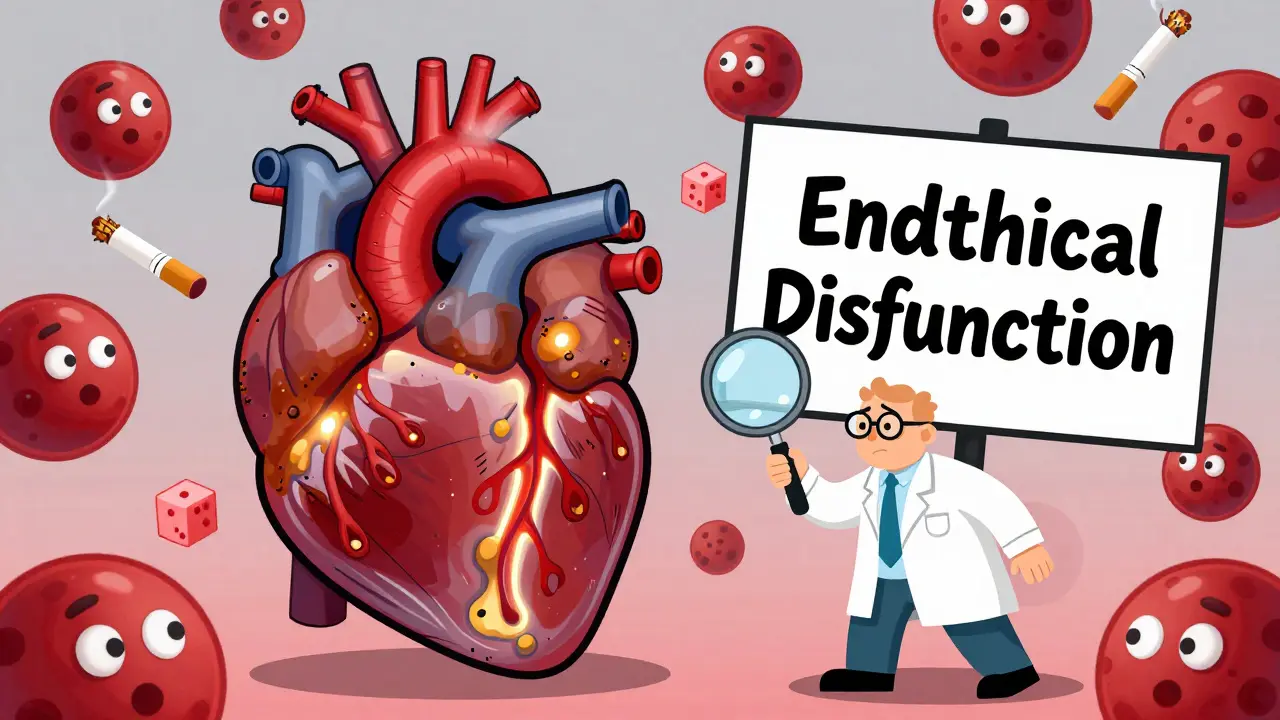
Cardiovascular disease doesn’t happen overnight. It begins with endothelial dysfunction-a fancy term for when the inner lining of your blood vessels stops working right. Normally, this lining keeps blood flowing smoothly and prevents clotting. But when it’s damaged by high blood pressure, sugar, or toxins from smoking, it lets cholesterol and inflammatory cells sneak in.
Over time, these build up as plaque. Think of it like rust in a pipe. At first, you feel nothing. Then, when the plaque cracks or breaks off, it triggers a clot. If that clot blocks an artery going to your heart, you get a heart attack. If it blocks one going to your brain, you get a stroke. If it blocks an artery in your leg, you get pain when walking-this is peripheral artery disease.
That’s why early detection matters. The 2023 American College of Cardiology guidelines now recommend a simple, non-invasive test called coronary artery calcium (CAC) scoring for people with moderate risk. A scan can show you exactly how much plaque you have-before you have symptoms.
How Doctors Are Changing the Game
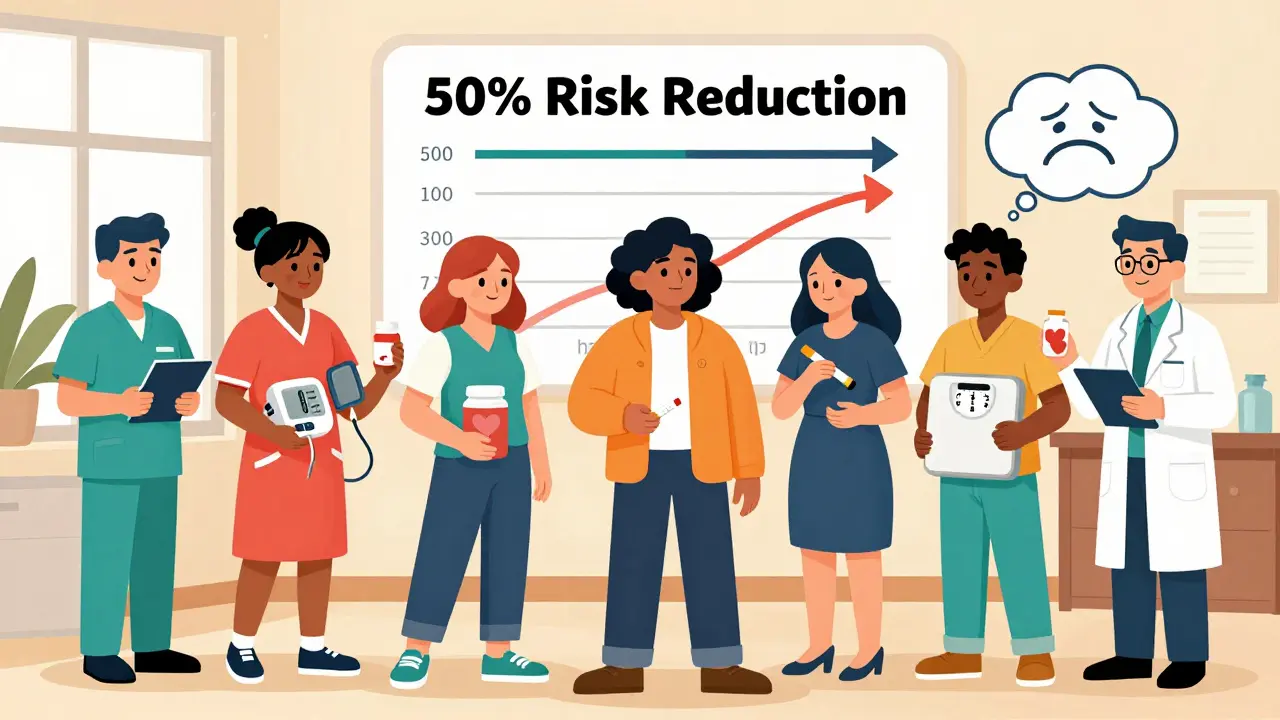
Twenty years ago, doctors treated high blood pressure, high cholesterol, and diabetes like separate problems. Now, they see them as parts of one big puzzle. The landmark Steno-2 trial proved that managing all these factors together-blood sugar, blood pressure, cholesterol, and even smoking-can cut heart attack and stroke risk by more than half.
Today’s guidelines-whether from the American Diabetes Association, the American Heart Association, or the European Society of Cardiology-all agree on one thing: integrated care works. For example:
- The 2025 ADA Standards recommend an LDL target of <55 mg/dL for people with diabetes and known heart disease-much stricter than past advice.
- New drugs like SGLT2 inhibitors (Empagliflozin) and GLP-1 receptor agonists (Semaglutide) were originally for diabetes. Now, we know they protect the heart and kidneys too-even in people without diabetes.
- The ESC 2025 guidelines now require doctors to screen for depression in every heart patient.
These aren’t just theory. Real people are living longer because of them. One study showed that when people with type 2 diabetes got all their risk factors under control, their risk of dying from heart disease dropped to match that of someone without diabetes.
What Works in Real Life-Not Just in Studies
Guidelines are great, but what actually changes outcomes on the ground? The CDC’s HEARTS package is making a difference in clinics around the world:
- Hypertension control
- Evidence-based tobacco control
- Access to essential medicines
- Risk-based management (using tools like CAC scoring)
- Team-based care (nurses, pharmacists, dietitians working together)
- Support for healthy diet
In 21 countries, this approach cut CVD deaths by 15-25%. In the U.S., the Million Hearts initiative has helped reduce CVD deaths by 21.6% since 2000, even as obesity rose.
Workplaces are helping too. Johnson & Johnson’s employee health program reduced CVD risk by 26% over 10 years. Community programs like the National Diabetes Prevention Program cut heart events by 18% in people with prediabetes.
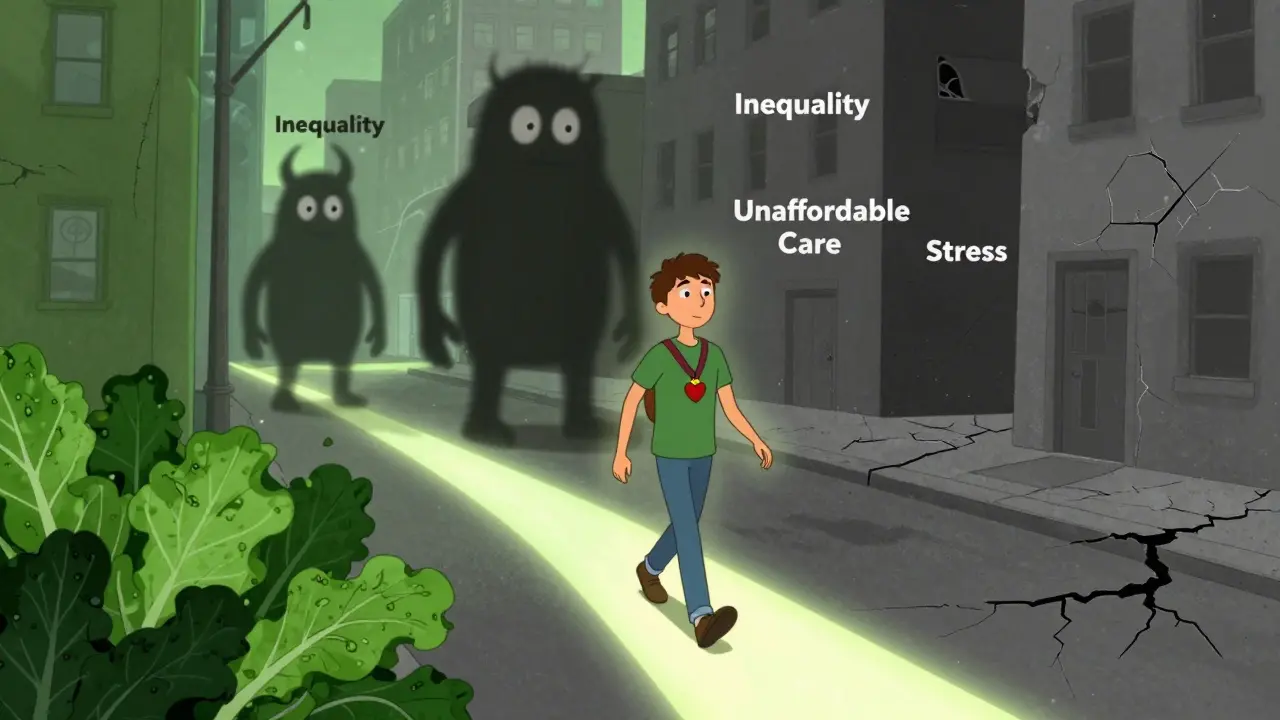
But here’s the hardest truth: where you live matters more than your genes. In the U.S., zip code is a stronger predictor of heart disease than family history. Black Americans die from CVD at 30% higher rates than White Americans-even when their blood pressure and cholesterol levels are the same. That’s not biology. That’s inequality in access to care, healthy food, safe neighborhoods, and stress-free living.
The Cost of Doing Nothing
Cardiovascular disease costs the U.S. $444 billion a year-$268 billion in medical bills, $176 billion in lost work and productivity. By 2035, that could hit $1.1 trillion. The global market for heart devices is growing fast, projected to reach $103 billion by 2028. But money spent on devices and drugs won’t fix this unless we fix the root causes.
Statins still generate $18 billion in global sales. Newer drugs like semaglutide (Ozempic) are booming, with $24 billion in cardiovascular-related sales in 2023. But these aren’t magic bullets. They work best when paired with lifestyle changes. And they’re useless if people can’t afford them or can’t access them.
What You Can Do Right Now
You don’t need a perfect diet or a gym membership. Start small, but start now:
- Know your numbers: Get your blood pressure, cholesterol, and fasting blood sugar checked. Don’t wait for symptoms.
- Move daily: 30 minutes of brisk walking, five days a week. That’s it. No need to run a marathon.
- Quit smoking: Even cutting back helps. But quitting? That’s the single best thing you can do for your heart.
- Manage stress: Chronic stress raises cortisol, which spikes blood pressure and inflammation. Try breathing exercises, walking in nature, or talking to someone.
- Ask about new medications: If you have diabetes, obesity, or high cholesterol, ask your doctor if an SGLT2 inhibitor or GLP-1 agonist might help your heart-not just your sugar.
And if you’ve had a heart attack, stroke, or been told you have PAD? Don’t just take your pills. Ask about a cardiac rehab program. These programs cut your risk of another event by 25% and improve your quality of life. Yet less than 20% of eligible patients enroll.
The Bottom Line
Cardiovascular disease isn’t inevitable. It’s not just about aging. It’s about what you do today-and what you’ve been doing for years. The science is clear: managing your blood pressure, cholesterol, blood sugar, weight, and mental health can stop this disease in its tracks. You don’t need to be perfect. You just need to be consistent.
And if you’re reading this, you’re already one step ahead.
Lisandra Lautert
This is exactly why I started tracking my BP daily. No more ignoring it.
One year ago, I was 142/90. Now? 118/76. Lifestyle changes work.
Cory L
Man, I used to think heart disease was just for grandpas. Then my cousin had a stroke at 39. Turns out, plaque doesn't care how young you are.
It's a silent thief. And yeah - smoking? I quit. Best decision I ever made.
Bhaskar Anand
America is weak. We eat sugar like candy and wonder why our arteries turn to cement. No one takes responsibility anymore. Just blame genetics. Pathetic.
William James
I love how this breaks it down - not just numbers, but the *why*.
Endothelial dysfunction? That’s the real villain. We treat symptoms like they’re the enemy, but it’s the whole system breaking down.
And mental health? Yeah. Depression isn’t 'just in your head' - it’s in your arteries too. We need to stop siloing care.
David McKie
You people are so naive. You think diet and exercise fix everything?
What about the corporations that sell you poison? The food industry? The pharmaceuticals that profit from your suffering?
This isn't about willpower. It's about systemic corruption.
Southern Indiana Paleontology Institute
I dont get why people make this so complicated. Eat less sugar. Stop smoking. Move your butt.
Its not rocket science. But everyone wants a pill or a scan or a doctor to fix it. Just do the damn thing.
Anil bhardwaj
In India, we used to eat real food. Roti, dal, vegetables. Now everyone wants burgers and soda.
My uncle had a heart attack at 45. He never even knew he had high BP.
Simple things matter.
lela izzani
CAC scoring is a game-changer. I got mine at 42. Score of 180. Scared the hell out of me.
But it woke me up. Changed my diet, started walking 10k steps daily, got off sugar.
18 months later? Score down to 42.
You can reverse this. It’s not a death sentence.
John Smith
Oh wow. Another 'lifestyle change' sermon.
How many of you have actually read the Steno-2 trial? Or are you just quoting TikTok cardiologists?
Steven Pam
I’m 37. Diabetic. Pre-hypertensive. Used to think I had time.
Then I read this.
Now I meal prep. Walk after dinner. Check my BP every Sunday.
It’s not about perfection. It’s about showing up.
You got this.
Timothy Haroutunian
Look, I get it. The science is solid. But let’s be real - most people don’t care. They’re too busy scrolling, bingeing, and pretending they’ll 'start tomorrow.'
And don’t even get me started on the 'I’ll just take a pill' crowd.
Plaque doesn’t care about your excuses. It just builds. Slowly. Relentlessly.
By the time you feel it, it’s too late.
And yeah, I know I sound like a broken record. But someone’s gotta say it.
Erin Pinheiro
I had a heart attack at 31.
My doc said I was 'lucky' to survive.
Lucky? I lost 8 months of my life.
And now I’m supposed to be 'grateful' for the warning?
Why wasn’t this on the radar before I collapsed?
Why do we wait until someone’s dying to say 'you should’ve...'?
Michael FItzpatrick
The real revolution isn’t in the meds or the scans - it’s in how we talk about health.
We stopped calling it 'lifestyle' and started calling it 'self-care.'
That shift? It changes everything.
You’re not failing if you slip. You’re human.
Just keep showing up.
One walk. One meal. One breath at a time.