
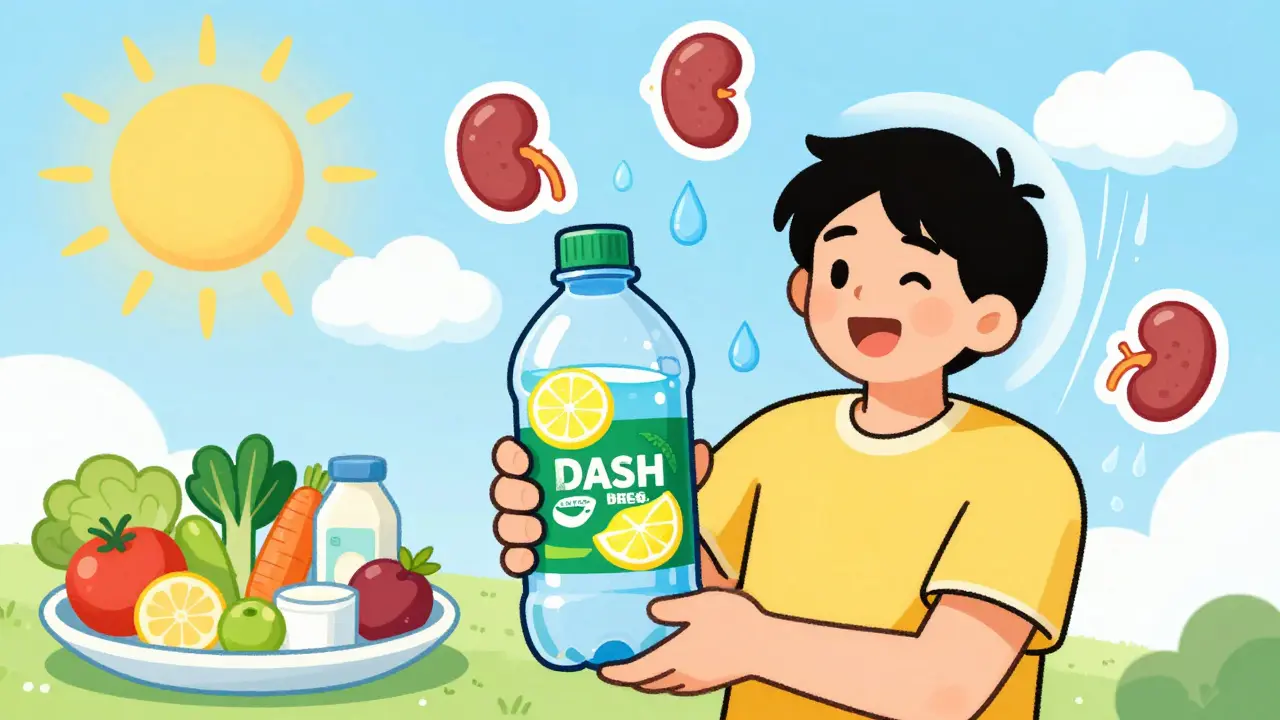
Most people think of kidney stones as a one-time pain event-something that happens, you get treated, and then you’re done. But if you’ve had more than one stone, you’re not just unlucky. You have a chronic condition. About 30% to 50% of people who’ve passed a kidney stone will have another within three to five years. Without changes, that number jumps to 70% within five years. This isn’t about luck. It’s about metabolism, fluid balance, and daily habits you can control.
Why Kidney Stones Keep Coming Back
Kidney stones aren’t random. They form because your urine is too concentrated with minerals like calcium, oxalate, and uric acid. When these stick together, they harden into stones. The most common type-calcium oxalate-makes up about 80% of cases. But here’s the twist: cutting out calcium won’t help. In fact, it makes things worse. Your body absorbs more oxalate when you don’t eat enough calcium. That means more oxalate in your urine, which increases stone risk. The same goes for sodium. Too much salt pulls calcium into your urine, making it easier for stones to form. And if you’re eating too much animal protein-like red meat, chicken, or fish-you’re increasing uric acid and reducing citrate, a natural stone blocker. The good news? You can break this cycle. But it’s not a quick fix. It’s a lifelong shift in how you eat and drink.Fluid Intake: The #1 Rule
Every major guideline-from the European Association of Urology to the National Kidney Foundation-says the same thing: drink enough water. Not just “a lot.” Not just “when you’re thirsty.” You need to produce at least 2.5 liters of urine every day. That means drinking 2.5 to 3 liters of fluid, even if you’re not sweating or feeling hot. Why 2.5 liters? Because your body loses fluid through breathing, skin, and bowel movements-even when you’re sitting still. Thirst is a late signal. By the time you feel thirsty, you’re already behind. The NHS warns: “Thirst is not a sufficient indicator of adequate hydration.” Here’s how to make it work:- Use a marked water bottle-500ml or 1 liter-and track how many you drink daily.
- Start your day with a glass of water before coffee.
- Drink one glass before every meal.
- Keep a glass of water on your desk, in your car, by your bed.
Diet: What to Eat (and What Not to Fear)
You’ve probably heard to avoid spinach, nuts, and chocolate because they’re high in oxalate. But here’s the truth: you don’t need to eliminate them. You need to pair them with calcium. Calcium from food binds to oxalate in your gut before it reaches your kidneys. So if you eat spinach with yogurt or almonds with cheese, the oxalate gets trapped and leaves your body in stool-not urine. That’s why the National Kidney Foundation says: “People who eat more plant foods such as fruits, vegetables, whole grains and plant proteins tend to have fewer kidney stones.” Here’s what to focus on:- Calcium-rich foods: Dairy (milk, yogurt, cheese), fortified plant milks, tofu made with calcium sulfate, sardines, kale. Aim for 1,000-1,200 mg daily from food-not supplements.
- Fruits and vegetables: Citrus fruits (oranges, lemons), broccoli, cauliflower, cucumbers, berries. These lower urine acidity and boost citrate.
- Whole grains: Oats, brown rice, quinoa. They’re low in oxalate and high in fiber, which helps manage weight and blood pressure.
- Sodium: Keep it under 2 grams per day-that’s 5 grams of salt. Most people eat 3-4 times that. Hidden sodium is everywhere: bread, canned soups, deli meats, soy sauce, frozen meals. Read labels. Choose “low sodium” versions.
- Animal protein: Limit to 8 ounces (about the size of a deck of cards) per day. That’s one small chicken breast or two thin slices of steak. Replace some with beans, lentils, or tofu.
- Fizzy drinks: Especially colas. They contain phosphoric acid and high fructose corn syrup, both linked to higher stone risk. The NHS specifically warns against them.
- Supplements: Don’t take extra calcium pills unless prescribed. Vitamin C supplements over 1,000 mg a day can turn into oxalate in your body.
What About the DASH Diet?
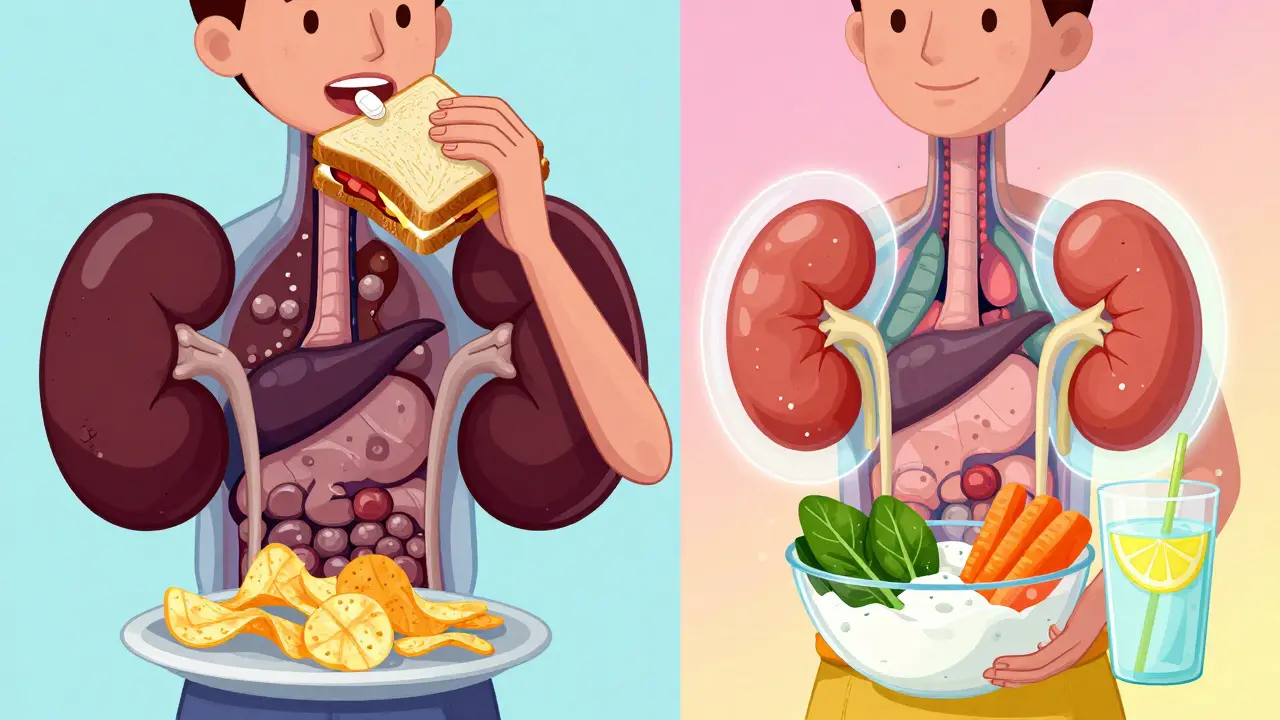
The DASH diet-originally designed for high blood pressure-is now one of the most proven tools for preventing kidney stones. A study by the National Kidney Foundation showed it reduces stone risk by 40-50%. DASH stands for Dietary Approaches to Stop Hypertension. But it works for stones because it’s high in fruits, vegetables, whole grains, and low-fat dairy-and low in salt, sugar, and red meat. Think of it as a simple blueprint:- 4-5 servings of vegetables daily
- 4-5 servings of fruit daily
- 2-3 servings of low-fat dairy
- 6-8 servings of whole grains
- Less than 2,300 mg sodium (ideally under 1,500 mg)
- Less than 2 servings of meat per day
Monitoring Progress: The 24-Hour Urine Test
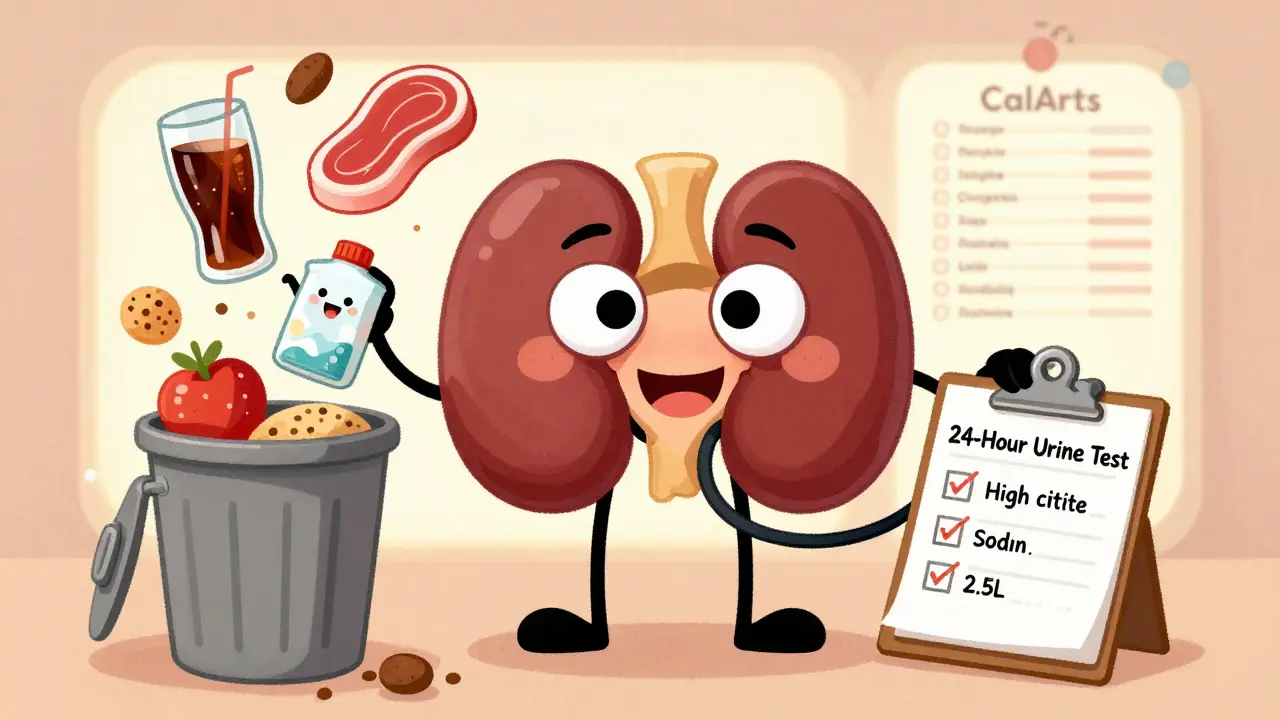
You can’t guess if your changes are working. You need data. The European Association of Urology recommends a 24-hour urine test eight to twelve weeks after you start your new routine. This test measures:- Urine volume (should be >2.5 liters)
- Citrate (should be >320 mg/day)
- Calcium, oxalate, sodium, uric acid
- Urine pH (ideal range: 6.0-6.5)
What Doesn’t Work
There’s a lot of noise out there. Here’s what science says doesn’t help:- Cutting out dairy: Makes stones worse by increasing oxalate absorption.
- Drinking only lemon water: Helpful, but not enough on its own. You still need total fluid volume and low sodium.
- Detox teas or supplements: No evidence they prevent stones. Some contain herbs that can harm your kidneys.
- Hydrochlorothiazide without monitoring: A 2023 trial found it didn’t work much better than placebo for many people. It’s only useful if your urine calcium is high-and only if you’re monitored.
Real-Life Example: Sarah’s Story
Sarah, 42, from Perth, passed her first stone in 2022. She thought she was done after surgery. Then she had another in 2023. She was frustrated. Her urologist referred her to a dietitian. She learned:- She was drinking 1 liter of water a day-half what she needed.
- Her lunch was a turkey sandwich with processed cheese and chips-high in sodium.
- She took a vitamin C pill daily (1,000 mg) thinking it helped her immune system.
- Drinking 3 liters of water daily using a 1-liter bottle she refilled three times.
- Adding lemon juice to her water every morning.
- Replacing chips with carrot sticks and hummus.
- Switching her vitamin C to a multivitamin without extra C.
Final Advice: Make It Stick
This isn’t about perfection. It’s about consistency. You don’t need to be a nutritionist. You just need to be aware. Start with these three steps:- Fill a 3-liter water bottle every morning. Drink it by bedtime.
- Check your lunch. If it has processed meat, cheese, or salty snacks, swap one thing for a fruit or veggie.
- Stop taking calcium or vitamin C supplements unless your doctor says so.
Can I drink coffee if I have kidney stones?
Yes. Coffee counts toward your daily fluid intake. Studies show moderate caffeine doesn’t increase stone risk. In fact, some research suggests coffee may slightly lower risk due to its diuretic effect and antioxidants. But don’t rely on coffee alone-pair it with water and avoid sugary creamers or syrups.
Should I avoid spinach and nuts?
No, but eat them with calcium. Spinach and almonds are high in oxalate, but when eaten with a calcium-rich food like yogurt or cheese, the oxalate binds in your gut and doesn’t reach your kidneys. Avoid eating them alone on an empty stomach. Pair them with meals that include dairy or fortified plant milk.
Is lemon water better than plain water?
Lemon water adds citrate, which helps block stone formation, so it’s beneficial. But it’s not a replacement for total fluid volume. You still need to drink 2.5-3 liters of fluid daily. Lemon water is a helpful addition-not a magic solution.
Do I need to take potassium citrate pills?
Only if your urine citrate is low and your doctor recommends it. Many people can raise citrate levels naturally with lemon juice and a DASH-style diet. Pills are usually reserved for those with recurrent stones despite dietary changes, or those with specific metabolic conditions like renal tubular acidosis.
How long until I see results from dietary changes?
It takes 6-12 weeks for your urine chemistry to stabilize. That’s why doctors recommend a 24-hour urine test after this time. You might not feel different, but your urine will be less likely to form stones. Don’t stop changes just because you haven’t had a stone yet-prevention is silent work.
Can kidney stones cause permanent kidney damage?
Yes, if they’re recurrent and untreated. About 19% of people with frequent stones develop chronic kidney disease over time. Stones can cause blockages, infections, and scarring. Preventing recurrence isn’t just about avoiding pain-it’s about protecting your long-term kidney health.
Are men more likely to get kidney stones than women?
Yes. Men are about three times more likely to develop kidney stones than women, especially between ages 30 and 60. But the gap is narrowing as diets high in salt and processed foods become more common in women. The risk factors-low fluid intake, high sodium, and animal protein-affect everyone.
What if I can’t drink 3 liters of water a day?
Start where you are. If you’re currently drinking 1 liter, aim for 1.5 liters this week, then 2 liters next week. Every extra 250 ml helps. Add flavor with lemon, cucumber, or mint to make it easier. Even small increases reduce concentration in your urine. Progress, not perfection, is the goal.
Alexandra Enns
Okay but have you seen what they put in processed cheese these days? It's not even cheese anymore, it's plastic with a side of sodium bombs. And don't even get me started on how the FDA lets this crap fly under the radar. You think you're eating food but you're just slowly turning your kidneys into a mineral deposit. This isn't medicine, it's corporate sabotage.
Marie-Pier D.
I was skeptical at first but after my 3rd stone, I started drinking 3L of water + lemon every day and honestly? No more pain. 🙏 I even switched my lunch to hummus and carrots and my husband jokes I’ve become a veggie ninja. It’s not perfect but it’s working. You got this!
Amelia Williams
This is the most practical kidney stone advice I’ve ever read. No fluff, no snake oil. Just science-backed, doable steps. I’m printing this out and taping it to my fridge. Also, the lemon water tip? Genius. I’ve been adding it to my morning tea and I actually look forward to drinking water now. Who knew hydration could feel like a win?
Viola Li
Oh please. Everyone says drink more water like it’s magic. But what about the fluoride in your tap? The microplastics? The fact that your ‘hydration’ is just poisoning you slowly? And DASH diet? That’s just Big Pharma’s way of selling you potassium citrate pills. You think you’re healthy but you’re just another cog in the medical-industrial complex.
Dolores Rider
Wait… so if I drink lemon water, I’m not just preventing stones… I’m also fighting the government’s secret kidney-destroying agenda?? 😱 I knew it. My urologist keeps asking for my urine samples… but why? What are they looking for?? I think they’re tracking my citrate levels to sell me more meds. I’m done. I’m moving to a cabin in the woods with a well and a lemon tree. 🍋💣
venkatesh karumanchi
From India, I’ve seen many with stone problems. In villages, they drink water from wells - no filtration, no lemon, no fancy advice. Yet many never get stones. Maybe the problem isn’t just diet… maybe it’s stress. Or air pollution. Or maybe we’re overcomplicating things. Simple life, simple water - maybe that’s the real cure.
Jenna Allison
Important note: the 24-hour urine test is gold standard. Citrate <320 mg/day = high risk. Calcium >250 mg/day = hypercalciuria. Sodium >2000 mg/day = stone accelerator. Uric acid >750 mg/day = purine overload. Don’t guess - test. And if your doc doesn’t offer it, ask for it. This isn’t optional. It’s diagnostic. Period.
Vatsal Patel
So you’re telling me the answer to 50 years of kidney stones is… drink more water? Wow. Who knew? I bet the pharmaceutical companies are weeping into their potassium citrate bottles right now. Next up: doctors will realize that sunlight prevents scurvy. Groundbreaking. 🙄
Sharon Biggins
OMG I just started the lemon water thing and I’m already feeling better!! I used to hate drinking water but now I add mint and it’s like a little spa moment 😊 I also swapped my sandwich for a salad and my husband said I’m ‘less grumpy’… which I take as a win. Small changes, big impact. You’re not alone!! 💪
John McGuirk
Let’s be real. Kidney stones are a distraction. The real threat? Glyphosate in your oat milk. The real villain? The WHO’s silent collaboration with Big Ag. You think you’re controlling your diet? You’re just being fed the narrative so they can sell you ‘low sodium’ labels while your liver rots. Drink tap water? You’re ingesting chlorine, fluoride, and corporate lies. Wake up.
Himanshu Singh
Life is like urine - too concentrated, and everything hardens. Too diluted, and you lose focus. The balance isn’t in extremes. It’s in rhythm. Drink when you rise. Eat with your calcium. Walk after meals. Breathe. Stones are not your enemy. They’re your body’s whisper: ‘Slow down. Realign.’ Listen. 🌿
siva lingam
Drink water. Eat lemon. Don't eat salt. Wow. I'm shocked. Next article: 'How to prevent sunburn: stay in shade'. Revolutionary stuff here. My cat could write this.
Phil Maxwell
Just wanted to say I’ve been doing the 3L water thing for 2 months. Haven’t had a stone since. I still eat chips sometimes. I still drink coffee. But I make sure I’ve had my water first. It’s not about being perfect. Just… not lazy. Feels good.
Shelby Marcel
i did the 24hr test and my citrate was low so i started leom juice and now im not sure if my kidneys are better or if im just paranoid but hey at least im drinkin more water??