
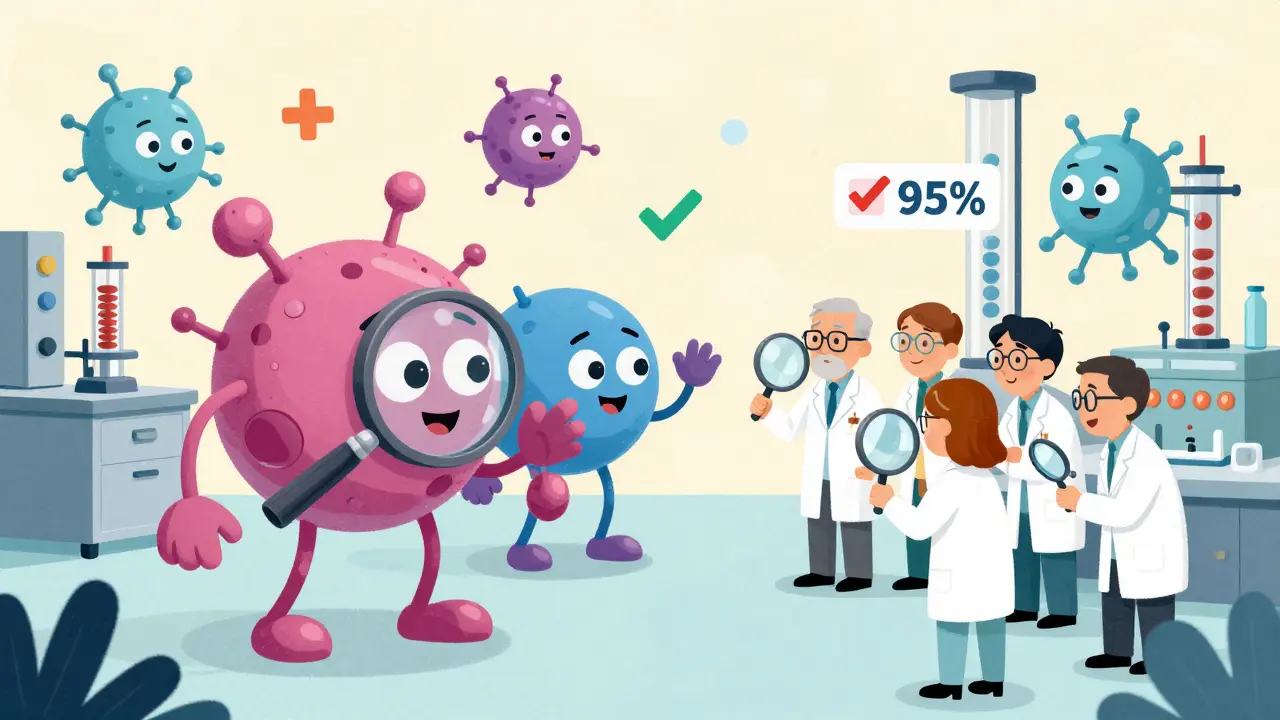
When you hear the word "generic," you probably think of a cheaper version of a pill you’ve been taking for years. But when it comes to biologic drugs - complex medicines made from living cells - things are completely different. That’s where biosimilars come in. They’re not generics. They’re not copies. They’re highly similar versions of brand-name biologics, and the FDA doesn’t just approve them with a quick glance. There’s a detailed, science-heavy process behind every one that ends up on the market.
What Exactly Is a Biosimilar?
A biosimilar is a biologic drug that is highly similar to an already-approved reference product, known as the originator biologic. These are not small-molecule drugs like aspirin or metformin. Biologics are made from living organisms - proteins, antibodies, or other complex molecules. Think drugs like Humira (adalimumab), Enbrel (etanercept), or Herceptin (trastuzumab). Because they’re so complex, you can’t make an exact copy like you can with a chemical drug. That’s why the FDA doesn’t call them "generics." Instead, they use the term "biosimilar" to reflect the fact that while they’re not identical, they’re close enough to be considered safe and effective.The FDA’s Step-by-Step Evaluation Process
The FDA doesn’t just look at a few test results and say yes. The approval process for a biosimilar is built on a foundation of science, and it happens in layers. First, manufacturers must show that their product is structurally and functionally almost identical to the reference product. This starts with analytical studies - hundreds of them. These studies use advanced tools like mass spectrometry, capillary electrophoresis, and multiple chromatography methods to compare the two products at the molecular level. The FDA looks at up to 300 different characteristics - things like protein folding, sugar attachments (glycosylation), and purity levels. The goal? To prove that the biosimilar matches the reference product in at least 95% to 99% of those attributes. If it doesn’t, the application stops right there. Next, if the analytical data is strong enough, the FDA may skip animal studies and move straight to human testing. This usually means a small clinical trial - often between 50 and 100 people - to compare how the body absorbs and processes the biosimilar versus the reference product. This is called a pharmacokinetic (PK) study. Sometimes, a pharmacodynamic (PD) study is added to see how the drug affects the body’s biological response, like immune system activity or tumor shrinkage. Immunogenicity is another major focus. Biologics can trigger immune reactions. Even a tiny difference in structure could cause the body to react differently. So, all biosimilars must be tested for immune responses over 24 to 52 weeks. The FDA’s Sentinel Initiative, which tracks real-world adverse events, has found no difference in immune-related side effects between biosimilars and their reference products since 2015.The Purple Book: The Official FDA Listing
Once a biosimilar is approved, it doesn’t just disappear into the pharmacy system. It gets listed in the FDA’s Purple Book - the official public database of all licensed biologics, including reference products and their biosimilars. The Purple Book was updated in 2021 to include patent information, exclusivity periods, and licensure dates. As of October 2025, it lists 387 reference biologics and 43 approved biosimilars. What makes this listing useful? It tells prescribers and pharmacists which products are approved and which ones are designated as "interchangeable." That’s a special category. To earn that label, a biosimilar must prove it can be switched with the reference product without any increase in risk. Only 17 of the 43 approved biosimilars have this status. The rest are biosimilar - but not interchangeable - meaning a pharmacist can’t substitute them without the doctor’s permission.
Biosimilars vs. Generics: Key Differences
Many people assume biosimilars are just like generics. They’re not. Here’s how they differ:- Complexity: Generics are exact chemical copies of small-molecule drugs. Biosimilars are highly similar versions of complex biologics made from living cells.
- Approval Pathway: Generics rely on bioequivalence studies. Biosimilars require analytical, non-clinical, and clinical data to prove similarity.
- Testing: A generic might need one small study in 50 people. A biosimilar needs dozens of tests, sometimes hundreds of data points, and multiple clinical studies.
- Interchangeability: Generics are automatically interchangeable. Biosimilars must go through an extra review to earn that status.
Why the FDA’s Approach Matters
The FDA’s method is stricter than Europe’s. The European Medicines Agency (EMA) has approved 118 biosimilars as of 2025. The FDA has approved 43. Why the difference? The FDA demands more analytical detail. It requires more methods per quality attribute - now five to seven, up from three to five in earlier guidance. This means development takes longer and costs more. A single biosimilar program can cost $120 million to $180 million just in analytical testing. But that rigor pays off. Since Zarxio - the first U.S. biosimilar approved in 2015 - there have been zero safety signals unique to any biosimilar. Adverse event rates are statistically the same as the reference products. Real-world data from the FDA’s Sentinel system shows 0.8 adverse events per 10,000 patients for biosimilars versus 0.7 for reference products. That’s not a fluke. That’s proof the system works.Market Reality: Why So Few Are Actually Available
Even though 43 biosimilars are approved, only 29 have actually launched. Why? Patent lawsuits. Drugmakers of the original biologics often file legal challenges to delay competition. The average time between FDA approval and market launch is 11.3 months. In oncology, biosimilars have taken off fast - some capture 75% of the market within 18 months. But in autoimmune diseases like rheumatoid arthritis, adoption is slower. Adalimumab biosimilars, approved in 2023, only reached 28% market share by mid-2025. Payers and prescribers are still cautious. Some doctors don’t trust biosimilars. Some insurers block them. The FDA is working on this. Its 2025 Biosimilars Action Plan aims to increase biosimilar use to 30% of the biologics market by 2030 - a jump from 18% today.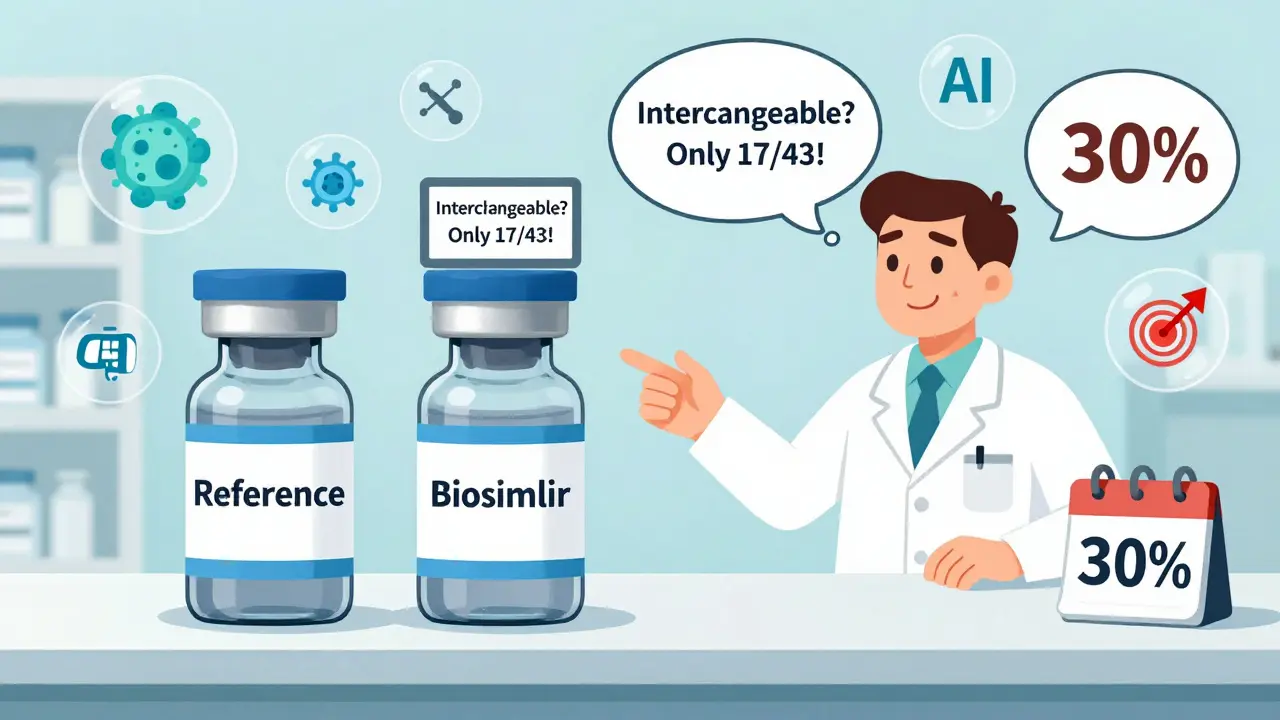
What’s Next?
The FDA is making changes to speed things up. In September 2024, it updated its guidance to allow manufacturers to skip comparative efficacy studies if analytical data is strong enough. That could cut development time by 12 to 18 months and save $50 million to $100 million per product. In June 2025, it also allowed extrapolation of indications based on analytical data alone - meaning a biosimilar approved for one cancer type can be used for others without additional trials. The Purple Book is now searchable online and updated daily. AI tools are being tested to help review analytical data faster. And by 2027, the FDA plans to release specific guidance for biosimilars of even more complex products - like antibody-drug conjugates and gene therapies.Frequently Asked Questions
Are biosimilars the same as generics?
No. Generics are exact copies of simple chemical drugs. Biosimilars are highly similar versions of complex biologic drugs made from living cells. They can’t be identical because of their complexity, but they must be shown to have no clinically meaningful differences in safety or effectiveness.
How does the FDA decide if a biosimilar is approved?
The FDA uses a stepwise approach: first, extensive analytical testing to prove structural similarity; then, animal studies (if needed); followed by clinical studies comparing pharmacokinetics and immunogenicity. The final decision is based on the "totality of evidence" - not one single study.
What is the Purple Book?
The Purple Book is the FDA’s official public database that lists all approved biologics, including reference products and their biosimilars. It includes licensure dates, patent information, and whether a biosimilar is designated as interchangeable.
Can a pharmacist substitute a biosimilar without asking the doctor?
Only if the biosimilar is designated as "interchangeable" by the FDA. Of the 43 approved biosimilars, only 17 have this status. The rest require a doctor’s prescription to be dispensed.
Why are biosimilars cheaper than the original biologics?
Biosimilars don’t require full clinical trials because they rely on the FDA’s existing safety data for the reference product. This reduces development costs by 40-60%, which translates to 15-30% lower prices for patients and payers.
Are biosimilars safe?
Yes. Since the first U.S. biosimilar was approved in 2015, no safety concerns unique to biosimilars have been identified. Real-world data from the FDA’s Sentinel system shows adverse event rates are identical to those of the reference products.
Darlene Gomez
Really appreciate how clear this breakdown is. I’ve been on Humira for years and never realized how much science goes into making a biosimilar. It’s not just ‘cheaper version’ - it’s like a masterclass in molecular precision. The FDA’s 95-99% similarity threshold? That’s not laziness. That’s rigor. And honestly, it gives me peace of mind knowing my refill isn’t some half-baked knockoff.
Also, the Purple Book update with patent data? Genius. Prescribers need that transparency. No more guessing games.
Katie Putbrese
USA still leading the world in regulatory rigor. Europe’s just rushing to approve anything to cut costs. 118 biosimilars? That’s not innovation - that’s a liability waiting to happen. We don’t cut corners here. We build walls around safety. And if you’re not grateful for that, you’re part of the problem.
Jacob Hessler
so like… biosimilars are kinda like generics but for fancy drugs? and the fda makes em prove theyre not gonna kill you? cool. guess that’s why they cost less. also purple book? sounds like a fantasy novel. but yeah. good job fda.
Amber Gray
Yesss 🙌 finally someone explains this right. Biosimilars aren’t ‘cheap junk’ - they’re science wins. And that 0.8 vs 0.7 adverse events stat? That’s not noise. That’s proof. Let’s get these out there. #BiosimilarsSaveLives 💯
James Moreau
Thanks for the detailed overview. As someone who works in global health policy, I’ve seen how biosimilars can dramatically improve access in low-resource settings. The FDA’s approach is cautious, yes - but that caution enables global trust. Countries adopting U.S.-approved biosimilars report high adherence and low adverse events. This isn’t just American regulation - it’s a global standard.
J. Murphy
43 approved? Only 29 launched? Wow. So the system works… just not for anyone who actually needs it. Patent trolls win again. Classic. Also, ‘interchangeable’? Sounds like corporate buzzword bingo.
Jesse Hall
This is the kind of info we need more of! 💪 Real science, real data, real impact. I’ve talked to patients who were scared to switch - now I’ve got solid facts to share. The FDA’s process isn’t overkill. It’s protection. And the fact that adverse event rates are identical? That’s huge. Let’s keep pushing this forward - biosimilars aren’t just cheaper, they’re just as good.
Donna Fogelsong
They say ‘no safety concerns’ - but what about long-term? What about the 10-year data? Who’s tracking the kids born to mothers on biosimilars? The Purple Book doesn’t tell you what the pharmaceutical lobby is hiding. This is just Phase 1 of a larger plan to replace natural immunity with corporate drugs. You think this is about cost? It’s about control.
Namrata Goyal
USA thinks it’s the only one that knows how to regulate. In India, we’ve been using biosimilars since 2007 - cheaper, effective, no drama. Your 120 million dollar testing? That’s not science. That’s profit protection. Real innovation is accessibility. Not paperwork.
Caroline Dennis
Structural similarity >95% + immunogenicity profiling + PK/PD validation = clinical confidence. The totality of evidence framework is elegant. What’s often missed: biosimilars reduce out-of-pocket costs by 30-50% for chronic conditions. That’s not trivial. It’s life-changing for millions.
Kevin Y.
Thank you for this comprehensive and well-researched piece. As a healthcare administrator, I can attest to the operational challenges of biosimilar adoption - but also to the undeniable cost savings and patient outcomes. The FDA’s methodical approach, while time-intensive, ensures that when we transition patients, we do so with confidence, not guesswork. This is public health excellence in action.
Raphael Schwartz
17 interchangeable? More like 17 excuses to delay. Pharma’s still holding the market hostage. Biosimilars should be automatic. Period. And if the fda’s so smart, why does it take 11 months to launch? Fix the system. Not the science.