
For decades, people have been told that generic drugs are just as good as brand-name ones. Same active ingredients. Same safety standards. Same results. So why do so many still refuse to take them? The answer isn’t in the science-it’s in the mind. And that mind changes dramatically depending on what decade you were born in.
Why Older Generations Stick to Brand Names
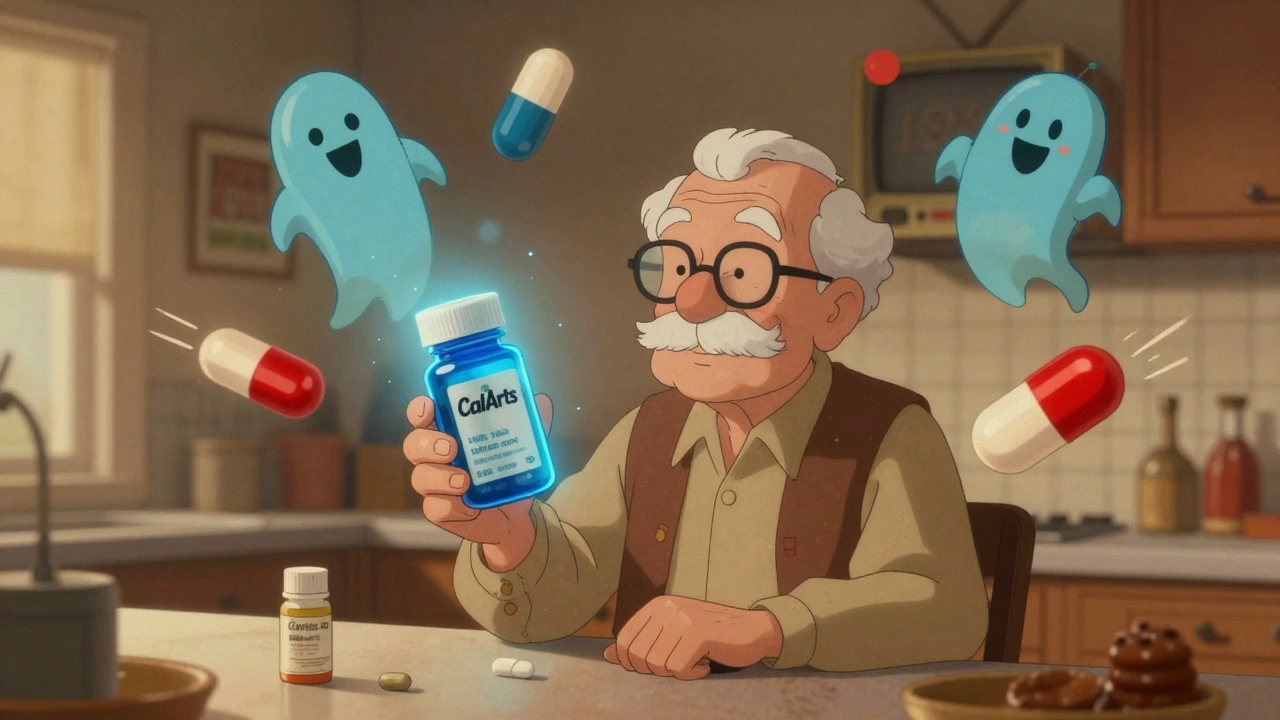
If you’re a Baby Boomer (born 1946-1964), you likely grew up with advertising that made brand names feel like promises. Think of the iconic blue pill that “works better” or the red capsule that “does the job faster.” These weren’t just ads-they were cultural touchstones. When your doctor handed you a prescription, you didn’t question the name on the bottle. You trusted it. And that trust stuck.Today, many Baby Boomers still reach for the brand-name version-even when the generic is cheaper, covered by insurance, and proven identical. Why? It’s not about cost. It’s about familiarity. A 2023 study found that people over 60 are nearly twice as likely to believe brand-name drugs are more effective, even when they know the generic is bioequivalent. That’s not ignorance. It’s memory. Their experience with medicine was shaped in an era when pharmaceutical marketing was powerful, and generic drugs were rare, poorly made, or even counterfeited in some places.
There’s also a psychological layer: the fear of change. When you’ve taken the same pill for 20 years, switching feels risky. Even if the science says it’s safe, the brain says: “This is what worked before.” That’s not irrational-it’s human.
Gen X: The Skeptical Middle Ground
Born between 1965 and 1980, Gen X grew up watching the rise of corporate healthcare. They saw the cost of brand-name drugs climb while insurance coverage shrank. They’re the first generation to be routinely pushed toward generics by their doctors and pharmacies. But they didn’t fully buy in.Why? Because they’re the first to witness the gap between what’s said and what’s delivered. They’ve had bad experiences-generic pills that didn’t work as well, or caused unexpected side effects. Some of those cases were coincidences. Others were real, but rare. Still, those stories stick. A 2022 survey in Australia found that 47% of Gen Xers said they’d only switch to generics if their doctor specifically recommended it. Otherwise, they’d rather pay more.
Gen X also has higher health literacy than Boomers. They Google symptoms. They read drug labels. But here’s the catch: they know more about what’s *supposed* to be true than what actually *is*. They understand the concept of bioequivalence, but they don’t trust the system that produces generics. They’ve seen drug recalls. They’ve heard about manufacturing scandals. That erodes confidence-even when the data says generics are safe.
Millennials and Gen Z: The Cost-Driven Shift
If you’re under 40, you probably don’t care what the pill looks like. You care about what’s in your wallet.Millennials (born 1981-1996) and Gen Z (born 1997-2012) grew up in a world where everything is priced transparently. Pharmacy apps show you the price difference between brand and generic before you even click “fill.” Insurance plans often charge $5 for generics and $50+ for brands. You don’t have to be a pharmacist to do the math.
Studies show that 78% of Millennials will choose a generic if it’s significantly cheaper-even if they’ve never taken the brand version. For Gen Z, it’s even higher. Why? Because they’ve never had the emotional attachment to brand names. They don’t remember the 1980s TV ads. They don’t associate blue pills with “quality.” They associate them with “waste.”
They also have higher objective knowledge about how drugs work. A 2024 study from the University of Melbourne found that Gen Z participants were 3.2 times more likely to correctly identify that generics must meet the same FDA (or TGA, in Australia) standards as brand-name drugs. They’re not just cheaper-they’re understood.
Why the Perception Gap Still Exists
Here’s the paradox: generics make up 90% of all prescriptions filled in the U.S. by volume, but only 23% of total drug spending. That means most people are taking generics-but they’re still paying more for brand names when they don’t have to.Part of the reason? Framing. If a doctor says, “This is a generic version of Lipitor,” some patients hear: “This is a cheaper copy.” But if the doctor says, “This is the same active ingredient as Lipitor, just without the marketing costs,” acceptance jumps by 40%.
Older generations respond better to reassurance: “It’s the same medicine, just less expensive.” Younger people respond to logic: “You’re paying 80% more for the same thing.”
Another factor: packaging. Generics often look different. A pill that was once blue and oval becomes white and round. For someone who’s taken the same pill for decades, that change feels like a betrayal-even if the chemical structure is identical. That’s not a flaw in the drug. It’s a flaw in how we communicate.
What Works to Change Minds
So how do you get people to switch? Not with lectures. Not with data dumps. You do it with trust.For older patients, the most effective strategy is the doctor’s word. A 2021 study in the Journal of General Internal Medicine found that when physicians personally explained the equivalence of generics and offered to monitor the patient’s response, 72% agreed to switch. That’s far higher than any pamphlet or website could achieve.
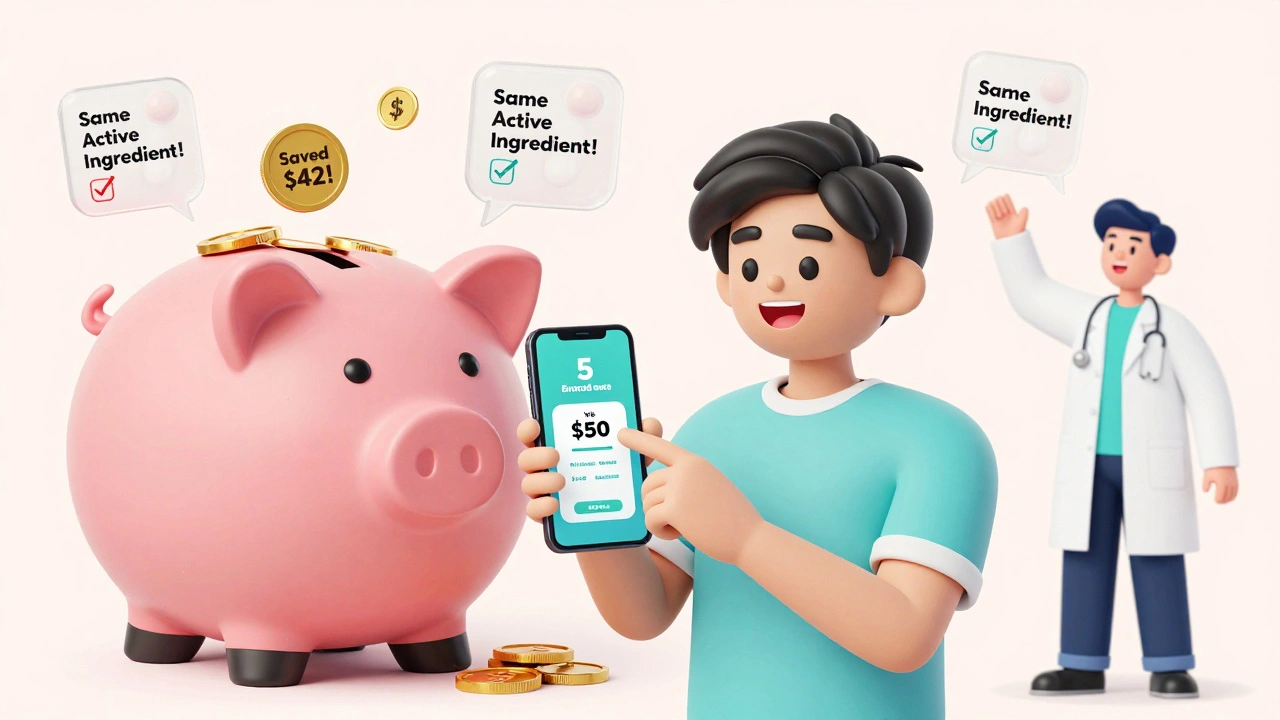
For younger patients, it’s about transparency. Apps that show real-time price comparisons. Pharmacies that highlight savings on receipts. Pharmacist-led consultations that say, “You saved $42 today. That’s a coffee every day for a month.”
And for everyone? Consistency. If a pharmacy switches your generic brand without telling you, people panic. They think something changed. It didn’t. But the perception did. That’s why some pharmacies now label generics with the original brand name: “Simvastatin (generic for Zocor).” It’s not deception. It’s clarity.
The Bigger Picture
This isn’t just about pills. It’s about trust in systems. Older generations distrust pharmaceutical companies because they’ve seen them prioritize profits. Younger generations distrust systems because they’ve seen them prioritize efficiency over experience.But here’s the good news: generational attitudes are shifting. In Australia, generic drug use has jumped from 58% to 84% in the last decade. That’s not because people became smarter. It’s because the system made it easier, cheaper, and clearer to choose them.
And as Baby Boomers age and need more medications, they’ll start to see the financial relief generics provide. As Gen Z becomes the largest group of prescription users, they’ll normalize generic use-no explanation needed.
The future of medication isn’t about branding. It’s about access. And the only thing standing in the way isn’t science. It’s perception. That’s something we can fix-with better communication, better framing, and better understanding of who we’re talking to.
sean whitfield
So let me get this straight - we’re paying $50 for a pill because some CEO’s yacht needs polishing? Meanwhile, the stuff in the generic bottle is literally the same chemical. Same FDA stamp. Same damn science. But nooo, we gotta pay for the blue color and the fancy logo like it’s a designer handbag. I mean, if your antidepressant looks like a Tic Tac now, you’re gonna have a breakdown? 🤡
Krishan Patel
It is not merely a matter of pharmacological equivalence - it is a metaphysical crisis of identity. The brand-name pill carries the weight of cultural memory, the sacred ritual of healing as performed by the pharmaceutical priesthood. To substitute it with an unadorned tablet is to commit epistemic violence against the very notion of medical authority. One does not replace a cathedral with a cardboard box simply because the dimensions match.
The generational divide is not about cost - it is about the erosion of symbolic meaning in an age of utilitarian nihilism. Millennials do not fear the pill; they fear the void where reverence used to be.
Carole Nkosi
Let’s be real - generics aren’t just cheaper, they’re the only reason I’m alive. I’m from South Africa. We don’t have the luxury of paying $200 for a blood pressure pill. My mom took generics for 30 years. She’s 82 and still walks three miles a day. You think your brand-name placebo is keeping you healthy? Nah. It’s the damn science. Stop romanticizing corporate branding.
Stephanie Bodde
You guys are doing SO great at unpacking this 💪 Seriously, this is such an important conversation! I’ve seen so many older relatives stress over switching, and it’s not about being stubborn - it’s about fear. A little empathy goes a long way. Maybe next time your grandpa hesitates, just say ‘I got you, let’s try it together’ 😊
Philip Kristy Wijaya
The entire pharmaceutical industrial complex is a carefully orchestrated illusion designed to extract wealth from the gullible masses. The FDA is not a regulatory body - it is a corporate puppet. Generics are manufactured in the same factories as brands - often by the same companies - under different labels. You think you’re saving money? You’re just paying less to the same wolves in different suits. The real scandal is that we’ve been trained to believe the packaging matters
Jennifer Patrician
Ever notice how every time you switch to generic, your doctor suddenly disappears? Like, poof. Gone. No follow-up. No check-in. Just ‘here’s your new pill’ and a smile. And then you get weird side effects - dry mouth, dizziness, nightmares - and the pharmacist says ‘it’s the same chemical’ like that fixes it. Meanwhile, Big Pharma’s hiding the fact that generics have different fillers. Dyes. Binders. That’s not science. That’s chemical roulette. And they’re betting your health on it.
Mellissa Landrum
USA first. America made the best pills. The blue one. The red one. The one with the logo. Now we got some cheap Chinese junk that looks like a rock and makes you sleepy at noon. My grandma took Lipitor for 20 years. She’s fine. Now they give her some white thing that says ‘simvastatin’ like it’s a barcode. I’m not taking my medicine from a country that makes fake AirPods. No way. No how. This ain’t freedom. This is surrender.
Ali Bradshaw
Interesting how the real issue isn’t the pills - it’s the silence. Nobody tells you when your generic switches brands. One day it’s round, next day it’s oval. You panic. You think you’re losing your mind. The system could fix this with one simple label: ‘Same as before, just cheaper.’ But they don’t. Why? Because they don’t care about your anxiety. They care about your co-pay.
an mo
The data is statistically insignificant. The bioequivalence thresholds are set at 80-125% - that’s a 45% variance window. You’re telling me a pill that could be 20% weaker or 25% stronger is ‘the same’? That’s not equivalence. That’s a gamble. And when you’re on anticoagulants or seizure meds, that’s not a ‘maybe’ - it’s a potential death sentence. The FDA doesn’t test for long-term outcomes. Only short-term plasma levels. That’s not science. That’s corporate math.
Mark Ziegenbein
Consider this: the brand-name drug is not merely a chemical compound - it is a narrative artifact embedded in the collective unconscious of Western medicine. The blue capsule of Lipitor is not just atorvastatin - it is the embodiment of trust, of corporate benevolence, of the American dream of health through consumption. To replace it with a generic is to erase a cultural myth - and myths, once dismantled, leave behind a vacuum filled only by alienation and the hollow echo of institutional betrayal. The generational shift is not about cost - it is about the death of meaning in pharmacology. We have reduced healing to a spreadsheet. And in doing so, we have lost the soul of medicine
Rupa DasGupta
Ugh I just switched to generic and now I feel like I’m floating?? Like my brain is made of cotton?? And my doctor was like ‘it’s the same’ and I was like NO IT’S NOT I CAN FEEL IT 😭 I swear I’m not crazy. I’ve been on this med for 7 years and now I’m crying in the shower because my anxiety is back and it’s ALL because of that stupid white pill. I just want my blue one back 💔
Marvin Gordon
My dad’s 76. Took Crestor for 15 years. Switched to generic last year. No issues. No side effects. He’s fine. The truth? Most people who say generics don’t work are either misremembering or blaming the wrong thing. The system’s broken, sure. But the pill? It’s not the problem. Talk to your pharmacist. Ask questions. Don’t let fear make the decision for you.