
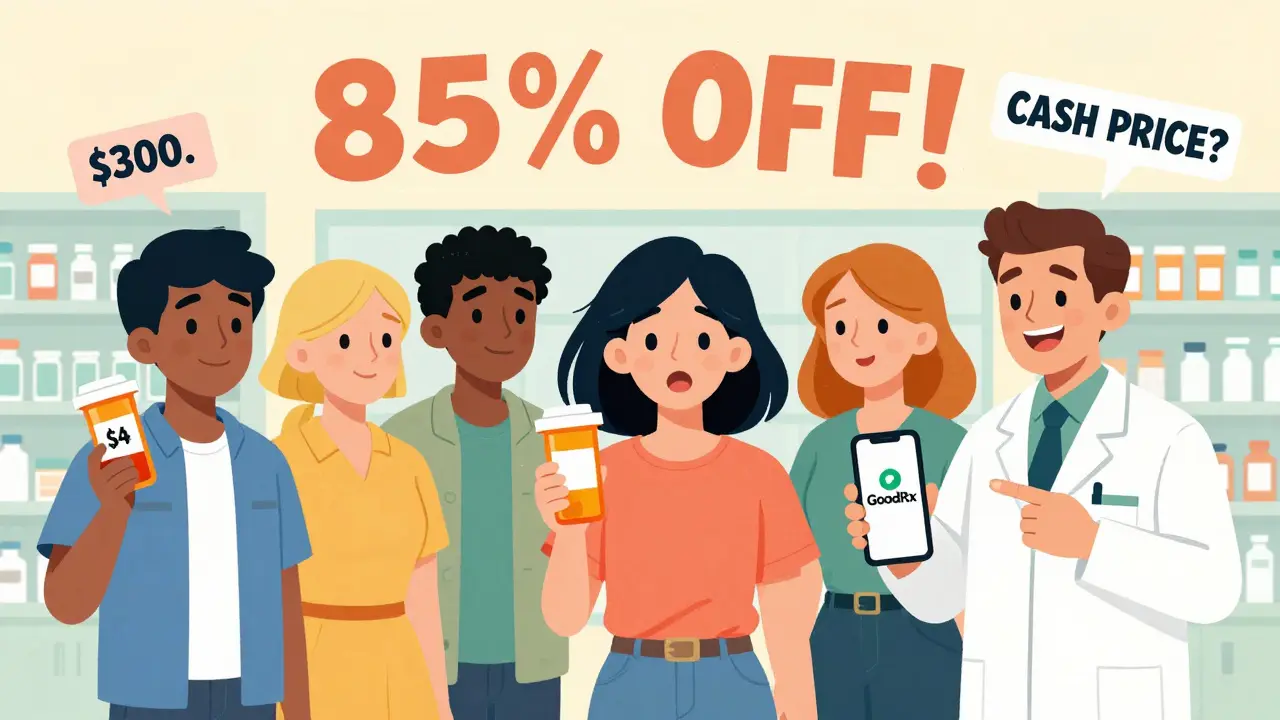
When you walk into a pharmacy to pick up your blood pressure pill or diabetes medication, you might assume the generic version is cheaper. But here’s the truth: generic drug prices aren’t always low-unless there’s real competition. That’s where price wars come in.
What Exactly Is a Generic Drug Price War?
A generic drug price war happens when multiple companies start making the same off-patent medicine. Once a brand-name drug’s patent expires, other manufacturers can legally copy it. They don’t need to run expensive clinical trials. All they need is proof that their version works the same. That’s called an ANDA-Abbreviated New Drug Application. The FDA approves these fast. And once a few companies jump in, prices start dropping. Fast.With just one generic maker, the price might be 70% lower than the brand. But with four or more? It can plunge 85% or more. The FDA found that when six or more companies sell the same generic, prices drop over 95% compared to the original brand. That’s not a small discount. That’s life-changing for people on chronic meds like metformin, lisinopril, or atorvastatin.
Why Don’t All Consumers See These Savings?
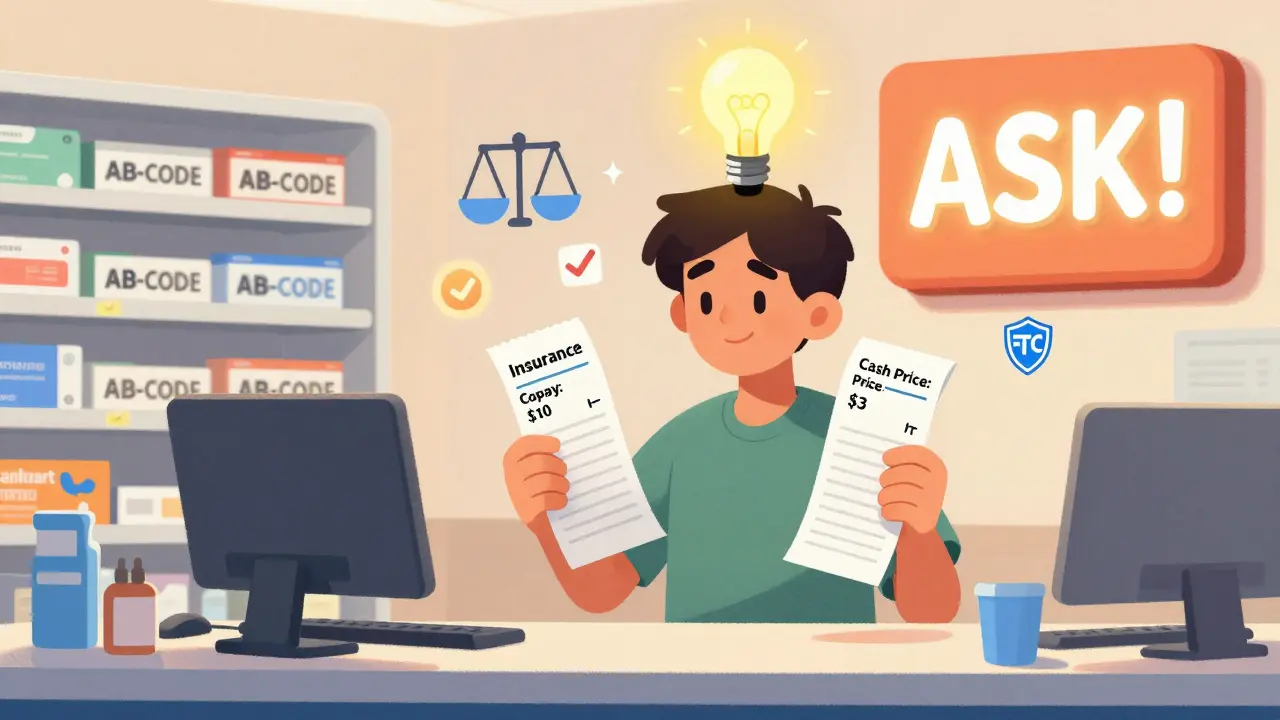
Here’s the twist: even when prices drop, you might still pay too much. Why? Because the system isn’t built to pass savings directly to you. Pharmacy Benefit Managers (PBMs) sit between drug makers, insurers, and pharmacies. They negotiate prices, but they don’t always pass the savings along.PBMs use tricks like spread pricing-charging your insurer more than they pay the pharmacy, pocketing the difference. Or copay clawbacks-making you pay a high copay even when the cash price is lower. In some cases, your $10 copay for a generic could be higher than the actual cash price of $3. But your pharmacist can’t tell you that. Until recently, gag clauses legally stopped them from speaking up.
Consumer Reports found 42% of people didn’t know they could pay less by skipping insurance and paying cash. That’s not your fault. It’s a broken system.
Who Really Benefits From Generic Price Wars?
The big winners? Insurance companies and pharmacy chains. Generic drugs have a 42.7% gross margin for pharmacies-way higher than the 3.5% on brand-name drugs. That’s why pharmacies push generics. But that doesn’t mean you’re getting the discount.Take insulin. Even though biosimilars exist, prices barely dropped because only two companies make them. On the flip side, drugs like metformin have over 20 manufacturers. You can get a 90-day supply for $4 at Walmart. That’s the power of competition.
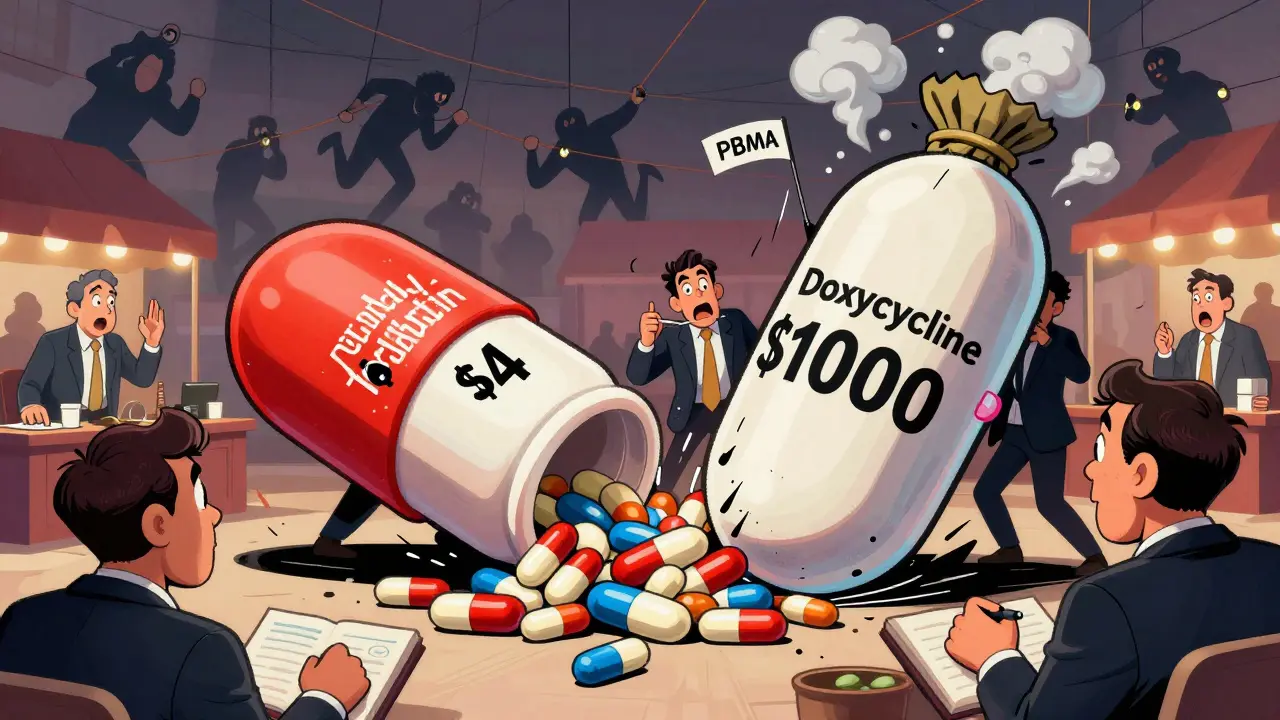
But here’s the dark side: when prices drop too low, companies stop making the drug. They can’t make a profit. That’s why 30% of generic shortages happen in markets with four or more competitors. The price war kills the market. The FDA says 24% of generic drugs saw price hikes between 2018 and 2022-not because of inflation, but because competitors disappeared.
How to Actually Save Money on Generic Drugs
You can’t fix the system. But you can outsmart it. Here’s how:- Ask for the cash price. Always. Even if you have insurance. In 28% of cases, the cash price is lower than your copay. That’s not a myth. It’s data from the USC Schaeffer Center.
- Use GoodRx or SingleCare. These apps show real-time prices at nearby pharmacies. One study found price differences of over 300% for the same generic drug between chains.
- Check for therapeutic equivalence. Look for the AB code on the label. That means the FDA says it’s as good as the brand. No need to pay extra for a name you recognize.
- Buy in bulk. If you’re on a daily med, get a 90-day supply. Many pharmacies offer discounts for larger quantities.
- Know your formulary. Insurance plans favor certain generics. If your plan covers a cheaper version, ask your doctor to switch you.
It takes 10 to 15 minutes per prescription to do this right. But if you’re on five meds a year? That’s an hour. And you could save hundreds-or even thousands-over time.
Why the U.S. System Falls Short
Compare this to Europe. In countries like Germany or the UK, the government negotiates prices directly. When multiple generics enter, prices drop fast-and stay low. No PBMs. No middlemen. No tricks.In the U.S., five companies control over 60% of the generic market. Teva, Viatris, Sandoz, Amneal, Aurobindo. That’s not competition. That’s an oligopoly. When only a few players control supply, they can quietly raise prices. That’s what happened with doxycycline and allopurinol. Prices spiked 1,000% overnight. Not because of cost. Because of control.
The FDA approved 1,010 generic drugs in 2023-up from 748 the year before. That’s good news. But if those new entrants get squeezed out by low prices or anticompetitive behavior, the savings vanish.
What’s Changing? What’s Next?
There’s momentum for change. The 2022 Inflation Reduction Act lets Medicare negotiate some drug prices. The 2023 Pharmacy Benefit Manager Transparency Act aims to ban spread pricing. The FTC just released a report calling for pass-through pricing-where every penny saved by competition goes directly to the patient.Amazon Pharmacy, CVS, and Walmart are starting to offer $0 copays on select generics. That’s real progress. But it’s patchy. It depends on your location, your plan, your pharmacy.
The Congressional Budget Office estimates that fixing the system could save Medicare Part D $15 billion a year. That’s not just about government budgets. It’s about people choosing between insulin and rent.
The Bottom Line
Generic drug price wars are real. And they work-when competition is fierce and the system doesn’t get in the way. But if you’re waiting for the market to save you, you’ll be disappointed.Your power isn’t in waiting for reform. It’s in asking questions. Checking prices. Switching pharmacies. Demanding transparency. You don’t need to be an expert. You just need to be curious.
That $4 metformin? It exists. That $300 EpiPen? It shouldn’t. The difference isn’t science. It’s structure. And you can change how you interact with it.
Start today. Ask your pharmacist the cash price. Compare it to GoodRx. Pay the lower one. Do that once, and you’ll never go back to paying what you’re told.
doug b
Just asked my pharmacist for the cash price on my metformin. $3.99. My copay was $15. I switched. Done. You don’t need a degree to save money-you just need to ask.
Mel MJPS
This hit me right in the feels. I’m on three generics and never knew I could pay less cash. I felt so stupid for just accepting what the system told me. Thanks for the wake-up call. I’m downloading GoodRx tonight.
Jess Bevis
Walmart $4 metformin. That’s the American dream. Not the flag. Not the anthem. The pill.
Howard Esakov
Of course the system is rigged. PBMs are just Wall Street vampires in lab coats. They don’t care if you die. They care if your copay exceeds their profit margin. And you’re still surprised? 😏
Rhiannon Bosse
Wait… so the FDA approves generics but the same 5 companies control 60% of the market? And you think this is coincidence? Nah. It’s a cartel. The government lets them do it. They’re all in bed together. I told you this was coming. #PharmaConspiracy
Jeffrey Carroll
While the structural issues are deeply concerning, I believe the most impactful step remains individual agency. The data presented by the USC Schaeffer Center is compelling, and the actionable steps outlined-cash pricing, GoodRx, therapeutic equivalence-are not merely suggestions but essential practices for financial stewardship. One must approach healthcare not as a passive recipient but as an informed participant.
Kevin Kennett
Bro. You don’t need to be a genius. Just go to GoodRx. Type in your drug. See the lowest price. Walk in. Pay cash. That’s it. No forms. No insurance drama. No guilt. Do it once. Then do it again. You’ll wonder why you ever paid more.
Phil Davis
So let me get this straight. The system is designed to make you pay more even when the drug costs $3… and we’re supposed to be grateful that Walmart sells it for $4? Brilliant. Let’s all start a support group: ‘I paid $15 for a $3 pill and all I got was this lousy guilt.’
Rose Palmer
The economic inefficiencies inherent in the current pharmaceutical distribution model necessitate systemic reform. The absence of transparent pass-through pricing mechanisms fundamentally undermines consumer welfare. Legislative initiatives such as the Pharmacy Benefit Manager Transparency Act represent a necessary, albeit insufficient, corrective measure.
Irebami Soyinka
USA still got the best system in the world? 😂😂😂 I come from Nigeria, we pay $0.50 for metformin. No insurance. No apps. Just pharmacy. You people pay $15 for a pill that costs $3? And you still say you’re free? 🤡🤡🤡
Mindee Coulter
Just tried GoodRx for my lisinopril. Cash price $2.49. Copay was $12. I cried. Not because I was sad. Because I was angry. And then I paid the $2.49. And I felt powerful.
Chris Urdilas
They’re not trying to fix it. They’re trying to make you think you’re fixing it. Amazon Pharmacy offering $0 copays? Cool. But only on 3 drugs. And only if you’re in a zip code they like. This isn’t reform. It’s marketing with a conscience.
Brittany Fiddes
Europe doesn’t have this problem because they don’t let greedy corporations run medicine. Here? We have a market where the only thing more expensive than the drugs is the illusion of choice. I’m not surprised. We’ve turned healthcare into a horror movie with a 401(k) soundtrack.
John Rose
One thing I’m curious about: if prices drop so drastically with 6+ manufacturers, why don’t more companies enter the market? Is it regulatory hurdles? Capital requirements? Or is it because the big players buy out the small ones before they even launch? Just wondering.
matthew martin
My grandma used to say, ‘If you don’t ask, you don’t get.’ She never had insurance. She paid cash. She knew the pharmacy owner. She got her pills for $1. We forgot how to do that. We let the system take over. Time to remember.