

Imagine your body acting like a sponge that simply refuses to stop soaking up iron. For most of us, the body tightly regulates how much iron it absorbs from food. But for people with Hemochromatosis is a genetic condition where the body absorbs too much dietary iron, leading to a toxic buildup in vital organs like the liver, heart, and pancreas. This isn't just a minor imbalance; if left unchecked, the excess iron acts like slow-acting poison, causing permanent scarring and organ failure. The good news? If caught early, it is one of the most treatable genetic disorders in existence.
The Genetic Glitch: Why Iron Piles Up
At its core, this condition is usually about a broken switch. Most cases are caused by a mutation in the HFE Gene, specifically the C282Y mutation. This gene is responsible for regulating a hormone called Hepcidin, which is produced in the liver. Think of hepcidin as the "gatekeeper" that tells your gut to stop absorbing iron when you have enough.
When the HFE gene is mutated, hepcidin levels drop. Without that gatekeeper, your enterocytes (gut cells) keep pumping iron into your bloodstream regardless of how much you already have. Over decades, iron stores can climb from a normal 1 gram to over 5 grams. Because the body has no natural way to excrete excess iron, it gets stored in the tissues of your organs, leading to oxidative stress and cell death.
Spotting the Warning Signs
The tricky part about iron overload is that it doesn't happen overnight. It's a slow burn. Because women lose iron through menstruation, they often don't show symptoms until after menopause. Men typically start noticing issues between their 30s and 50s. The earliest signs are often so vague that doctors might mistake them for aging or burnout.
- Profound Fatigue: About 74% of patients report a crushing tiredness that doesn't go away with sleep.
- Joint Pain: Often felt in the knuckles (metacarpophalangeal joints) and knees, affecting roughly 65% of patients.
- Hormonal Shifts: Low libido or erectile dysfunction occurs in about 54% of men due to iron damaging the pituitary gland.
As the iron buildup worsens, more distinct "classic" symptoms appear. Some people develop a bronze or slate-gray tint to their skin. Others may develop "bronze diabetes," which happens when iron destroys the beta cells in the pancreas, making it impossible to regulate blood sugar.
How Doctors Diagnose Iron Overload
You can't feel iron building up in your liver, so blood tests are the first line of defense. Doctors look for two primary markers: Serum Ferritin, which measures stored iron, and Transferrin Saturation, which shows how much iron is currently circulating in the blood.
A red flag is usually raised if transferrin saturation is above 45%. For men, a ferritin level over 300 ng/mL is concerning, while for women, the threshold is typically 200 ng/mL. However, the real danger zone is when ferritin exceeds 1,000 ng/mL; at this level, there is a 50-75% risk that the liver has already developed cirrhosis.
| Feature | Hereditary Hemochromatosis | Secondary Iron Overload |
|---|---|---|
| Primary Cause | HFE Gene Mutation | Frequent Blood Transfusions / Disease |
| Transferrin Saturation | High (>45%) | Often Normal or Low |
| Onset | Slow (Decades) | Variable / Rapid |
| Common Examples | C282Y Homozygosity | Sickle Cell, Thalassemia |

The Gold Standard: Phlebotomy Treatment
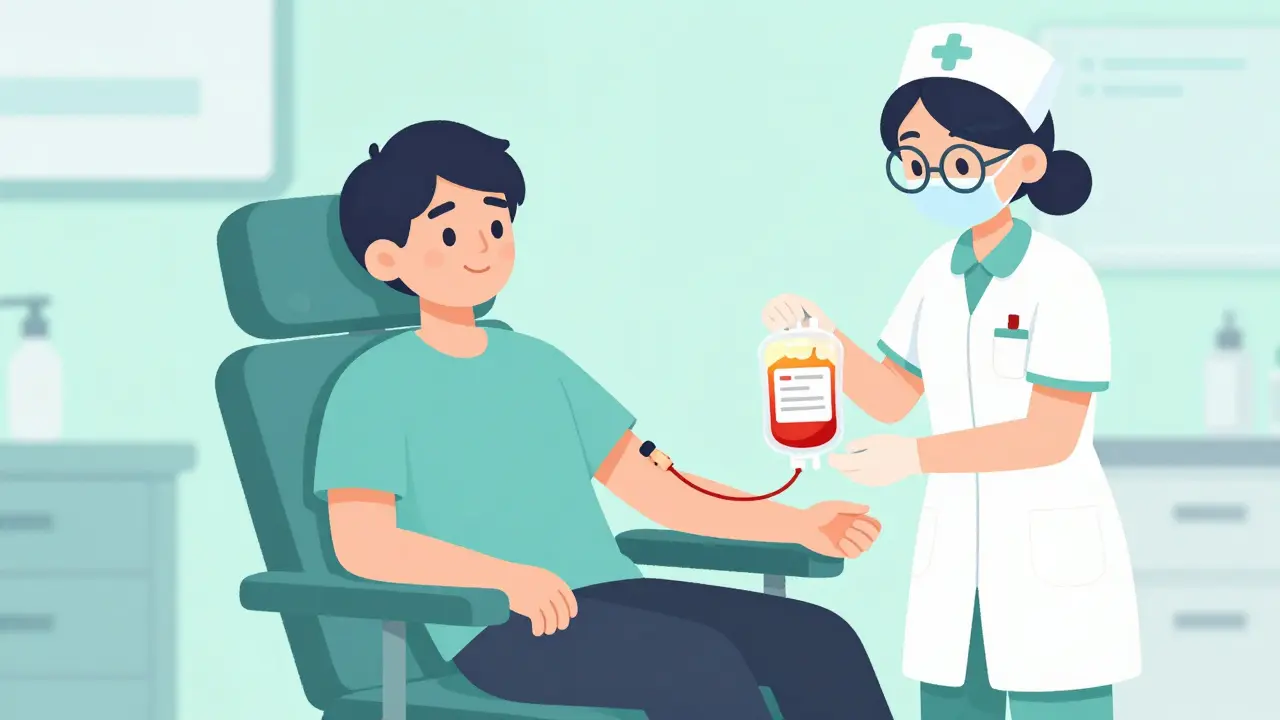
The most effective way to get rid of excess iron is surprisingly simple: take the iron out via the blood. Phlebotomy is the process of removing blood from a vein, similar to donating blood. Since most of the body's iron is stored in hemoglobin, removing blood forces the body to pull iron out of the organs to make new red blood cells.
Treatment usually happens in two distinct phases:
- The Induction Phase: This is the "aggressive" stage. Patients typically undergo phlebotomy once a week, removing about 450-500 mL of blood each time. This continues until serum ferritin drops to around 50 ng/mL. For someone severely overloaded, this might require 30 to 50 sessions over a year or more.
- The Maintenance Phase: Once iron levels are safe, the goal shifts to keeping them there. Most people need a "top-off" phlebotomy every few months-usually 4 to 6 times a year-to prevent the iron from creeping back up.
For the vast majority, this treatment is highly successful. When started before ferritin hits 1,000 ng/mL, phlebotomy can prevent nearly 99% of complications like liver cancer or cirrhosis. The only people who can't use this method are those with severe heart failure or advanced cirrhosis who develop anemia and can't tolerate blood loss.
Dealing with Treatment Fatigue and Challenges
While the clinical outcome is great, the lifestyle hit is real. Many patients suffer from "treatment fatigue." After a few years, the joint pain is gone and the energy is back, making the weekly or monthly trips to the clinic feel like a chore. However, stopping maintenance therapy is a gamble; iron will inevitably start accumulating again, and you can't feel it happening until the damage is already done.
Other practical hurdles include "difficult veins." Frequent phlebotomy can cause scarring (fibrosis) in the veins, making it harder for nurses to find a site. This is especially common in patients over 50. Some people also struggle to find clinics that offer therapeutic phlebotomy, as standard blood donation centers often have rules against accepting blood from people with hemochromatosis.
Beyond the Needle: Alternatives and Future Tech
If phlebotomy isn't an option, doctors use Iron Chelators. These are medications like deferoxamine or deferasirox that bind to iron and help the body flush it out through urine. They are significantly more expensive and often have more side effects than simple blood removal.
The future of treatment looks promising. Researchers are developing "hepcidin mimetics," which are drugs that act like the missing hormone to block iron absorption in the gut. In early trials, these have shown significant reductions in transferrin saturation. Additionally, the use of MRI R2* technology now allows doctors to see exactly how much iron is in the liver without needing a risky biopsy needle.
Can I just stop eating iron-rich foods?
Unfortunately, no. While avoiding iron supplements is crucial, dietary changes alone cannot treat hemochromatosis. The problem isn't how much iron you eat, but that your body cannot stop absorbing it. Once iron is stored in your organs, the only way to remove it is through phlebotomy or chelation.
Is hemochromatosis curable?
It is not curable because it is a genetic condition-you will always have the HFE mutation. However, it is highly manageable. With regular phlebotomy, most people live a completely normal lifespan with no organ damage.
Should my children be tested?
Yes. Hemochromatosis is autosomal recessive, meaning if both parents carry a mutation, children have a 25% chance of inheriting the condition. Cascade testing for first-degree relatives is strongly recommended to catch the disease before organ damage occurs.
How often do I actually need blood drawn?
It depends on your ferritin levels. During the induction phase, it's usually once a week. Once you hit the target (usually 50-100 ng/mL), you move to maintenance, which for most people is every 2 to 4 months.
Does this condition always lead to cirrhosis?
Not at all. Cirrhosis typically only occurs in people who are diagnosed very late, usually when their ferritin levels have already exceeded 1,000 ng/mL. Early diagnosis and treatment almost entirely eliminate the risk of cirrhosis.
Next Steps for Patients and Families
If you've just been diagnosed or are a family member of someone with iron overload, the priority is establishing a baseline. Start by requesting a full iron panel including serum ferritin and transferrin saturation. If you have the HFE mutation, don't panic-the treatment is straightforward and highly effective.
For those already in treatment, the biggest hurdle is consistency. Set a recurring calendar invite for your maintenance phlebotomy and keep a log of your ferritin levels to see the progress. If you find your veins are becoming difficult to access, talk to your hematologist about using a different site or exploring specialized access options to ensure you don't miss critical sessions.
Del Bourne
It's really important for families to understand the autosomal recessive nature of this condition. Since many people are asymptomatic carriers, a simple blood test for first-degree relatives can be a literal lifesaver. I always suggest starting with a transferrin saturation test because it's often more sensitive than ferritin alone for early detection.
Jay Vernon
Wow this is super helpful! 🌟 Thanks for sharing! 😊
Darius Prorok
Basically everyone knows that phlebotomy is the only way that actually works. The induction phase is just basic medicine. It's not that complicated if you just read the charts.
Brady Davis
Oh sure, because nothing says "luxury lifestyle" like spending your entire Tuesday getting drained like a Capri Sun. Truly a glamorous existence. 🙄
Ethan Davis
Funny how they push "blood removal" as the only fix. Ever wonder why the pharma companies aren't pushing a cure? They want you in that clinic forever. It's all a cycle to keep you dependent on the system. Total scam.
Grace Lottering
The government hides the real causes of iron spikes. It's in the water. Wake up.
Daniel Trezub
Actually, I think the focus on the C282Y mutation is a bit narrow. While it's common, you can't just ignore the H63D variant entirely even if it's less severe. It's a bit lazy to just stick to the main one, but hey, it's a start!
Jitesh Mohun
listen up you lot just get the tests done stop whining about the needles and save your liver before its too late its not that hard just go to the doctor
Toby Sirois
I've seen so many people fail because they lack the discipline to stick to the maintenance phase. It's honestly pathetic. You think you're "cured" because the pain stopped? That's just ignorance. You have to actually commit to the process or you're just waiting for your organs to fail. I've spent years studying this and the mental weakness of patients is always the biggest hurdle. Most people just don't have the will to manage a genetic fluke properly and then they act surprised when they hit 1,000 ferritin. It's basic biological maintenance and if you can't handle a needle every few months, you're basically inviting a liver transplant. Stop pretending it's a chore and start treating it like the life-or-death situation it actually is. The logic is simple: no blood draw, more iron, dead liver. End of story.
Michael Flückiger
You can totally do this!!! Just keep a positive attitude and the time will fly by!!!! It's such a blessing that we have this treatment available now!!! Stay strong everyone!!!