
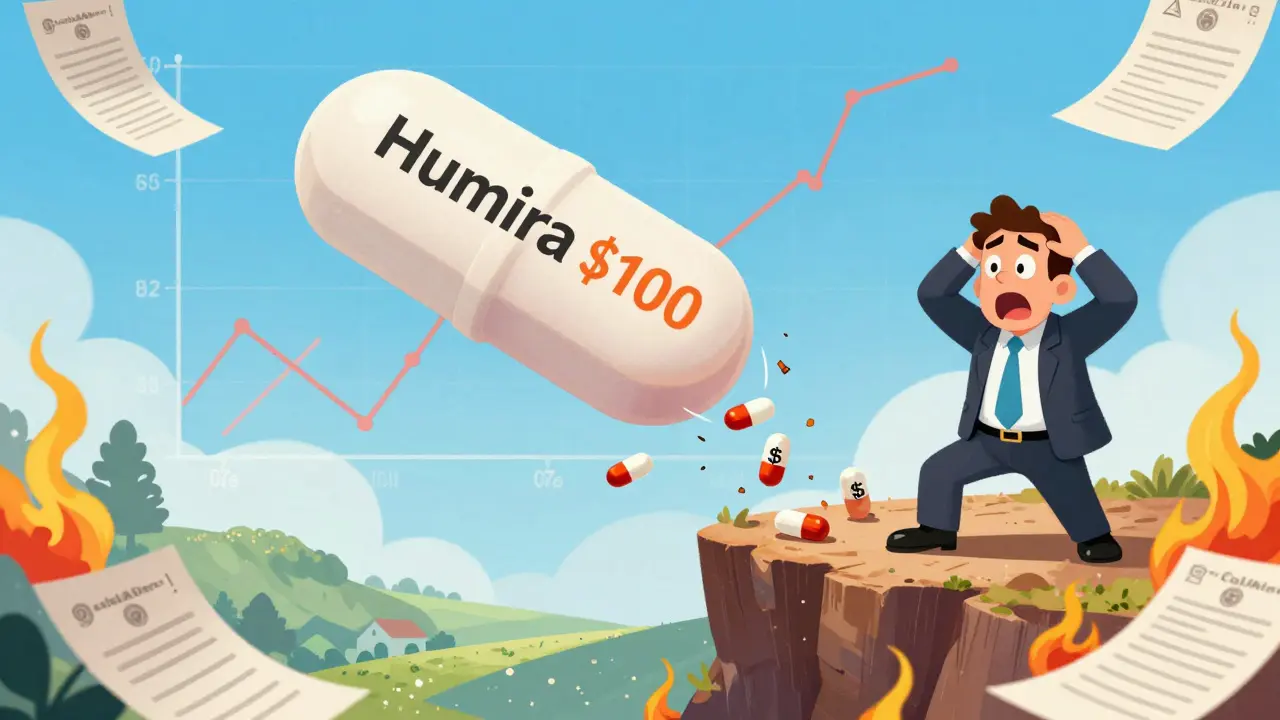
When a brand-name drug loses its patent, everything changes. The price doesn’t just drop-it plummets. Within a year, the same pill that cost $100 a month might be selling for $5. And that’s not a hypothetical. It’s happened with Humira, Lipitor, and dozens of other top-selling drugs. This isn’t a glitch in the system. It’s how it’s supposed to work. But for the companies that spent billions developing those drugs, it’s a financial earthquake.
The 90% Rule: Generics Dominate Prescriptions, Not Spending
In the U.S., about 90% of all prescriptions filled are for generic drugs. That sounds like a win for patients. And it is-mostly. But here’s the twist: generics make up only about 20% of total prescription drug spending. That means the other 80% comes from brand-name drugs, even though they’re prescribed far less often. Why? Because those brand drugs still carry high prices, especially when they’re new, have no competition, or are protected by legal tricks. The math is brutal for brand manufacturers. Once a patent expires, revenue can drop by 80 to 90% in the first year. That’s not a slow decline. It’s a cliff. And companies know it’s coming. That’s why they plan for it years in advance. Some spin off their generic divisions-like Novartis did with Sandoz in 2022. Others rush to launch their own generic version of the drug before competitors can. That’s called an “authorized generic.” It lets them keep some of the market share instead of watching it vanish.The Hatch-Waxman Act: The Deal That Changed Everything
The modern system for generics started in 1984 with the Hatch-Waxman Act. It was a compromise. Brand companies got extra patent time to make up for the years they spent getting FDA approval. In return, generic makers got a faster, cheaper path to market. They didn’t have to repeat expensive clinical trials. They just had to prove their drug worked the same way. That law created the foundation for today’s generic market. But it didn’t predict everything. For example, it didn’t stop brand companies from using “patent thickets”-filing dozens of minor patents on things like pill coatings or delivery methods-to delay generics. Or “product hopping,” where they tweak a drug slightly-say, change from a pill to a liquid-and get a new patent. These tactics push back generic entry by years. The Congressional Budget Office estimates ending these practices would save $1.1 billion over ten years.Price Drops: More Competitors = Lower Prices
Once a generic enters the market, prices start falling fast. With just two or three generic makers, prices can drop 20% within three years. Add five or six competitors? The price can crash even further. The FDA tracked 2,400 new generic drugs approved between 2018 and 2020. In every case, the moment multiple companies started selling the same drug, prices fell below the brand’s price-and kept dropping. The drop isn’t always smooth. Sometimes, if only one or two companies make a drug, prices stay high. That’s why consolidation in the generic industry is worrying. Between 2014 and 2016, nearly 100 generic manufacturers merged or were bought. Fewer players means less competition-and higher prices. It’s the opposite of what the system was designed for.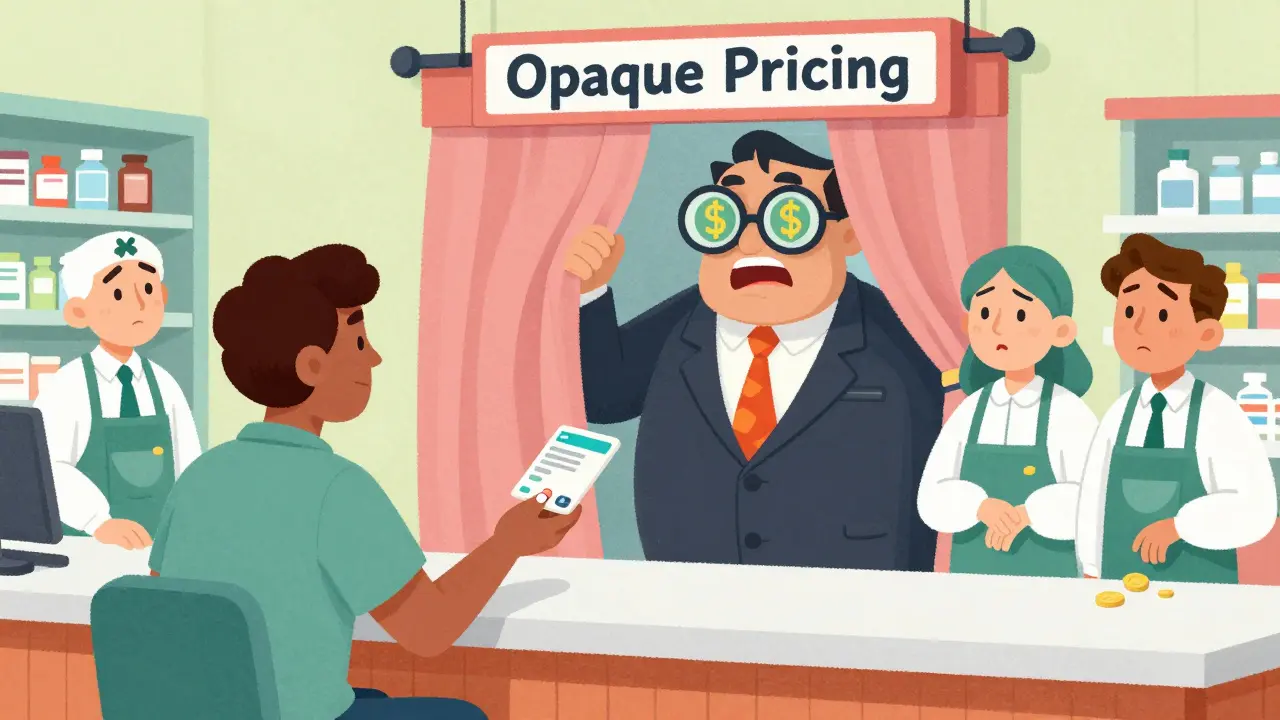
The Hidden Cost: PBMs and the Broken Middleman System
You’d think with generics costing 80-85% less, patients pay less. But that’s not always true. Pharmacy benefit managers (PBMs)-the middlemen between drug makers, insurers, and pharmacies-have complicated pricing systems that often hurt patients more than help them. PBMs negotiate rebates with drug makers, but those rebates aren’t always passed on to consumers. Instead, they inflate the list price. A patient might see a $10 copay for a generic, but the PBM keeps part of the rebate. Meanwhile, the pharmacy might be getting paid less than it costs to fill the prescription. That’s why some pharmacists on Reddit say they lose money on generics. And patients? They’re still paying more than they should. The Schaeffer Center at USC found patients pay 13-20% more for generics than they should because of these opaque practices. That’s billions in extra costs every year. It’s not the fault of the generic drug. It’s the system around it.Pay-for-Delay: The Secret Deals That Keep Prices High
One of the most controversial tactics is “pay-for-delay.” That’s when a brand company pays a generic maker to stay out of the market. It sounds illegal-and in many ways, it is. But it’s happened for decades. In 2023, a study in the Journal of Health Economics estimated these deals cost the U.S. system $12 billion a year, with $3 billion of that coming directly from patients’ pockets. These deals delay competition. And without competition, prices stay high. Congress has tried to ban them. A bipartisan bill could save $45 billion over ten years. But so far, big pharma has blocked them. Why? Because every month of delay means millions in extra revenue.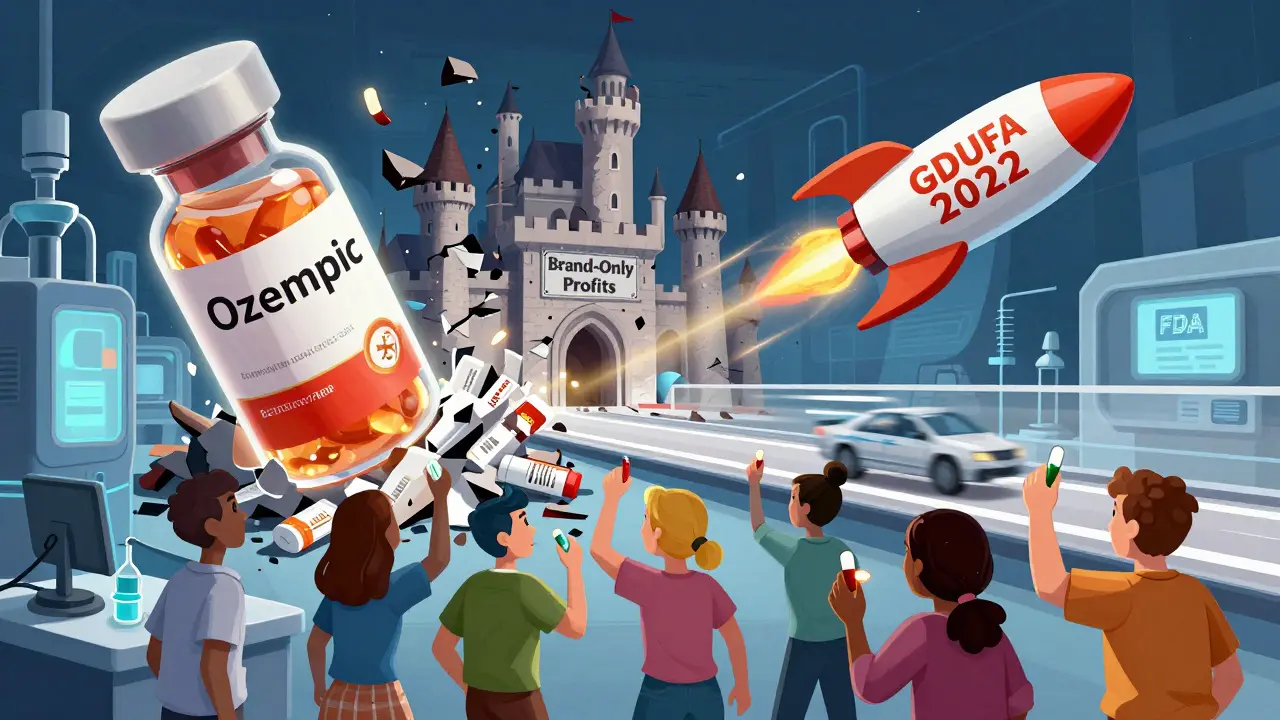
Aurora Daisy
Oh wow, a 90% drop in price? Must be nice to live in a world where capitalism actually works for patients instead of shareholders. Guess I’ll just wait for my insulin to become a commodity like toilet paper.
Paula Villete
Generics save billions? Yeah, if you ignore that your $3 pill still costs $15 because the PBM pocketed the rebate. The system isn’t broken-it’s designed this way. And no, I’m not mad, I’m just disappointed in humanity.
Georgia Brach
Let’s be real: if you think patent thickets are the real problem, you haven’t looked at the FDA’s backlog. The agency approves generics slower than a government website loads. The real villain isn’t Big Pharma-it’s bureaucratic inertia dressed up as regulation.
Steven Mayer
The Hatch-Waxman Act was a Faustian bargain. Brand companies got extended monopolies, generics got a backdoor-and now we’re stuck with a market where competition is legally obstructed by 17 patents on a pill’s coating color. This isn’t innovation. It’s legal engineering.
Katie Taylor
People act like generics are some kind of miracle. They’re not. They’re just the only thing standing between middle-class families and financial ruin. We need to treat drug access like a public utility-not a profit center. Period.
Payson Mattes
Did you know the FDA’s own inspectors found that 40% of generic drug manufacturing plants in India have sanitation violations? And yet we import 80% of our generics from there. Coincidence? Or is Big Pharma outsourcing quality control to avoid liability? Just saying.
niharika hardikar
The structural inequities inherent in pharmaceutical market dynamics are profoundly concerning. The regulatory arbitrage facilitated by the Hatch-Waxman Act, while ostensibly promoting competition, has engendered perverse incentives for patent evergreening and market manipulation by vertically integrated conglomerates. The resultant oligopolistic consolidation among generic manufacturers-particularly in the wake of post-2014 M&A activity-has demonstrably undermined the intended price-discovery mechanisms of a free market. Furthermore, the opacity of PBM rebate structures constitutes a form of latent consumer exploitation, wherein the nominal cost of therapeutics is systematically divorced from actual patient outlay. This is not market efficiency; it is regulatory capture masquerading as policy.
It is imperative that legislative reform targets the structural enablers of pay-for-delay agreements, mandates transparent rebate pass-throughs, and incentivizes manufacturing diversification to mitigate supply chain fragility. The current paradigm, while economically rational for shareholders, is ethically indefensible for patients who are forced to choose between medication and groceries.
Moreover, the conflation of innovation with blockbuster biologics obscures the fact that foundational therapeutics-antibiotics, antihypertensives, antidiabetics-are still largely derived from decades-old molecular scaffolds. The true measure of pharmaceutical progress is not the number of $100,000 gene therapies, but the accessibility of the $0.10 generic that keeps a diabetic alive.
The $400 billion cliff looming by 2028 is not a crisis-it is an opportunity to recalibrate the entire ecosystem. We must decouple drug pricing from R&D amortization and instead adopt a value-based, cost-plus reimbursement model anchored in public health outcomes, not corporate margins.
Until then, we are not patients. We are revenue streams.
Isaac Bonillo Alcaina
You people act like generics are a gift from the gods. They’re not. They’re the reason your doctor can’t prescribe you anything new-because the whole system is rigged to keep you on cheap, outdated pills while the real breakthroughs get locked behind patents and profit margins. You’re not saving money-you’re just being slowly poisoned by stale chemistry.
Joe Jeter
Generics don’t save money-they just shift the cost. You think your $5 pill is cheap? Try telling that to the pharmacist who gets paid $2 to fill it. Or the patient who gets billed $15 because the PBM jacked up the list price to cover the rebate they didn’t give you. The math doesn’t add up because the system isn’t meant to add up-it’s meant to look like it does.
siddharth tiwari
bro why do we even trust indian factories for our meds? i heard one got shut down for using sewage water to clean pills. and now we’re all on generic lipitor? lol. also pay for delay? duh. big pharma pays generic makers to not compete. its like paying your rival to not open a store next door. but its legal? wtf
Jeffrey Frye
the real issue is the FDA’s approval process is a joke. they approve generics faster than they can inspect the plants. and when a shortage hits? no one gets punished. just another 3-month wait while the whole country runs out of metformin. meanwhile, the same company that made the defective batch just got a new contract. capitalism, baby.
Sidra Khan
generics are great… until you get the one that makes you feel like a zombie. then you realize ‘bioequivalent’ doesn’t mean ‘identical’. also why do i have to pay $12 for a $3 pill? 🤡
Diana Alime
So let me get this straight: we let companies patent the color of a pill, pay rivals to stay off the market, and then blame patients for not understanding why their insulin costs more than their rent? And you wonder why people are angry? This isn’t healthcare. It’s a horror movie with a spreadsheet.