
When you walk into a pharmacy and pick up a generic version of your blood pressure pill, you’re probably thinking you saved money. And you did. But what you don’t see is the quiet, complex battle behind that lower price - a battle shaped by how many other companies are making the same drug, and why sometimes, even with ten competitors, prices don’t drop as much as they should.
The First Generic Entry: A Big Drop, But Not Always What It Seems
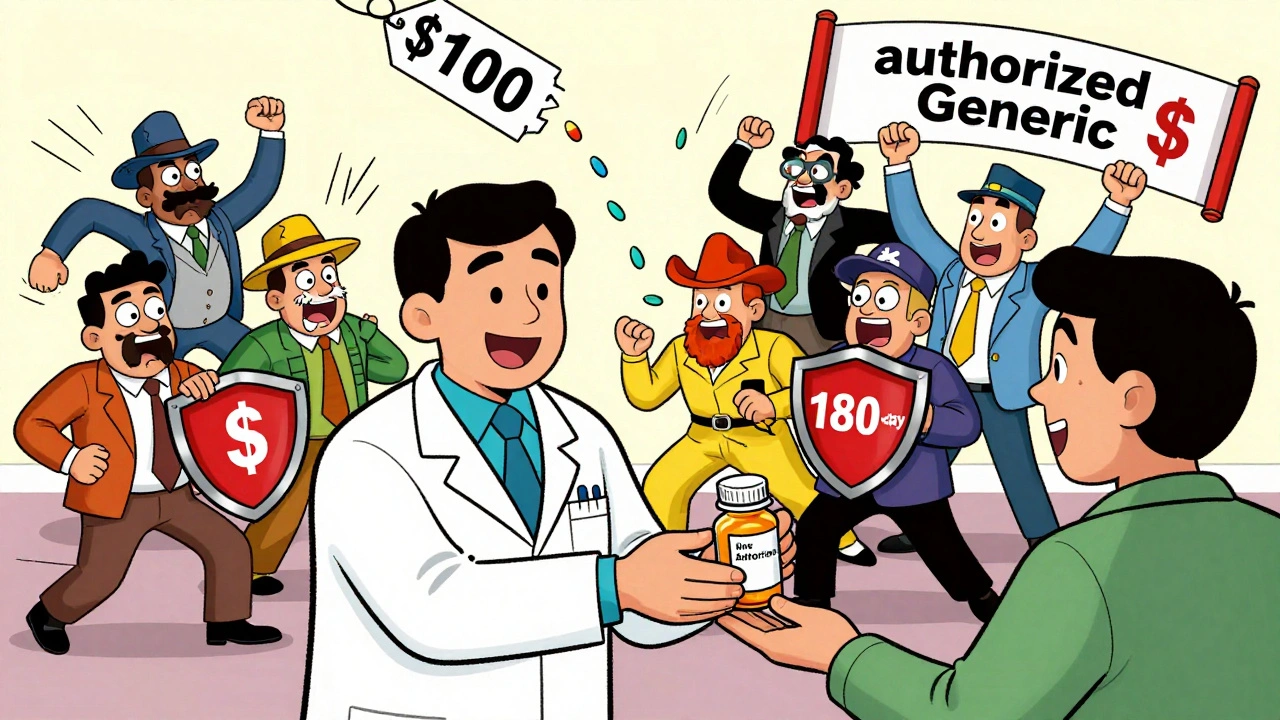
The moment the first generic version of a brand-name drug hits the market, prices usually plunge. In the U.S., that first generic can cut the price by 30% to 40% almost overnight. That’s because the original maker loses its monopoly. But here’s the twist: the first generic doesn’t just compete with the brand. It also gets 180 days of exclusive rights to sell without any other generics in the mix. That’s a huge advantage. In those six months, that single generic company captures about 80% of the market. The rest? The brand and a few scattered prescriptions. So even though there’s competition, it’s not really competition - it’s a winner-takes-most scenario.
More Competitors Should Mean Lower Prices… Right?
Logic says: more companies making the same drug = lower prices. And that’s mostly true. When two generics enter, prices drop another 15% on top of the first drop - down 54% from the brand’s original price. With six or more generics, prices fall by 95% for many drugs. That’s not a guess. It’s based on real data from the FDA, tracking what manufacturers actually charge hospitals and pharmacies.
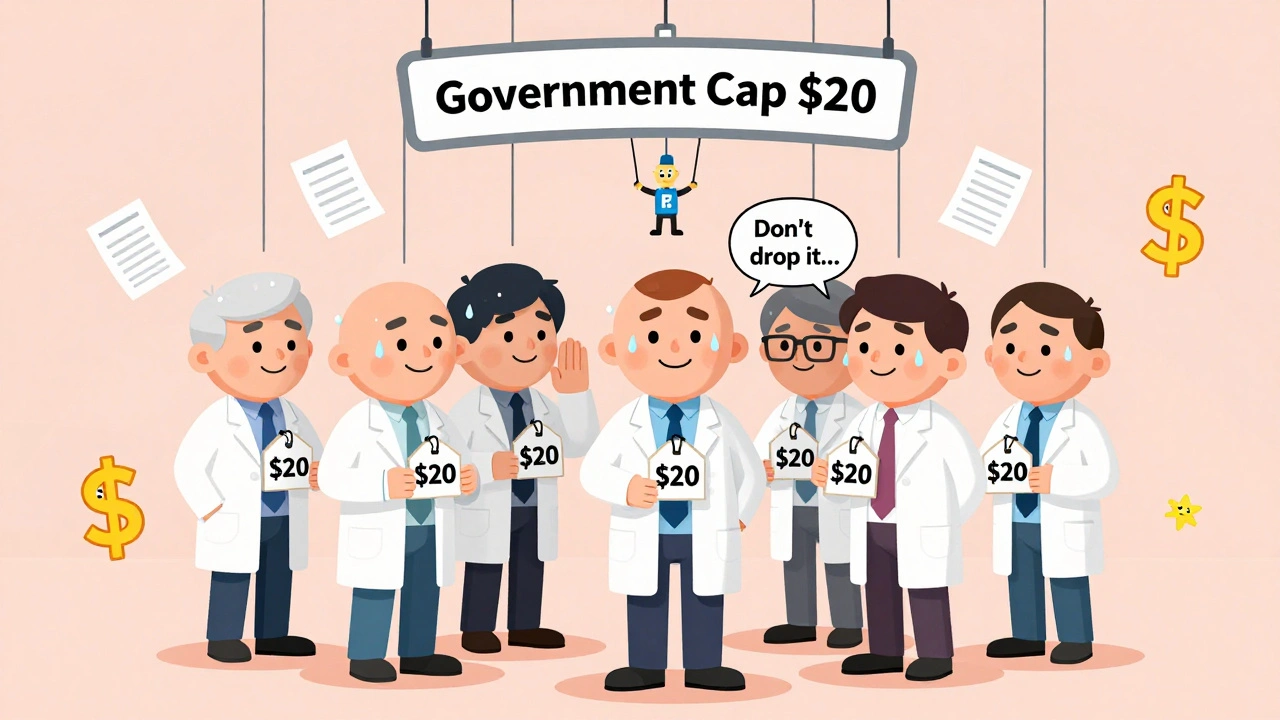
But here’s where things get messy. In some markets, like Portugal, even with five or six generic versions of the same statin drug, prices stay stubbornly high - right at the government-imposed price cap. Why? Because the companies aren’t really fighting each other. They’re quietly agreeing, through behavior, not contracts, not to undercut each other. Economists call this “mutual forbearance.” It’s not illegal. It’s just smart business in a regulated system. Each company knows if they drop their price, the others will follow, and everyone loses. So they all stay at the ceiling. The consumer doesn’t benefit. The system looks competitive. It isn’t.
Why Some Drugs Never See Real Competition
Not all drugs are created equal. A simple tablet of metformin? Easy to copy. A complex inhaler or injectable biologic? That’s a whole different story. Making a generic version of a complex drug isn’t just about matching the active ingredient. You have to prove it works the same way in the body - down to how the particles dissolve, how the drug is absorbed, even how the packaging affects stability. That’s called proving Q1, Q2, Q3 - quality attributes that regulators demand. It takes years and millions of dollars.
That’s why only the biggest generic manufacturers - the ones with deep pockets and advanced labs - can even try. In China, a 2023 study found that 70% of originator drugs had only one or two generic competitors, even years after patent expiry. Why? Because the rest couldn’t afford the hurdle. The market looks crowded on paper. In reality, it’s dominated by a handful of players.
Brand Companies Don’t Always Roll Over
You’d think once generics arrive, brand-name companies just fade away. But sometimes, they fight back - by raising prices. In the same Chinese study, 3 out of 27 brand drugs actually increased their prices after generics entered. How? They leaned on perception. Patients and doctors believed the brand was “better,” “more reliable,” or “safer.” So they kept prescribing it. And the brand company, losing market share but not revenue, raised prices to make up the difference. It’s a risky move, but it works when trust in the brand is strong.
And then there’s the authorized generic - a version made by the original brand company, sold under a different label. When a brand launches its own generic during the first 180-day exclusivity window, it crushes the first generic’s profits. But here’s the twist: if the authorized generic is made by a different company (not the brand), the original brand’s price ends up 22% higher than if they made it themselves. Why? Because they know the market is already flooded, so they don’t need to compete. They just sit back and charge more.
Who Really Controls the Market?
It’s not the pharmacy. It’s not even the doctor. It’s the Pharmacy Benefit Managers - PBMs. These middlemen negotiate drug prices for insurance companies. In 2017, they controlled 90% of all drug purchases in the U.S. That means they have enormous power to decide which generic gets picked - and at what price. If a PBM cuts a deal with one generic manufacturer, the others are left out. So even if ten generics exist, only one or two are actually sold in large volumes. The rest? They’re stuck on the shelf. The market looks competitive. The patient never sees it.
Complexity Protects Prices - Even With Many Competitors
Think of drug development like building a car. A basic sedan? Easy to copy. A hybrid with adaptive cruise control and a custom battery system? Not so much. The same goes for drugs. Newer formulations - extended-release pills, patches, inhalers, injectables - are harder to replicate. That’s why you’ll see dozens of generic versions of aspirin, but only one or two for a complex diabetes drug like semaglutide. The regulatory bar is high. The cost is high. The risk is high. So fewer companies enter. And prices stay higher than they should.
Patent Games and Pay-for-Delay
Brand companies don’t wait for generics to show up. They file dozens of patents - not always on the drug itself, but on the way it’s packaged, the timing of release, the color of the pill. These are called “evergreening” tactics. Each patent creates a new legal barrier. Generic makers have to challenge each one in court. Some settle. Some pay. That’s “pay-for-delay”: the brand pays the generic company to stay off the market for a few more months. It’s legal. It’s controversial. And it delays real competition. In 2023, DrugPatentWatch found that over 30% of generic approvals were delayed by these settlements, even when the patents were weak.
What Happens When the Government Steps In?
The Inflation Reduction Act of 2022 changed the game. For the first time, Medicare can negotiate prices for certain high-cost brand drugs. The result? Those drugs now have a “Maximum Fair Price.” That sounds good - until you realize it’s a ceiling, not a floor. Generic makers now have to ask: is it worth investing millions to make a generic if the brand’s price is already capped at $100 a month? Maybe not. That could mean fewer generics entering the market. Less competition. Less pressure to drop prices. And that’s the opposite of what the system was built for.
Supply Chain Resilience: The Hidden Benefit of Real Competition
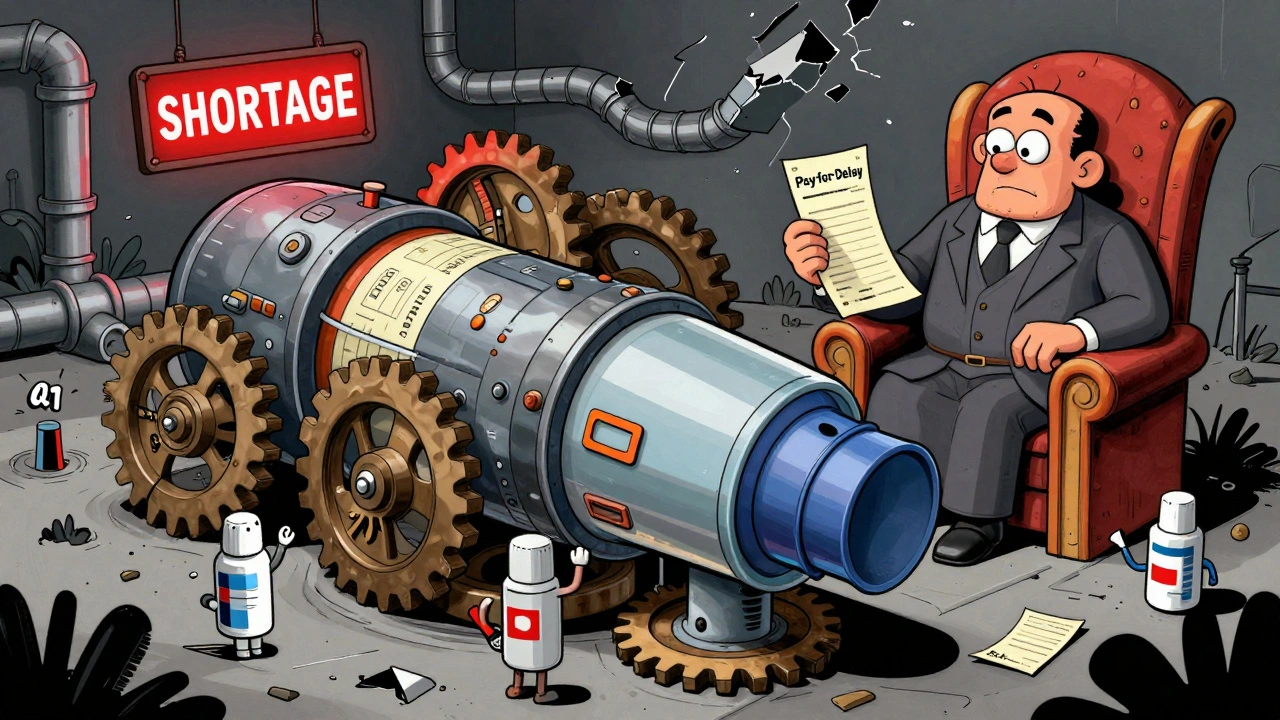
There’s one thing that gets overlooked: shortages. When only one company makes a generic drug - say, a heart medication - and that company has a factory fire, or a quality issue, or just decides to stop making it - the drug disappears. Patients panic. Hospitals scramble. But when three or more companies make the same drug, the system can absorb a shock. FDA data from 2018 to 2022 showed that drugs with three or more manufacturers had 67% fewer shortages than single-source generics. Real competition doesn’t just lower prices. It saves lives by keeping drugs available.
Global Differences: Why the U.S. Isn’t Like Europe
In the U.S., prices are set by the market - mostly by PBMs and manufacturers negotiating behind closed doors. In Europe, governments set prices directly. In countries like Germany or the UK, they use reference pricing: if Drug X costs $20 in France, it can’t cost more than $25 in Germany. That forces generics to compete on price from day one. No pay-for-delay. No authorized generics. Just a race to the bottom. That’s why European generic prices often fall faster and lower than in the U.S. But it also means less profit for manufacturers - which can lead to fewer companies willing to enter the market long-term.
What’s Next? Biosimilars and Digital Tools
The next wave of competition isn’t going to be about aspirin or metformin. It’s going to be about biologics - complex drugs made from living cells. These are the new cancer treatments, autoimmune drugs, and hormone therapies. They’re expensive. They’re hard to copy. And right now, the price drop for biosimilars is only about 15% to 30%, not the 90% we see with simple generics. The FDA says we’re entering a new frontier. Digital tools - AI for predicting drug behavior, blockchain for tracking supply chains - might help lower the cost of making biosimilars. But we’re still years away from that scale.
For now, the message is clear: having multiple generic competitors sounds great. But the reality is shaped by patents, regulation, corporate strategy, and who controls the money. More competitors don’t always mean lower prices. Real competition - the kind that lowers costs and keeps drugs available - needs more than just approvals. It needs transparency, fair rules, and a system that rewards actual competition, not clever loopholes.
Audrey Crothers
OMG this is so eye-opening!! I had no idea PBMs controlled 90% of drug purchases. I just thought pharmacies picked the cheapest option. 😱 This explains why my copay is still $40 for a $2 pill. Someone needs to expose this system.
Laura Weemering
It's not about competition-it's about structural capture. The pharmaceutical-industrial complex has engineered a pseudo-market where price elasticity is surgically neutered through regulatory capture, PBM rent-seeking, and patent thickets that function as de facto monopolies. The illusion of choice is the most insidious form of control. We're not consumers-we're data points in a cost-minimization algorithm.
Ashley Skipp
Everyone complains about prices but nobody wants to pay more for quality. If you want cheap pills get them from India. Problem solved. End of story.
nikki yamashita
This is why we need better transparency! 🙌 No more secret deals. Let patients see what PBMs are negotiating. If we knew the real prices, we could push back. Change is possible!!
Adam Everitt
the whole thing is kinda wild tbh. i always thought more generics = cheaper. turns out its just a game of musical chairs with lawyers and lobbyists. also why do they even make pills different colors???
wendy b
One must recognize that the American healthcare system is not designed to serve the public good but to maximize shareholder value. The very notion that a life-saving medication should be subject to market forces is a neoliberal fallacy that has resulted in preventable mortality on a mass scale. The Inflation Reduction Act is a tepid, compromised gesture that fails to address the fundamental pathology of pharmaceutical capitalism.
Rob Purvis
This is such an important breakdown. I never realized how much complexity in drug formulation blocks competition. And the fact that some brands raise prices after generics enter? That’s wild. But I’m glad you mentioned supply chain resilience-that’s the real win of multiple manufacturers. If one factory goes down, others can pick up the slack. That’s not just economics-it’s public safety.
Levi Cooper
Why are we letting foreigners make our meds? China controls 80% of the API supply. This isn't healthcare-it's national security failure. We need to bring manufacturing back to America. No more relying on regimes that don't care if Americans die.
sandeep sanigarapu
Interesting analysis. In India, generics are cheap because government caps prices and allows multiple manufacturers. But quality control is inconsistent. Sometimes the medicine works, sometimes it doesn't. Competition is good, but only if standards are enforced.
Robert Webb
I’ve been thinking about this for years, and honestly, the most overlooked part is the psychological trust in brand names. I’ve seen doctors prescribe brand-name insulin even when the generic is identical-because they grew up being told the brand was ‘better.’ It’s not about science anymore, it’s about habit, marketing, and fear. And patients? They’re conditioned to believe more expensive = safer. That’s the real barrier to real competition-not patents or PBMs, but perception. We need public education campaigns to reframe how people think about generics. Not just ‘cheaper,’ but ‘equally effective.’
Donna Anderson
wait so the brand makes its own generic?? that’s so sneaky 😤 i feel like i’ve been scammed my whole life. why do they even need a separate label??
Stacy Foster
THIS IS A COVER-UP. The FDA, PBMs, and Big Pharma are in a secret cabal. They don’t want you to know that the ‘generic’ you’re taking might be made in a factory with rats and no quality control. The real reason prices don’t drop? Because they’re all lying to you. And the Inflation Reduction Act? Just a distraction so you stop asking questions. Wake up.
Reshma Sinha
Very insightful! In India, biosimilars are emerging fast because of government incentives and lower R&D costs. But regulatory delays still exist. The real bottleneck isn’t science-it’s bureaucracy. We need global harmonization of biosimilar approval standards to accelerate access.
Lawrence Armstrong
Good breakdown! 🙌 I work in pharma logistics and can confirm: when there are 3+ makers of a drug, shortages drop dramatically. One plant had a power outage last year-no problem, two others picked up the slack. That’s the real value of competition. Also, AI is already helping predict dissolution profiles for generics. We’re getting closer to cutting costs. 👍