
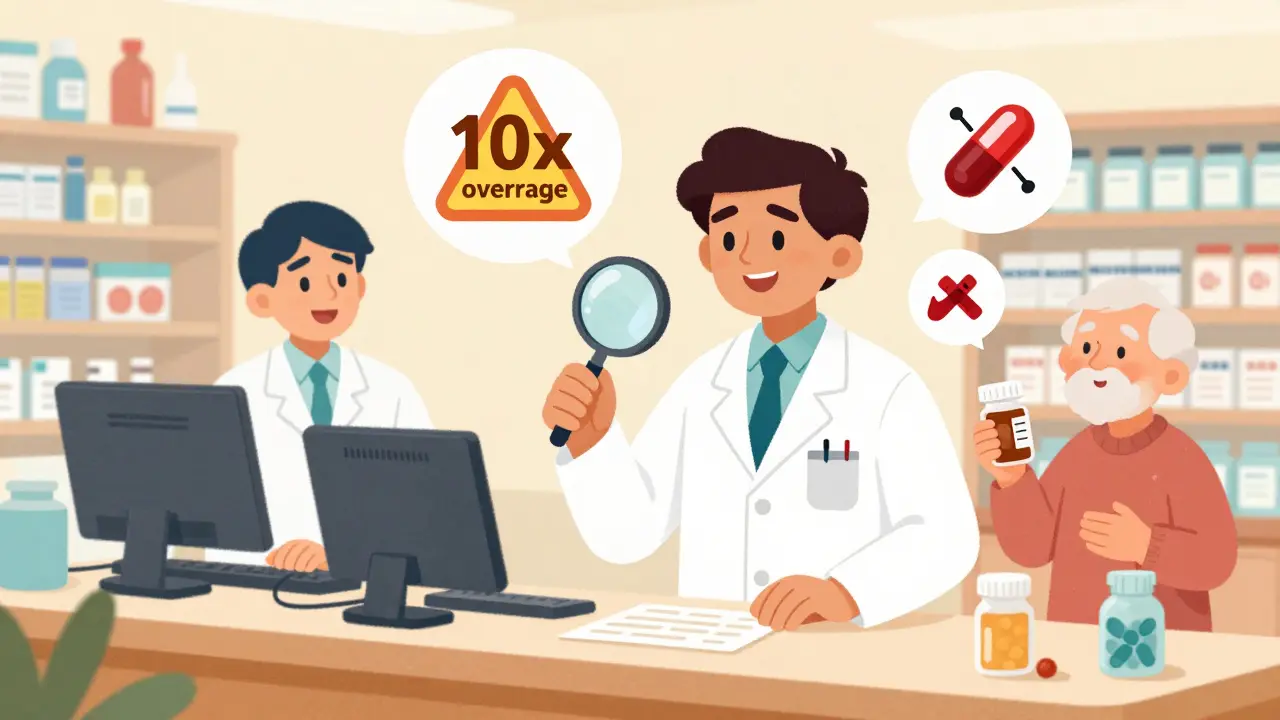
Every year, over a million people in the U.S. are harmed by medication errors. Many of these mistakes never reach patients-not because luck was on their side, but because a pharmacist caught them. This isn’t rare. It’s routine. Pharmacists are the final, critical checkpoint before a prescription becomes medicine in a patient’s hands. And they’re stopping errors that doctors, nurses, and even automated systems miss.
The Final Line of Defense
Think of the medication journey: a doctor writes a prescription, it’s sent electronically or on paper, a pharmacy technician inputs it, the system flags potential issues, and then it lands on the pharmacist’s counter. That’s when the real safety work begins. Pharmacists don’t just count pills. They verify the right drug, the right dose, the right patient, and the right instructions. They check for interactions with other meds the patient is already taking. They look at kidney and liver function. They ask: Is this really what the patient needs? According to the Agency for Healthcare Research and Quality, pharmacists prevent about 215,000 dangerous errors each year in the U.S. alone. That’s one error caught every two and a half minutes, around the clock. And it’s not just about typos or wrong numbers. It’s about catching a 10-fold overdose on warfarin, spotting a dangerous combo of blood thinners and NSAIDs, or realizing a child’s dose was written for an adult. These aren’t hypotheticals. Real patients have survived because a pharmacist paused, looked closer, and asked, “Wait-this doesn’t add up.”How Pharmacists Catch Errors
Pharmacists don’t rely on gut feeling. They use systems built over decades to catch mistakes. The first tool? Electronic drug utilization reviews (DUR). These are automated alerts that pop up when a prescription might interact with another drug, duplicate therapy, or conflict with a known allergy. But here’s the catch: these systems flag 85-90% of potential problems. The rest? That’s where the pharmacist steps in. For example, a patient on warfarin gets a new prescription for an antibiotic. The system flags a possible interaction. But not all interactions are equal. Some are mild. Others can cause internal bleeding. A pharmacist knows which ones matter. They pull up the patient’s full history: what they’re taking, what they’ve taken before, their lab values, even what they eat. They don’t just read the screen. They think like a clinician. In hospitals, pharmacists do medication reconciliation every time a patient is admitted or discharged. That means comparing the list of meds the patient says they take with what the hospital thinks they’re on. On average, they find 2.3 errors per patient. One common mistake? A patient says they take “aspirin,” but the chart lists “aspirin 81 mg,” and the discharge summary says “aspirin 325 mg.” That’s a 4x overdose. Pharmacists catch it. In community pharmacies, technicians often do the first review. They check the National Drug Code against the prescription, look for confusing names like “Hydralazine” vs. “Hydroxyzine,” and flag illegible handwriting. Then the pharmacist reviews it again. This double-check system catches 78% of errors before the patient walks out the door.Technology Helps, But It’s Not Enough
You’d think computers would fix everything. They help-big time. Electronic prescribing cuts errors from messy handwriting by 95%. Barcode scanning reduces dispensing mistakes by 51%. Automated cabinets cut errors by 38%. But technology has blind spots. A 2021 study found that computerized order systems alone reduce errors by 17-25%. Add a pharmacist, and that jumps to 45-65%. Why? Because machines can’t understand context. They don’t know if a patient is 89 and frail, or if they’re on dialysis, or if they can’t afford the medication and might skip doses. Only a human can ask the right questions. Even worse, pharmacists face alert fatigue. Clinical systems throw up so many warnings-many of them low-risk-that pharmacists start ignoring them. One study found they override 49% of drug interaction alerts because they’ve seen them before and they don’t matter. Newer systems are smarter now. They use tiered alerts: red for life-threatening, yellow for moderate, green for minor. That cuts override rates to 28%.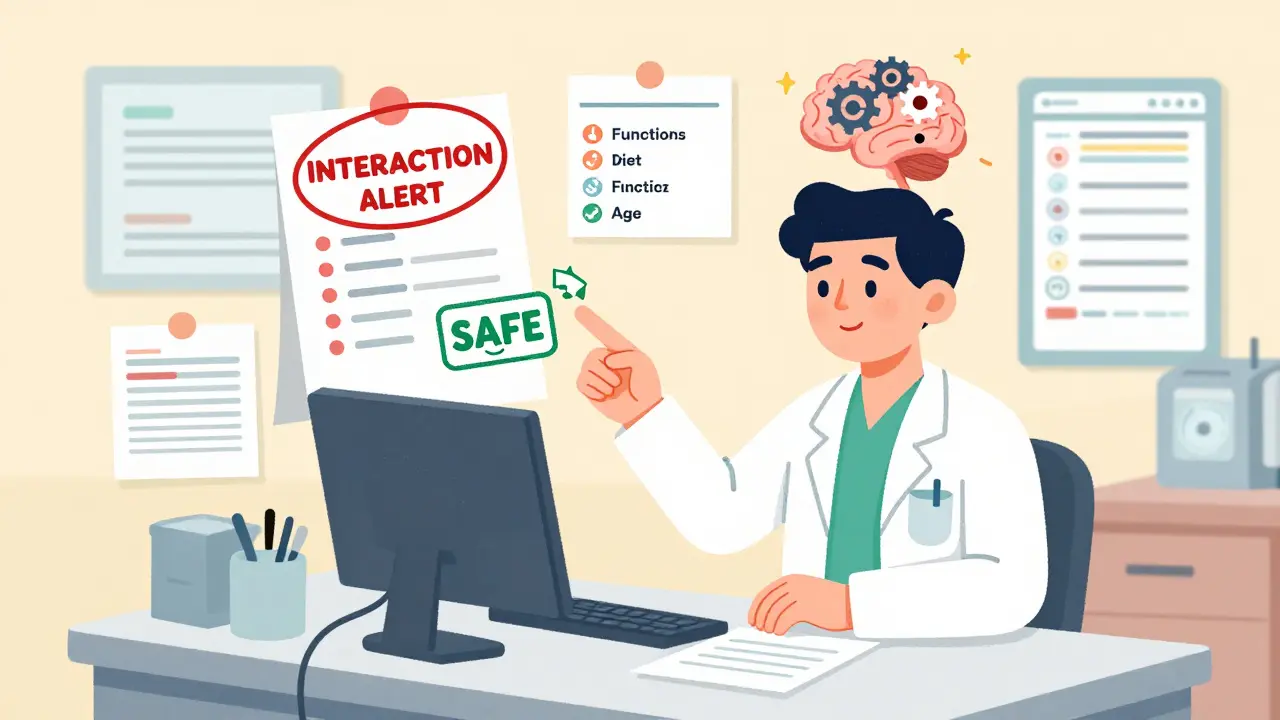
The Human Factor: Training, Time, and Pressure
Pharmacists aren’t superheroes. They’re people working under pressure. In busy community pharmacies, they might handle 200-300 prescriptions a day. That’s one every 2-3 minutes. Complex cases-like a patient on six different blood pressure meds, an anticoagulant, and a diabetes drug-can take 15-20 minutes to review properly. But time is tight. A 2022 study in low-income countries found that when pharmacists are stretched too thin-say, one pharmacist for every 500 patients-error reduction drops to just 15%. In the U.S., most hospitals have one clinical pharmacist for every 10-15 patients. That’s why hospitals with dedicated safety pharmacists see error rates drop by 37%. And it’s not just about volume. It’s about culture. When pharmacists feel respected and heard, they speak up. When they’re ignored, they stay quiet. One Reddit post from a pharmacy tech said they see 3-4 serious errors a week that slip past pharmacists because they’re rushed. That’s not failure. That’s a broken system.Pharmacists Don’t Just Stop Errors-They Improve Care
The best pharmacists don’t just say “no.” They say, “Here’s a better way.” A patient gets prescribed a daily statin, but their cholesterol is already under control. The pharmacist calls the doctor and suggests switching to every-other-day dosing. Saves money. Reduces side effects. An elderly patient is on five pills for hypertension, but their blood pressure is fine. The pharmacist recommends dropping two. The patient feels better, has fewer dizziness episodes, and takes fewer pills. Studies show pharmacist interventions improve therapeutic appropriateness by 28%. That means patients aren’t just safer-they’re healthier. And it saves money. Every error a pharmacist prevents saves an average of $13,847 in hospitalizations, ER visits, and long-term care. Across the U.S., that adds up to $2.7 billion a year.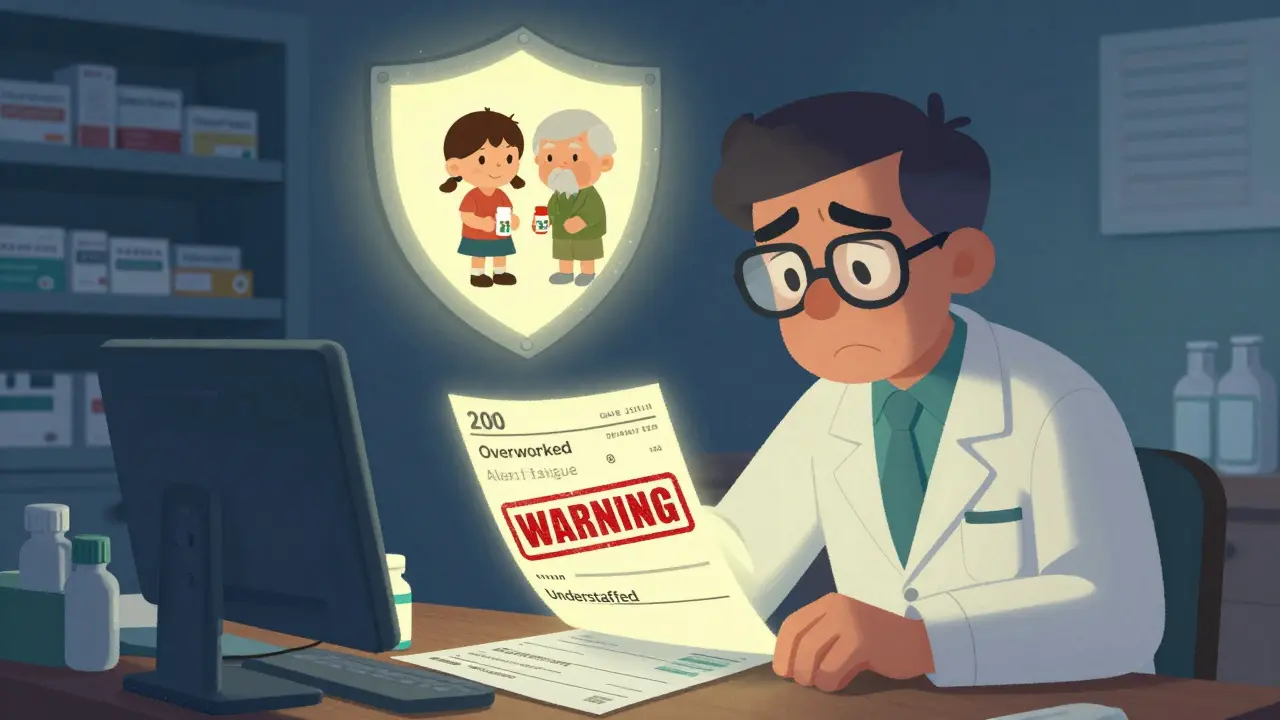
What’s Next for Pharmacist Safety Roles
The role of pharmacists is expanding fast. In 27 states, pharmacists can now adjust medications under collaborative practice agreements-no doctor’s signature needed. That’s huge for chronic disease management. In hospitals, pharmacists now lead medication safety committees. AI tools are being tested to prioritize high-risk prescriptions, cutting pharmacists’ workload by 35% while keeping detection rates at 98%. But there’s a problem: a shortage. By 2025, the U.S. could be short 15,000 pharmacists. If we don’t hire more, or if we keep overloading the ones we have, those 215,000 prevented errors could drop. That’s not just a staffing issue. It’s a patient safety crisis.Why This Matters to You
If you or someone you love takes medication, this isn’t abstract. It’s personal. That pill you pick up at the pharmacy? It passed through at least two sets of eyes before it reached you. And if something looked off? Someone stopped it. You can help too. Keep a list of all your meds-prescription, over-the-counter, supplements-and bring it to every appointment. Ask your pharmacist: “Is this safe with everything else I’m taking?” Don’t assume the system caught it. They’re good-but they’re not perfect. The truth is, medication safety isn’t just about technology or rules. It’s about people. Pharmacists are the quiet guardians of your health. They don’t get headlines. But every day, they keep you alive.How often do pharmacists catch medication errors?
Pharmacists prevent an estimated 215,000 medication errors each year in the U.S. alone, according to the Agency for Healthcare Research and Quality. That’s about one error caught every two and a half minutes. In hospitals, clinical pharmacists catch an average of 2.3 medication discrepancies per patient during admission. In community pharmacies, double-check systems catch 78% of potential dispensing errors before they reach the patient.
What types of errors do pharmacists catch?
Pharmacists catch a wide range of errors, including wrong dosage (like a 10-fold overdose on warfarin), drug-drug interactions (e.g., mixing blood thinners with NSAIDs), incorrect drug selection (confusing similar-sounding names like Hydralazine and Hydroxyzine), allergies, duplicate therapy, and inappropriate prescribing for age or kidney function. They also catch transcription errors from handwritten prescriptions and system glitches in electronic orders.
Can technology replace pharmacists in catching errors?
No. While electronic prescribing, barcode scanning, and clinical decision support systems reduce errors significantly, they can’t replace clinical judgment. Computer systems flag about 85-90% of potential issues, but many alerts are low-risk or false. Pharmacists interpret context: Is this patient frail? Are they on dialysis? Can they afford the drug? Studies show that adding pharmacist review to technology increases error detection from 17-25% to 45-65%. Machines don’t understand human needs-pharmacists do.
Why do some errors still slip through?
Errors slip through due to workload pressure, alert fatigue, and understaffing. In busy pharmacies, pharmacists may handle 200-300 prescriptions a day, leaving little time for complex reviews. Many clinical alerts are irrelevant, leading pharmacists to override them out of habit. In low-resource settings, one pharmacist may be responsible for 500+ patients, making thorough reviews impossible. Even the best systems fail when people are stretched too thin.
What can patients do to help prevent medication errors?
Patients can keep an up-to-date list of all medications-including prescriptions, over-the-counter drugs, vitamins, and supplements-and bring it to every appointment. Ask your pharmacist: “Is this safe with everything else I’m taking?” Don’t assume the system caught everything. If a dose seems too high or too low, ask. If a new drug looks unfamiliar, request an explanation. Your vigilance, combined with your pharmacist’s expertise, is the strongest safety net.
Emma Duquemin
Okay but have you ever seen a pharmacist stare at a prescription like it just insulted their ancestors? 😱 I swear, I watched one yesterday pause for 3 full minutes, mutter something about 'warfarin and cipro' under her breath, then call the doctor like she was about to drop a mic. That’s not a job-it’s a superhero origin story. And she didn’t even get a cape. Just a lanyard and a coffee stain on her scrubs.
Kevin Lopez
Pharmacists are the last line of defense in the pharmacokinetic chain. Their clinical decision-making capacity mitigates iatrogenic harm via DUR override triage and polypharmacy risk stratification. Without them, ADE rates spike exponentially. End of story.
Duncan Careless
Really appreciate this post. I’ve seen pharmacists go the extra mile-especially in rural areas where there’s barely one per town. They’ll call doctors at 8pm to clarify a script. Not because they have to. Just because they care. Wish more people knew how much they do.
Samar Khan
😭😭😭 I lost my grandma because a pharmacist didn’t catch the interaction between her blood thinner and that new herbal tea she started. She was 82. They said it was ‘rare’ but it wasn’t rare for her. Why didn’t they ask? Why didn’t they check? 😭
Russell Thomas
Oh wow, so pharmacists are magic? Let me guess-they also fix your WiFi and make your kids behave? 😏 I’ve seen pharmacists miss *obvious* errors because they were too busy scrolling TikTok between scripts. Don’t glorify burnout. Fix the system.
Joe Kwon
Great breakdown. I’m a med student and I’ve shadowed clinical pharmacists-they’re the unsung heroes of the hospital. The way they reconcile meds at discharge? Pure art. And yeah, alert fatigue is real. Tiered alerts are a game-changer. We need more of them in every ER and clinic. 👏
Fabian Riewe
My mom’s pharmacist remembers her by name. Knows she hates grapefruit. Knows her dog died last year and she’s been depressed. He calls her if her script changes. That’s not just safety-that’s humanity. We need more of that. Not just tech. Not just speed. Just… care.
Greg Quinn
It’s fascinating how we outsource safety to people we don’t pay enough to do it properly. We automate everything except the one thing that needs judgment-the human mind. And then we act surprised when things go wrong. Maybe the problem isn’t the pharmacist. Maybe it’s the system that treats them like a vending machine.
Jim Rice
215,000 errors prevented? That’s just the ones they admit to. I bet half of them are just pharmacists yelling at doctors for writing ‘QD’ instead of ‘daily.’ We don’t need more pharmacists-we need doctors who can spell.
Henriette Barrows
My cousin’s pharmacist caught a 10x overdose on insulin. She was crying when she called the doctor. I asked her why she cared so much. She said, ‘Because that could’ve been my sister.’ That’s why they do it. Not for the paycheck. For the people.
Alex Ronald
Pharmacists are the only ones who actually read the patient’s full med list-not just the last script. I’ve seen them spot a duplicate anticoagulant that the EHR missed because it was coded under a different brand name. That’s not luck. That’s expertise.
Teresa Rodriguez leon
Pharmacists are overworked and underpaid. And yet they’re still the only ones who catch the mistakes. We owe them more than gratitude. We owe them better pay, better hours, and fewer scripts per hour.
Janette Martens
Canada does this better. We don’t need 15,000 more pharmacists-we need Americans to stop treating healthcare like a fast-food drive-thru.