
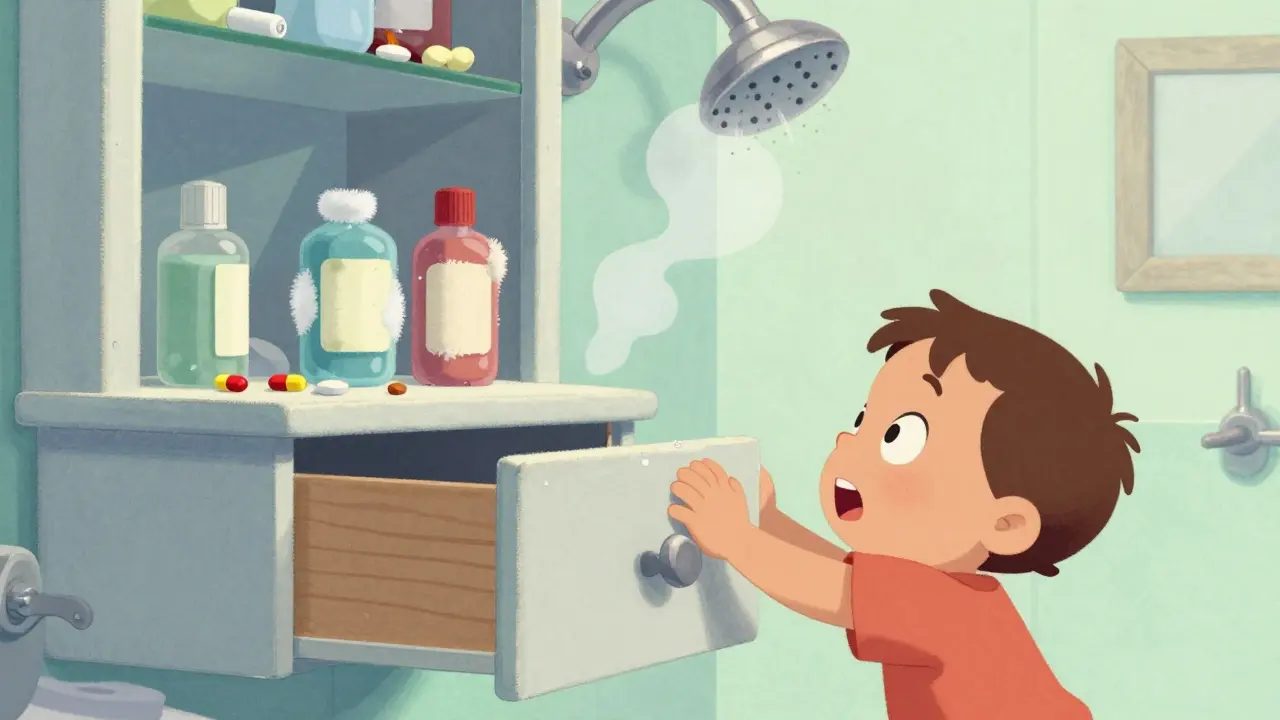
Every family has a medicine cabinet. But how many of them are actually safe? If your cabinet is in the bathroom, filled with old bottles, and unlocked, you’re not storing medicine-you’re storing risk. Every year, more than 60,000 children under 5 end up in emergency rooms because they got into medications. That’s not a rare accident. It’s a preventable crisis. And it’s happening in homes that look perfectly normal.
Stop Storing Medicine in the Bathroom
The bathroom is the most common place families keep their medicine. It’s convenient. It’s right next to the sink. But it’s also the worst place for it. Humidity from showers and baths doesn’t just make your mirror fog up-it ruins your pills. Moisture causes medications to break down, become less effective, or even crumble into useless powder. The U.S. Pharmacopeia (USP) says most drugs start degrading above 86°F (30°C), and bathrooms often hit that temperature-and higher-during hot showers.Instead, move your medicine cabinet to a cool, dry spot. A high shelf in a linen closet, a bedroom drawer, or even a closet in the hallway works best. The goal isn’t just to keep it out of sight-it’s to keep it out of reach. The American Academy of Pediatrics recommends storing medicines at least 4 feet off the ground. That’s higher than most toddlers can reach, even on tiptoes.
Lock It Down-Even If It’s Just a Drawer
Child-safety caps aren’t child-proof. They’re child-resistant. A 2021 Johns Hopkins study found that 42% of kids between 4 and 5 can open a standard bottle in under 10 minutes. That’s not a flaw in the cap-it’s a flaw in the assumption that “it’s capped, so it’s safe.”Real protection means physical barriers. If your cabinet doesn’t lock, install a childproof lock. These are inexpensive, easy to install, and work like a latch on a kitchen cabinet. For extra security, use a locked drawer inside the cabinet. Some families even use small combination safes-like the kind you’d keep jewelry in-for high-risk items like painkillers or sleep aids.
And don’t forget teens. Around 54% of teenagers who misuse prescription drugs get them from their own home medicine cabinet, according to the National Survey on Drug Use and Health. A locked cabinet isn’t just for toddlers-it’s for protecting your whole family from accidental or intentional misuse.
Empty It Out and Start Fresh
Before you organize anything, take everything out. Yes, everything. Pills, syrups, creams, vitamins, eye drops, even that old bottle of antiseptic from 2018. Put it all on the table. Now sort it into three piles: Keep, Discard, and Questionable.Anything past its expiration date? Toss it. The FDA says expired medications don’t just lose effectiveness-they can become unsafe. Antibiotics, for example, can break down into toxic compounds. Vitamins? They lose potency. Eye drops? They can grow bacteria. If it’s been more than 12 months past the expiration date, don’t hesitate. Get rid of it.
For anything you’re unsure about-like that unlabeled bottle with a faded label-throw it out. Better safe than sorry. You can always buy a new one.
Organize by Use, Not by Clutter
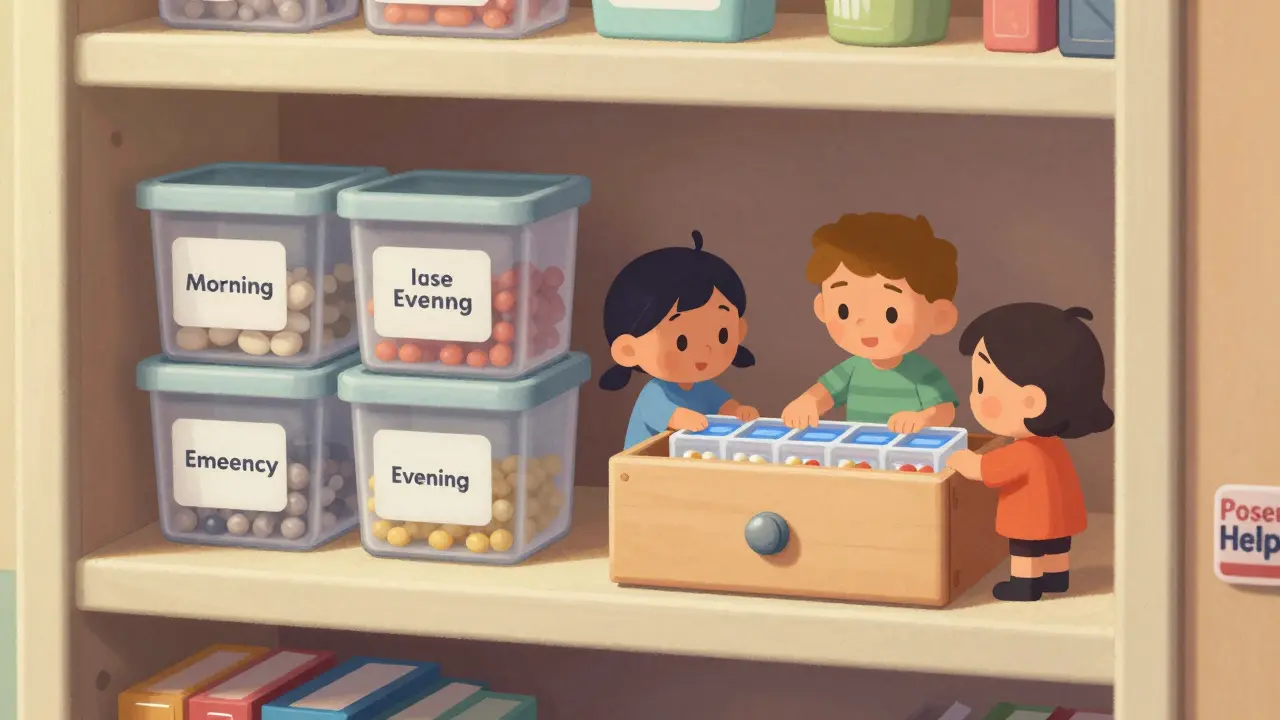
Once you’ve cleared the clutter, organize what’s left. Group items by how and when they’re used:- Morning meds: Allergy pills, daily vitamins, blood pressure meds
- Evening meds: Sleep aids, pain relievers, cough syrup
- First aid: Bandages, antiseptic wipes, hydrocortisone cream, tweezers
- Emergency: Acetaminophen, ibuprofen, antihistamines, thermometer
Keep everything in its original container. That’s not just for looks-it’s for safety. The label has the name, dosage, expiration date, and warnings. If you transfer pills to a pill organizer, keep the original bottle nearby as a reference. Never mix different meds in the same container.
Consider using free adherence packaging from your pharmacy. Many pharmacies, including Cone Health, offer pre-sorted blister packs labeled by day and time. It’s a simple way to prevent missed doses or double-dosing-especially helpful for families with multiple people taking meds.
Dispose of Old Meds the Right Way
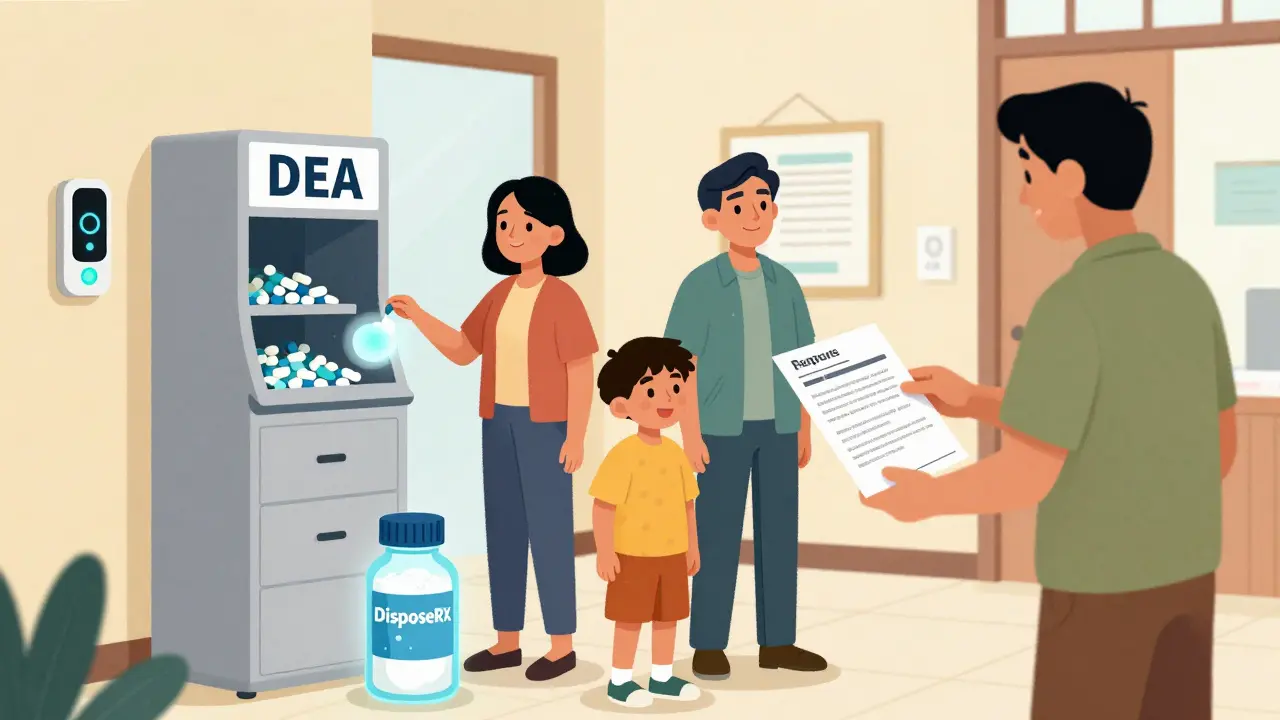
Never flush pills down the toilet or toss them in the trash. Flushing contaminates water supplies. Throwing them in the trash invites pets, kids, or even strangers to dig through your garbage.The safest way? Use a drug take-back program. CVS, Walgreens, and many other pharmacies have secure disposal kiosks inside their stores. These are monitored, and the meds are destroyed safely. In 2023, the DEA’s National Prescription Drug Take Back Day collected over a million pounds of unused medication.
If there’s no drop-off nearby, use DisposeRX powder. It’s a free, FDA-approved powder you add to your old pills in their original bottle. It turns the meds into a gel-like substance that can’t be snorted, injected, or abused. Seal the bottle, throw it in the trash. Done.
Keep a Medication List-And Share It
Every family should have a written or digital list of all medications-prescription and OTC-taken by everyone in the household. Include:- Drug name
- Dosage
- Frequency
- Reason for use
- Expiration date
Keep this list in your phone and in your wallet. If your child gets sick and you rush to the ER, doctors need to know what they’ve taken. Accidental overdose from mixing OTC meds is one of the most common causes of pediatric poisoning. A clear list can prevent that.
Post the Poison Help Number-Everywhere
Every phone, every fridge, every bathroom mirror-put the Poison Help number up. It’s 800-222-1222. It’s free, confidential, and available 24/7. Poison control centers don’t just handle emergencies-they give advice on what to do if your child spits out a pill, takes too much cough syrup, or gets into the vitamins.Teach your kids what this number is. Not to call it for fun-but to know it’s there if something goes wrong. And make sure babysitters, grandparents, and anyone who watches your kids knows it too.
Check It Twice a Year
A safe medicine cabinet isn’t a one-time project. It’s a habit. Set a reminder every six months-say, January 1 and July 1-to do a full cabinet check. Look at expiration dates. Toss anything old. Reorganize if needed. Make sure the lock still works. Update your medication list.Some families even use smart devices now-like cabinet sensors that send a text if the door opens. While not necessary, they’re growing in popularity. Since 2020, adoption of smart security for medicine storage has increased by 300%, according to the Security Industry Association.
It’s Not About Perfection-It’s About Protection
You don’t need a locked vault. You don’t need to buy expensive gadgets. You just need to be intentional. Move the cabinet. Lock it. Clear out the junk. Label it. Know what’s in it. And always, always have the Poison Help number handy.Medicines are powerful. They heal. But they can also harm-especially when they’re easy to reach and hard to track. A safe medicine cabinet isn’t about being paranoid. It’s about being prepared. For your kids. For your teens. For your whole family.
Can I store OTC medicine in the kitchen?
Yes, but only if it’s away from heat sources like the stove, dishwasher, or sunny windows. Kitchens are often too warm or humid. A high cabinet on a cool wall is better than a drawer next to the toaster. Always keep it locked and out of children’s reach.
Are vitamins safe to leave out in the open?
No. Vitamins are still medications. A child who thinks they’re candy can overdose on iron, vitamin D, or zinc. Iron poisoning is one of the leading causes of fatal childhood poisonings. Store vitamins just like any other medicine-locked, in original containers, and away from humidity.
What if I don’t have a cabinet? Can I use a locked box?
Absolutely. A locked plastic storage box, a small safe, or even a locked tool box works fine. The container doesn’t matter as much as the lock. Just make sure it’s kept in a dry, cool place-not under the sink or in the garage. Label it clearly so you can find it fast in an emergency.
How do I know if a medicine is expired?
Check the expiration date on the label. It’s usually printed as MM/YYYY. If the date has passed, throw it out-even if it looks fine. Some medicines, like insulin or liquid antibiotics, can become dangerous after expiration. When in doubt, discard it. Your pharmacy can also help you check if you’re unsure.
Should I keep my child’s OTC meds in their room?
No. Even if your child is responsible, their room is not a secure place. Other kids may visit. Teens may be tempted. Medications should be stored in a central, locked location that all caregivers can access, not in a child’s personal space.
What if I have a relative visiting who takes prescription meds?
Ask them to bring their meds in original bottles and keep them in a locked container in your medicine cabinet. Never leave them unattended on a nightstand or in a guest bathroom. Even one unsecured pill can be dangerous if a child finds it. If they’re staying long-term, consider adding their meds to your family medication list.
Doreen Pachificus
I never thought about humidity ruining pills until now. My bathroom cabinet is a disaster zone. Time to move everything to the linen closet. Thanks for the wake-up call.
Also, I had no idea vitamins could be deadly if kids get into them. Iron overdose is scary stuff.
Cassie Tynan
Oh wow, so we’ve been treating our medicine cabinet like a haunted house full of expired ghosts and toddler magnets? And we wonder why kids get into stuff? 🤦♀️
Let’s be real-this isn’t about safety. It’s about adulting. And most of us are still on level 1: ‘I think the pills are in the drawer somewhere?’
Lock it. Toss it. Stop pretending ‘child-resistant’ means ‘child-proof.’ We’re not babysitting pills. We’re babysitting our own negligence.
Rory Corrigan
Medicines are like emotions-you can’t just leave them lying around. They need a home. A locked, dry, labeled home. 🌱
Also, I just realized my 3-year-old thinks my ibuprofen are gummy bears. I’m not even mad. Just… terrified.
DisposeRX sounds like magic. I’m ordering it tonight.
Stephen Craig
Move it. Lock it. Toss it. That’s the whole guide.
Simple. Effective. Done.
Connor Hale
This is one of those posts that doesn’t feel like advice-it feels like a public service. I’ve been lazy about my cabinet for years. The part about teens getting meds from home hit hard. We assume they’re too smart to do it. But curiosity doesn’t care about intelligence.
I’m setting up a locked drawer this weekend. And putting the poison number on the fridge. Right next to the pizza delivery card.
Roshan Aryal
USA again with its over-the-top safety paranoia. In India, we just keep medicine in the kitchen shelf. Kids learn respect, not fear. You lock everything, you raise a generation that thinks every pill is a bomb.
Also, why are we paying for DisposeRX? In my village, we just bury old pills. Natural decomposition. No corporate profit schemes needed.
Stop infantilizing your own children. Teach them caution. Not lockdowns.
Jack Wernet
Thank you for this comprehensive and deeply thoughtful guide. The emphasis on clarity, accessibility, and proactive disposal reflects a level of care that is too often absent in domestic health practices.
I will be sharing this with my extended family, particularly those caring for elderly relatives and young children. The inclusion of poison control as a household staple is not merely prudent-it is essential.
Charlotte N
So… like… I moved my meds to the bedroom drawer last year? And I use a lock? But I still keep the vitamins next to the toothpaste? And I never check expiration dates? And I have no list? And I forgot the poison number? 😬
Also, is it weird that I feel guilty now? Like… I just… I just thought it was fine? I mean… my kid’s never touched anything… right?
Okay. New plan. Starting tomorrow. I’m doing this. I swear.
Catherine HARDY
Did you know the FDA and pharmaceutical companies are pushing this ‘safe cabinet’ narrative to sell more locks, DisposeRX, and smart sensors? It’s a $2 billion industry built on fear.
And why is no one talking about how the government lets toxic meds stay on shelves for years? Why are expiration dates so arbitrary? Why do we trust labels from companies that sued parents for ‘misuse’?
Lock your cabinet? Sure. But don’t trust the system that gave you the pills in the first place.
bob bob
Man, I just read this and I’m already feeling better. Like, I didn’t realize how much chaos was in my cabinet until you laid it out. I’m gonna grab the kids tonight and show them the poison number. Gonna make it a family thing.
Also, my wife and I are gonna do a cabinet cleanout this Sunday. Pizza and pills-our version of date night.
Vicki Yuan
Excellent breakdown. One addition: if you use a pill organizer, always keep the original prescription bottle with the label intact and store it next to the organizer. Many ERs now ask for the original container to verify dosage and ingredients. A mismatched pill can cost you minutes-or worse.
Also, update your medication list every time a prescription changes. Even if it’s just a dosage tweak. Write it down. Save it. Share it. It’s not bureaucracy-it’s insurance.