
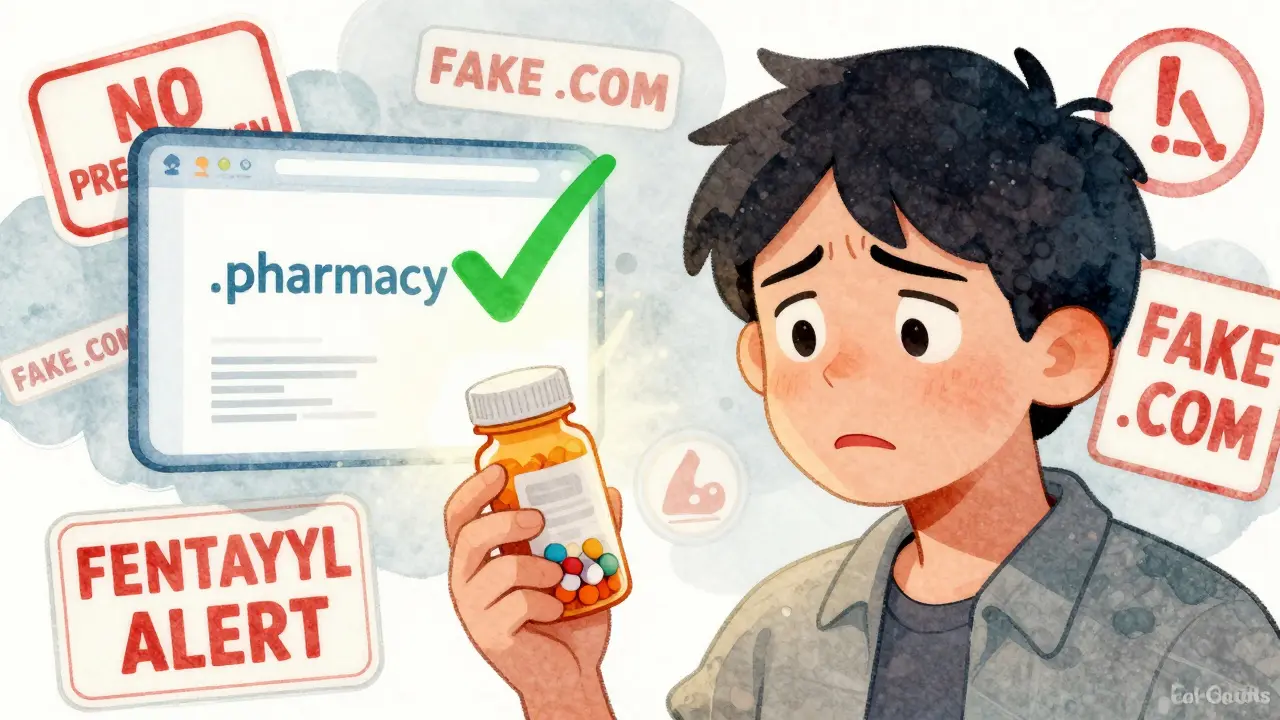
Buying medicine online sounds convenient-until you get pills that don’t work, or worse, make you sick. Every year, millions of people unknowingly buy counterfeit generics from fake websites that look just like real pharmacies. These fakes can contain nothing but flour, chalk, or deadly chemicals like fentanyl. And the scammers are getting smarter. They copy packaging perfectly. They use real-looking logos. They even mimic the exact color and shape of the real pills. But here’s the hard truth: you cannot tell if a medicine is fake just by looking at it. Not without a lab. That doesn’t mean you’re powerless. You can drastically reduce your risk by knowing what to look for-and what to avoid.
What Makes a Generic Medicine Counterfeit?
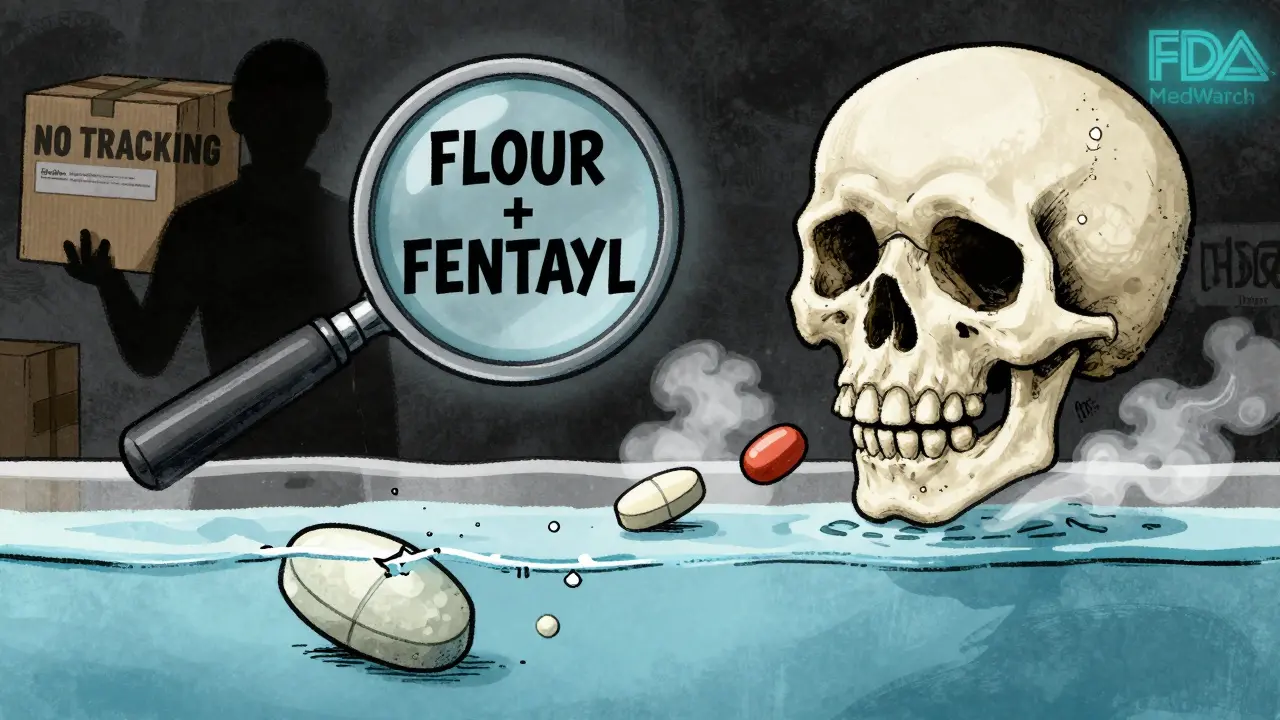
Generic drugs are supposed to be exact copies of brand-name medications, with the same active ingredient, dosage, and effect. But counterfeit generics? They’re frauds. The World Health Organization calls them substandard and falsified medical products. That means they might have no active ingredient at all, the wrong amount, or dangerous fillers like crushed drywall or rat poison. In Asia, over half of fake malaria pills contain zero medicine. In the U.S., the DEA seized over 134 million counterfeit pills between January 2023 and October 2024-most of them laced with fentanyl. These aren’t just ineffective. They’re lethal.
Counterfeiters don’t just target expensive brand-name drugs. They go after the most common generics: Viagra, Cialis, metformin, blood pressure pills, antibiotics, and even insulin. Why? Because they’re bought in huge volumes, and people are desperate for cheap prices. That’s the trap. If a website offers 80% off a prescription drug, it’s not a deal. It’s a death sentence waiting to be shipped.
How Online Scammers Trick You
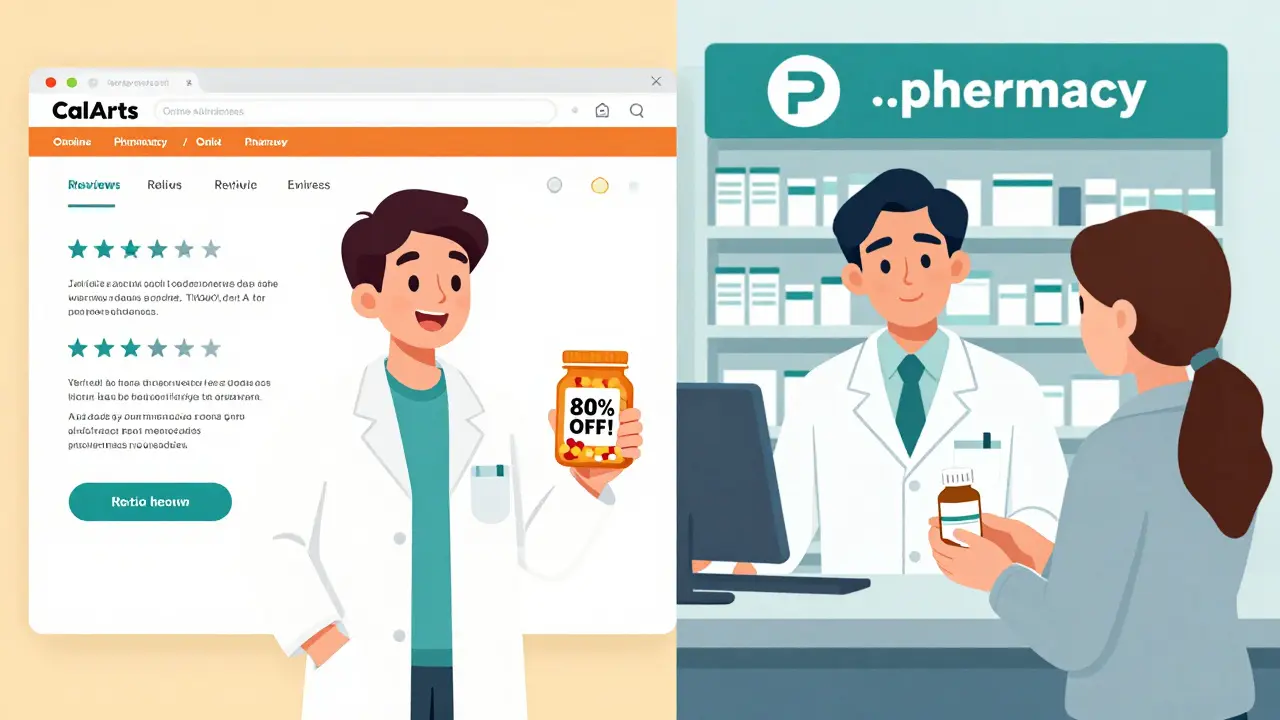
Fake pharmacies don’t look fake. They use professional design, fake customer reviews, and even fake licenses. Many copy the layout of real sites like CVS or Walgreens. Some even have live chat support that sounds like a real pharmacist. But here’s what they never do: require a valid prescription. According to the National Association of Boards of Pharmacy (NABP), 96% of online pharmacies operate illegally, and 88% don’t ask for a prescription at all.
They also use domain tricks. You might think you’re on pharmacy.com, but it’s actually pharmacy-support.com or pharmacy-deals.net. The real, verified online pharmacies have one thing no scammer can fake: the .pharmacy domain. That’s not a marketing gimmick. It’s a legally enforced certification. Only pharmacies that meet strict licensing, safety, and privacy rules can use it. If the site doesn’t end in .pharmacy, walk away.
What to Check Before You Click Buy
Before you enter your credit card, check these five things:
- Look for the .pharmacy domain-only sites with this ending are verified by the NABP. Click the logo on the page to verify it’s real.
- Check for a physical address and phone number. Real pharmacies list their location, not just a PO box. Call them. If the number doesn’t connect or goes to a voicemail with no name, it’s a red flag.
- Is there a licensed pharmacist available to answer questions? Legit pharmacies offer direct access to a pharmacist. If you can’t talk to one before or after your purchase, it’s not safe.
- Do they require a prescription? If they don’t, they’re breaking the law. No exceptions.
- Are the prices too good to be true? If you see $10 for 30 pills of a $200 brand-name drug, it’s fake. Real pharmacies don’t undercut by 90%.
Even if all these checks pass, you’re not 100% safe. But you’ve cut your risk by 90%.
What to Do When You Get Your Pills
When your package arrives, don’t just swallow them. Compare them to your last legitimate bottle.
- Check the color, shape, size, and imprint. If the pill is slightly off-say, a little lighter, or the numbers are blurred-it could be fake.
- Look at the packaging. Font style? Spelling? Logo placement? Even tiny differences matter. One user on Reddit reported pills that dissolved in water in 10 seconds-real ones took over 20 minutes.
- Check the lot number and expiration date. If they’re missing, smudged, or look printed on with a regular inkjet printer, it’s fake.
- Call the manufacturer. Yes, really. Pharmaceutical companies like Pfizer or Johnson & Johnson track counterfeit reports. Give them the lot number. They’ll tell you if it’s real.
Some people swear by home tests-like dissolving pills in water or checking for smell. Don’t. Counterfeiters now use the same binders and coatings as real drugs. The only way to know for sure is lab testing. But you don’t need to be a scientist to spot the warning signs.
What to Do If You Suspect a Fake
If you think you’ve gotten counterfeit medicine:
- Stop taking it. Even one dose can be dangerous.
- Save everything. The pill bottle, packaging, receipt, and even the shipping box.
- Report it. Contact the FDA’s MedWatch program or your country’s health authority. In the U.S., go to fda.gov/medwatch.
- Call the manufacturer. They collect data on counterfeits. Your report could help stop the next batch.
- Warn others. Leave a review on Trustpilot or Reddit’s r/pharmacy. Scammers rely on silence.
The FDA received over 1,200 consumer complaints about counterfeit drugs in 2023. Most came from people who noticed side effects they’d never had before-burning eyes, dizziness, nausea, or no effect at all. These aren’t side effects. They’re signs you were poisoned.
The Technology That Can Help (And the Limits)
Some companies now offer smartphone apps that scan QR codes on medicine packaging. Apps like MediGuard use AI to verify authenticity and scanned over 1.2 million products in 2023 with 92% accuracy. That sounds great-but only if the packaging has a QR code. Most generics, especially cheap ones, don’t. And counterfeiters are starting to fake those too.
Big pharma uses advanced tools: Raman spectrometers that give a green checkmark or red X in seconds, or FT-NIR machines that analyze the chemical fingerprint of a pill. But these cost thousands of dollars. They’re for labs and customs agents, not consumers.
Blockchain-based track-and-trace systems are being tested by Pfizer and others. They promise 99.6% accuracy in verifying medicine from factory to pharmacy. But they’re only on high-value drugs-and only in rich countries. For now, your best defense is still common sense and verification.
Why This Matters More Than You Think
This isn’t just about saving money. It’s about survival. Counterfeit medicines cause over 1 million deaths worldwide every year, according to WHO estimates. In low-income countries, people die because they can’t afford real drugs-and end up buying fakes. But it’s not just developing nations. In the U.S., fentanyl-laced fake pills are killing teenagers who think they’re buying oxycodone from Instagram ads.
Even if you’re healthy, buying from a fake pharmacy puts everyone at risk. Fake antibiotics contribute to drug-resistant superbugs. Fake heart meds can cause strokes. Fake insulin can kill. This isn’t a victimless crime. It’s a public health emergency.
Bottom Line: Stay Safe, Stay Smart
You don’t need to be a detective to avoid counterfeit generics. You just need to be careful.
- Only buy from websites ending in .pharmacy.
- Never buy without a prescription.
- Compare every pill and package to your last legitimate one.
- Call the manufacturer if something feels off.
- Report anything suspicious.
There’s no magic trick. No app that can replace your eyes and instincts. But if you follow these steps, you’ll be safer than 95% of online buyers. And that’s not just smart-it’s life-saving.
Can I trust online pharmacies that offer free shipping and discounts?
No. Free shipping and deep discounts are classic red flags. Legitimate pharmacies don’t operate on massive profit margins, especially for prescription drugs. If a site offers 80% off a brand-name medication, it’s either fake or selling unregulated substances. Real pharmacies may offer loyalty discounts, but never at levels that seem too good to be true.
What if the website looks professional and has real-looking reviews?
Scammers hire people to write fake reviews and build websites that look exactly like real ones. Look past the design. Check for the .pharmacy domain, a verifiable physical address, and a licensed pharmacist on staff. If those are missing, the reviews are meaningless. Trust the structure, not the polish.
Are all generics fake?
No. Generic drugs approved by the FDA or equivalent agencies in other countries are safe and effective. They’re made by regulated manufacturers and must meet the same standards as brand-name drugs. The problem is counterfeit generics-fake versions sold illegally online or through unregulated channels. Always buy generics from licensed pharmacies, not random websites.
How do I know if my medication is counterfeit after I’ve taken it?
If you experience new or unusual side effects-like sudden dizziness, nausea, chest pain, or no improvement in your condition-stop taking the medication immediately. Contact your doctor and report it to the FDA’s MedWatch program. Counterfeit drugs often contain unknown chemicals that can cause severe reactions. Don’t wait for symptoms to worsen.
Can I return counterfeit medicine?
You shouldn’t try. Fake pharmacies don’t honor returns, and even if they do, you’re still risking exposure to harmful substances. Instead, keep the packaging and pills as evidence, then report the site to authorities. Your report helps shut down the operation and protects others.
Is it safe to buy medicine from international websites?
It’s risky. Medications bought from outside your country may not meet your nation’s safety standards. The FDA does not regulate foreign pharmacies, and many are unlicensed. Even if the site claims to ship from a "licensed" country, it could be a front. Stick to .pharmacy sites based in your country or those with verified international partnerships.
Susheel Sharma
Let’s be real-this isn’t just about pills. It’s about the slow erosion of trust in every system we’re told we can rely on. 🤡 I bought ‘Viagra’ from a site that looked like a NASA landing page. Got chalk. And a free PDF on how to ‘boost your confidence’ via yoga. I’m not even mad. Just impressed. The scam artists are artists. And we’re their unwilling audience. Stay vigilant, folks. Or just don’t click anything.
Katherine Urbahn
It is absolutely imperative, without exception, that individuals understand: the .pharmacy domain is not a suggestion-it is a legal mandate. The fact that people still fall for ‘pharmacy-deals.net’ is not ignorance; it is negligence. And negligence, in matters of pharmacology, is tantamount to criminal recklessness. If you cannot verify a website’s legitimacy, you have no business purchasing medication online. Period. End of discussion.
Alex LaVey
Hey, I just want to say-thank you for writing this. Seriously. I’ve been in healthcare for 18 years, and I’ve seen too many people panic because they can’t afford their meds. I’ve had patients show up with pills from ‘discountpharm.com’-and they were terrified to say anything. This guide? It’s the calm voice they need. You didn’t just list facts-you gave people dignity. Keep doing this. We’re lucky to have you.
Jhoantan Moreira
As someone who’s lived in 5 countries, I can say this: the fake drug problem is global, but the solutions? They’re local. In the UK, we have the MHRA portal to report dodgy sites. In India, it’s the CDSCO. In the US? FDA’s MedWatch. The tools exist. The problem is awareness. I’ve printed this guide and handed it out at my local pharmacy. Small acts, big ripple. 💪🌍
Justin Fauth
So let me get this straight-some guy in Bangalore is selling ‘insulin’ for $12 and you’re supposed to just… trust the logo? LOL. We’re talking about people’s LIVES here. And you think a fancy website is enough? Nah. This ain’t Amazon. This is your heart, your pancreas, your damn kidneys. If you’re buying meds online without triple-checking, you’re not saving money-you’re gambling with your funeral. And nobody wants to be buried because they clicked ‘Buy Now’ on a .net domain.
Meenal Khurana
.pharmacy domain. Prescription. Pharmacist. That’s it.
Joy Johnston
I work in hospital pharmacy. Every week, someone comes in with a bottle they bought online. ‘It looked legit,’ they say. It never does. We test them. Sometimes, the active ingredient is 0.03%. Sometimes, it’s fentanyl. Sometimes, it’s rat poison. And yes-we’ve had patients die. The FDA reports are just the tip. The real horror stories? They never make the news. If you’re tempted by a ‘deal,’ just ask: Would you take this pill if your child was on it? If the answer isn’t a hard NO, you’re already in danger.
Shelby Price
I tried to buy metformin last year. Found a site with 80% off. Looked perfect. Same logo, same font, same reviews. I almost clicked. Then I noticed the phone number had a +966 country code. Saudi Arabia? For a US pharmacy? Red flag. Walked away. Took me 20 minutes to find the real one. Worth it. I’m alive. And honestly? I’m kinda proud of myself. Sometimes, being paranoid saves your life.
Jesse Naidoo
Wait-so you’re telling me I can’t just Google ‘buy cialis cheap’ anymore? What’s the point of the internet if I can’t get my meds in 5 minutes? I’ve been doing this for years. Never had an issue. Maybe you’re just scared of technology? Or maybe you’re just trying to scare people so you feel smarter? I’m not dumb. I know what I’m doing.
Zachary French
Okay, so let me get this straight-because some clown in a basement in Kiev is slapping a fake logo on a pill, we’re supposed to stop trusting the entire internet? Bro. I’ve bought 12 different meds online. I’ve got a spreadsheet. I cross-check the lot numbers with the manufacturer’s site. I even use a UV light to check the holograms. I’m not paranoid-I’m prepared. If you’re too lazy to do your homework, that’s your problem. Don’t turn this into a panic attack. This is 2025. We have tools. Use them. Or shut up.
Daz Leonheart
Hey, I just want to say-you’re not alone. I used to buy meds online because I didn’t have insurance. I got sick. Not from the disease-from the fake pills. Took me 3 months to recover. Now I drive 45 minutes to a clinic that gives me discounts. It’s not easy. But it’s safe. If you’re struggling, reach out. There are people who care. You don’t have to risk your life for a discount.
Coy Huffman
It’s wild, isn’t it? We live in a world where you can verify the origin of your avocado with blockchain, but you can’t verify if your blood pressure pill is real without a $50,000 machine. We’ve built a future that can track a single coffee bean from farm to cup… but can’t protect a diabetic from a fake insulin vial. The irony is thick enough to choke on. Maybe the real counterfeit isn’t the pill-it’s the promise that technology would make life safer.
Amit Jain
Just 3 things: 1. Check .pharmacy. 2. Ask for prescription. 3. Call the company. That’s all. No need to overthink. Simple saves lives.
Nathan King
The commodification of human health has reached a zenith of grotesque absurdity. We have transformed pharmaceuticals-once sacred artifacts of medical science-into mere consumer goods, subject to the whims of algorithmic marketplaces and predatory e-commerce platforms. The fact that one must now engage in forensic-level due diligence merely to procure a life-sustaining medication is not a failure of regulation-it is a moral collapse.
Harriot Rockey
I’m so glad this exists. I’ve been teaching my elderly mom how to spot fake sites. She’s 78 and on 5 meds. She used to click ‘Buy Now’ on every ad that said ‘20% OFF’. Now? She calls me. We check the domain together. It’s not just about safety-it’s about dignity. She doesn’t want to be tricked. And she shouldn’t have to be. Thank you for giving us the tools to protect each other.