
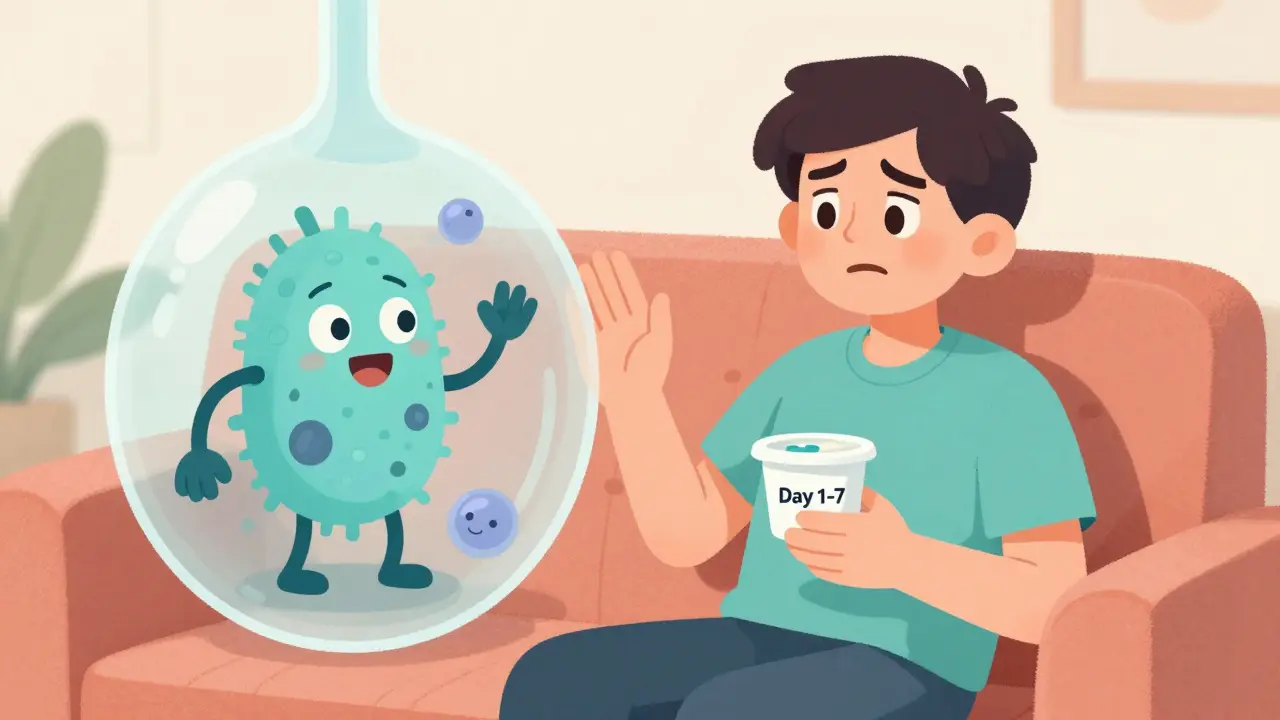
Antibiotics save lives-but they also come with side effects that make many people want to quit before finishing their prescription. You feel better after a few days, so you stop. But stopping early doesn’t just mean your infection might come back-it could make future infections harder to treat. Antibiotic side effects are common, but they don’t have to derail your treatment. With the right strategies, you can manage them and finish your course safely.
Why Finishing Your Antibiotic Course Matters
It’s a myth that you only need to take antibiotics until you feel better. Bacteria don’t care how you feel-they care if they’re still alive. When you stop early, the toughest bugs survive. These survivors multiply, and over time, they become resistant to the very drugs meant to kill them. That’s how superbugs form. The CDC estimates that 30% of antibiotic prescriptions in the U.S. are unnecessary, and half of those are taken incorrectly. But even when antibiotics are needed, up to 31% of people stop early because of side effects. This isn’t just a personal risk-it’s a public health crisis. Antibiotic resistance is now one of the top 10 global health threats, according to the WHO. Every incomplete course adds to the problem.Most Common Antibiotic Side Effects (And How to Handle Them)
Gastrointestinal issues are the #1 reason people quit antibiotics. About 1 in 4 people get diarrhea, 1 in 5 feel nauseous, and many report bloating or loss of appetite. Here’s how to manage them without stopping your treatment.- Diarrhea: Mild diarrhea is normal during antibiotic treatment. It happens because antibiotics wipe out good bacteria in your gut. If it’s mild-no blood, no fever, no severe pain-keep taking your meds. Add a probiotic with Lactobacillus rhamnosus GG or eat unsweetened yogurt daily. Clinical trials show this cuts antibiotic-associated diarrhea by 50%. If diarrhea lasts more than 48 hours after finishing your course, or if you see blood or mucus, call your doctor immediately. It could be a C. diff infection.
- Nausea and vomiting: Taking antibiotics with food can help, but not all of them work that way. Amoxicillin and doxycycline? Fine with a light snack. Tetracycline? Must be taken on an empty stomach. For nausea, try a small protein-rich snack like Greek yogurt or a boiled egg. Avoid greasy or spicy foods. A 2022 Reddit thread with over 300 responses found that taking doxycycline with an apple and waiting an hour before lying down helped many users. Don’t lie down right after taking your pill-it can irritate your esophagus.
- Bloating and gas: These are temporary. Cut back on beans, broccoli, and carbonated drinks while on antibiotics. A warm compress on your belly and gentle walking can help move things along.
- Loss of appetite: Eat smaller meals more often. Focus on bland, easy-to-digest foods like rice, toast, bananas, and broth. Stay hydrated. Dehydration makes nausea worse.
Special Cases: What to Watch Out For
Some antibiotics have unique side effects that need special attention.- Doxycycline: This one can cause severe esophageal irritation if not taken properly. Always swallow it with a full glass of water (at least 8 ounces) while sitting upright. Never take it right before bed. Wait at least 30 minutes before lying down.
- Tetracycline and doxycycline: These make your skin super sensitive to the sun. Use SPF 30+ sunscreen with both UVA and UVB protection. Reapply every two hours if you’re outside. Wear a hat and long sleeves. A sunburn isn’t just painful-it can delay your recovery.
- Vancomycin: If you’re getting this through an IV, the infusion should take at least two hours. Rushing it can trigger ‘Red Man Syndrome’-a reaction that causes flushing, itching, and low blood pressure. Hospitals now follow strict timing rules to prevent this.
- Fluoroquinolones (like ciprofloxacin): These can rarely cause tendon rupture or nerve damage. If you feel sudden pain, swelling, or tingling in your tendons or limbs, stop the drug and call your doctor immediately.

When to Call Your Doctor
Not all side effects are normal. Some need urgent care. Call your doctor right away if you have:- Bloody or black, tarry stools
- Severe abdominal cramps or pain
- Uncontrollable vomiting
- Fever over 101°F (38.3°C) during or after treatment
- Hives, swelling of the face or throat, wheezing, or trouble breathing (signs of an allergic reaction)
- Severe skin rash or blistering
How to Stay on Track
The key to finishing your course isn’t willpower-it’s preparation. Here’s what works:- Ask your doctor what to expect. Patients who get a clear heads-up about possible side effects are 35% less likely to quit early. Don’t be shy-ask: “What side effects should I watch for?”
- Use a pill organizer. Mark your doses with the days of the week. Seeing your progress helps you stay motivated.
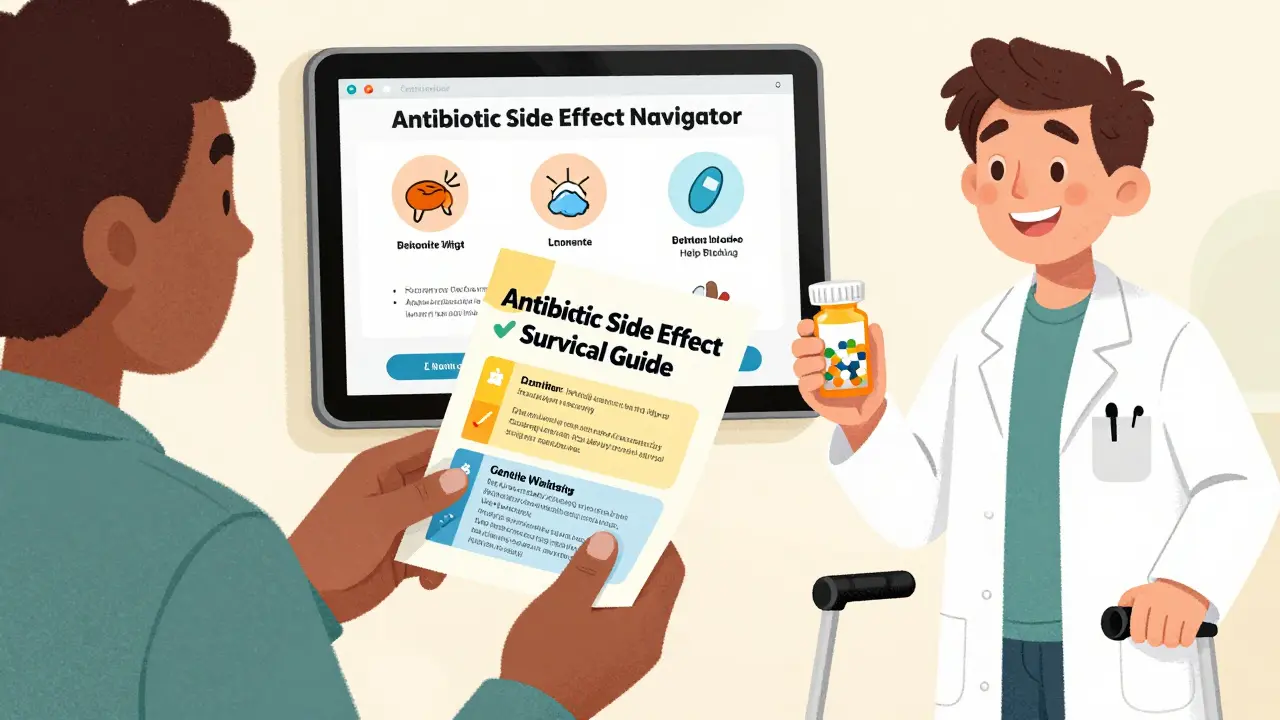
- Get a printed guide. A 2021 study found that patients given a simple one-page handout on side effect management were 42% more likely to finish their antibiotics.
- Set phone reminders. Tie your dose to something you do daily-like brushing your teeth or eating breakfast.
- Don’t rely on online forums alone. Reddit and Facebook groups can offer tips, but they’re not medical advice. Always check with your pharmacist or doctor before trying a new trick.
What Pharmacists Can Do for You
Your pharmacist is a hidden ally. They know your meds inside and out. When you pick up your prescription, ask:- “Should I take this with food or on an empty stomach?”
- “Is there a specific time of day that’s best?”
- “What should I avoid while taking this?”
- “Can you recommend a probiotic that works with this antibiotic?”
What’s New in Antibiotic Care
The field is changing fast. In 2023, the FDA approved the first probiotic strain-Lactobacillus reuteri NCIMB 30242-specifically for preventing antibiotic-associated diarrhea. The CDC launched a digital tool called the “Antibiotic Side Effect Navigator” that gives personalized advice based on your antibiotic, age, and health conditions. Researchers are even testing pills made from donated gut bacteria to treat severe C. diff infections, with success rates over 89%. By 2026, AI tools may help doctors pick the right antibiotic for you based on your unique microbiome, cutting side effects by nearly half.Final Thought: You’re Not Alone
Feeling sick while taking antibiotics is frustrating, but it’s not a sign you’re doing something wrong. It’s a side effect of a powerful tool. Millions of people manage these symptoms every year and finish their courses. You can too. The goal isn’t to avoid discomfort-it’s to beat the infection and protect others from resistant bacteria. Keep your pills on schedule. Use the tips here. Call your doctor if something feels wrong. Your health-and the health of everyone around you-depends on it.Can I stop taking antibiotics if I feel better?
No. Feeling better doesn’t mean all the bacteria are gone. Stopping early lets the strongest bacteria survive and multiply, leading to antibiotic resistance. Even if symptoms disappear, finish the full course unless your doctor tells you otherwise.
Is it safe to take probiotics with antibiotics?
Yes, and it’s often recommended. Take probiotics at least two hours after your antibiotic dose to avoid killing the good bacteria. Strains like Lactobacillus rhamnosus GG and Lactobacillus reuteri NCIMB 30242 have been shown to reduce diarrhea by up to 50%. Avoid yogurt with added sugar-it can worsen gut imbalance.
Can antibiotics cause yeast infections?
Yes. Antibiotics kill off good bacteria that normally keep yeast in check. This can lead to vaginal yeast infections or oral thrush. If you notice itching, white discharge, or white patches in your mouth, talk to your doctor. Over-the-counter antifungal treatments often help, but it’s best to get confirmation first.
Why do some antibiotics need to be taken on an empty stomach?
Some antibiotics, like tetracycline and doxycycline, bind to calcium, iron, or dairy products in your stomach. This prevents them from being absorbed properly. Taking them on an empty stomach ensures maximum effectiveness. Always follow the label or your doctor’s instructions-this isn’t optional.
How long do antibiotic side effects last after finishing the course?
Most mild side effects like nausea or loose stools fade within a few days after stopping the antibiotic. Gut bacteria usually rebalance in 1-4 weeks. If diarrhea, bloating, or other symptoms last longer than 48 hours after finishing your course, or if they get worse, see your doctor. It could signal a C. diff infection or another complication.
Can I drink alcohol while taking antibiotics?
For most antibiotics, moderate alcohol isn’t dangerous-but it can worsen side effects like nausea, dizziness, or liver stress. With metronidazole or tinidazole, alcohol can cause severe reactions like vomiting, flushing, and rapid heartbeat. When in doubt, skip it. Your body needs all its energy to heal.
Eli In
I took amoxicillin last month and thought I was gonna die from the diarrhea. 🤢 Started eating yogurt with live cultures every day and it cut the worst of it in half. Seriously, probiotics are magic.
Sheryl Dhlamini
I stopped my course once because I got so nauseous. Ended up back in the ER with a C. diff infection. Don't be me. Just... don't.
Doug Gray
The entire antibiotic paradigm is a neoliberal construct designed to commodify microbial ecology. We're all just collateral damage in the pharma-industrial complex. 🤔
Kacey Yates
Doxycycline with food is a myth unless you want zero absorption. Took mine on empty stomach with a whole bottle of water and never had a problem. Stop listening to Reddit myths.
Andy Steenberge
I’ve been a nurse for 18 years and I can tell you this: the number one reason people don’t finish antibiotics isn’t because they’re lazy-it’s because nobody explains what to expect. If your doctor just says ‘take this twice a day’ and walks away, of course you’re gonna panic when your stomach turns into a war zone. Tell people what’s normal. Tell them what’s dangerous. Give them a script. A one-pager. A checklist. Something. We’re not asking for much. Just a little clarity.
Laura Arnal
You got this 💪 I was terrified of my first antibiotic course too, but I used a pill organizer and set alarms that played my favorite song. By day 4 I was proud of myself. You’re not just healing-you’re fighting superbugs. That’s hero stuff.
Keith Oliver
Lactobacillus rhamnosus GG? Bro that’s just a fancy name for yogurt bacteria. You think Big Pharma cares about your gut? Nah. They’re selling you a $20 probiotic so you don’t sue them when your liver fails. Wake up.
Robin Keith
It’s fascinating how we’ve reduced complex biological systems-microbiomes, immune responses, bacterial evolution-to a series of bullet points and dosage instructions, as if the human body were a malfunctioning toaster. We’ve forgotten that antibiotics don’t just kill bacteria-they disrupt entire ecosystems we’ve co-evolved with over millennia. And yet, we treat it like a software update. ‘Click ‘install’ and hope for the best.’ We’re not just misusing antibiotics-we’re misunderstanding our own biology. The real side effect isn’t diarrhea-it’s the arrogance of believing we can control nature with a pill.
ryan Sifontes
I read somewhere that the government puts fluoride in water to make us docile. Maybe they put antibiotics in the food supply too. That’s why everyone’s always sick. You think it’s coincidence? I don’t think so.
LOUIS YOUANES
I just took my pill. Felt like I was swallowing a rock. No water. No food. Just pure willpower. I’m not a patient. I’m a soldier. And this is my war.
kabir das
I took antibiotics for a sinus infection... and then my girlfriend left me... and then my cat died... and then my car broke down... and then my mom called to say she had cancer... and then I realized... maybe the antibiotics weren't the problem... maybe it was me... maybe I'm just cursed... why does everything hurt... why... why... why...
Laia Freeman
I used a pill organizer and set reminders and I FINISHED MY COURSE!!! I’m a WINNER!!! 🎉🥳💪 #AntibioticHero #NoMoreLaziness
Kristie Horst
Ah yes, the classic ‘just take a probiotic’ solution. How convenient. Let’s outsource the responsibility of pharmaceutical side effects to a $15 bottle of capsules while the real issue-the overprescription, the lack of provider education, the corporate influence on clinical guidelines-remains untouched. How very... American. You’ve turned a systemic failure into a personal optimization challenge. Bravo.