

When your allergies won’t quit-no matter how many antihistamines you take-you might be wondering if there’s a way to actually change how your body reacts. Not just mask the sneezing, but immunotherapy-a treatment that retrains your immune system to stop overreacting to things like pollen, dust mites, or bee stings. This isn’t a quick fix. It’s a long-term strategy. And it works.
How Immunotherapy Changes Your Body’s Response
Allergy shots and sublingual tablets aren’t just another pill or spray. They’re the only treatments proven to alter the immune system’s response to allergens. Instead of fighting symptoms, they slowly expose you to tiny, controlled amounts of what triggers your allergies. Over time, your body learns not to panic. It’s like training a nervous dog: start with a whisper, then a normal voice, until the sound doesn’t scare them anymore.
This method, first used in 1911, is now backed by decades of research. According to the American College of Allergy, Asthma & Immunology (ACAAI), about 85% of patients see major symptom reduction after three years of treatment. That means fewer nasal sprays, less reliance on pills, and in many cases, no more asthma attacks triggered by seasonal pollen.
The key difference between immunotherapy and other treatments? It doesn’t just treat the reaction-it prevents it from happening again. Some people even stop needing medication entirely after finishing the full course.
Allergy Shots: The Gold Standard
Allergy shots, or subcutaneous immunotherapy (SCIT), are still the most effective option. They work for multiple allergens at once. If you’re allergic to grass, ragweed, dust mites, and cat dander, one set of shots can cover them all. That’s huge-because 78% of allergy sufferers react to more than one trigger.
The process has two phases. First, the build-up phase. You get injections once or twice a week, with gradually increasing doses. This lasts 3 to 12 months, depending on the schedule. Then, you move to maintenance: shots every 2 to 4 weeks, for 3 to 5 years total.
There are faster options now. Cluster immunotherapy cuts the build-up time from months to weeks. Instead of weekly visits, you do 8 to 10 appointments over 4 to 9 weeks, with multiple shots per session. Rush immunotherapy-used mostly for life-threatening insect venom allergies-can get you to maintenance in under two months. But even with these shortcuts, you still need the full 3 to 5 years of maintenance shots to get lasting results.
Studies show SCIT reduces symptoms by 82% on average. That’s higher than any tablet. And it’s not just about comfort. Research from the Journal of Allergy and Clinical Immunology says allergy shots can prevent new allergies from developing and even stop allergic rhinitis from turning into asthma.
Sublingual Tablets: Convenience Without Compromise?
Sublingual immunotherapy (SLIT) tablets are a game-changer for people who hate needles or can’t make weekly doctor visits. You put a small tablet under your tongue once a day. No shots. No clinics. Just a daily routine.
But there’s a catch. Each tablet only works for one allergen. Oralair for grass pollen. Ragwitek for ragweed. Odactra for dust mites. Cat-PAD, approved in April 2024, is the first for cat dander. But if you’re allergic to grass AND dust mites? You’d need two tablets. And they don’t work together. There’s no combo tablet. No multi-allergen option.
That’s why efficacy drops for people with multiple allergies. One 2021 study found SLIT tablets reduced symptoms by 67%-compared to 82% for shots. And 58% of negative reviews on Healthgrades blamed the tablets for not working well enough when multiple triggers were involved.
On the plus side, convenience wins. A 2022 survey found 92% of tablet users preferred them over shots. One user, a traveling salesperson, said: “I couldn’t manage weekly shots, but the tablet fits perfectly in my routine.”
But here’s the catch: you have to take it every single day. If you miss more than 20% of doses, effectiveness plummets to 45%. Setting phone reminders helps-studies show adherence improves by 37% with reminders.
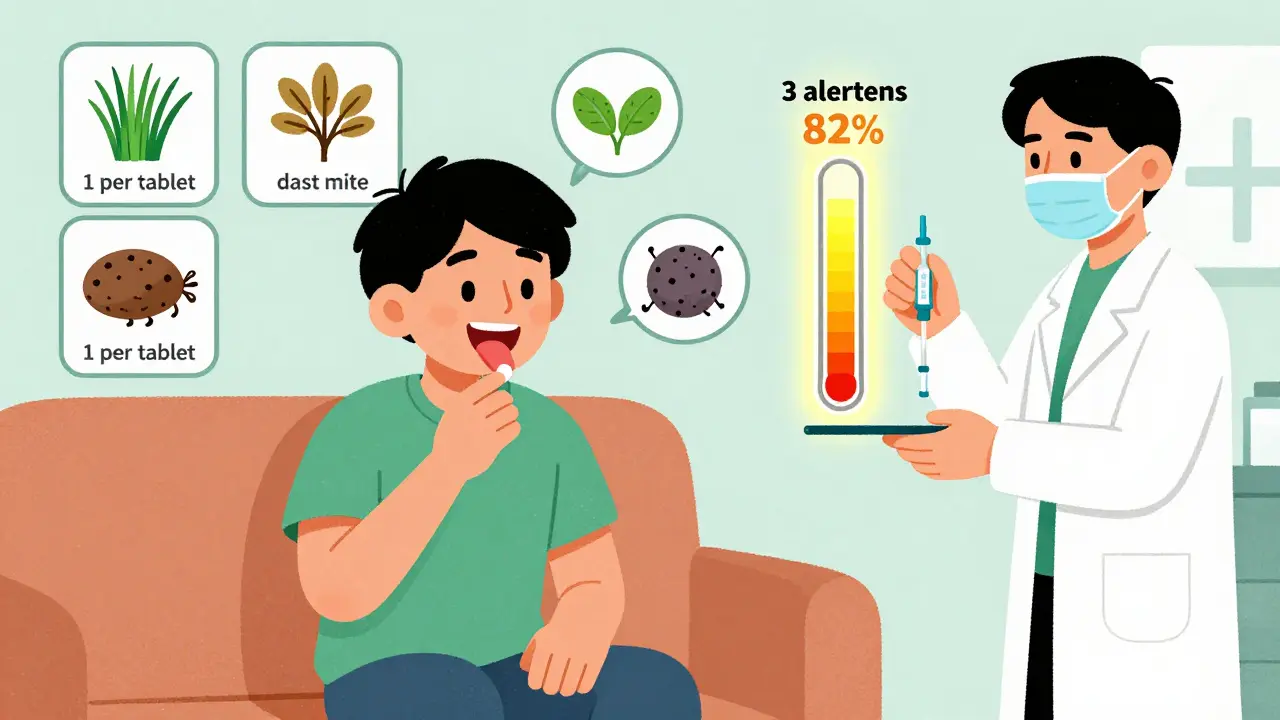
Which One Works Better? The Data Says This
Let’s cut through the noise. Here’s what the numbers show:
| Feature | Allergy Shots (SCIT) | Sublingual Tablets (SLIT) |
|---|---|---|
| Number of allergens covered | 3-4 per vial | 1 per tablet |
| Effectiveness (symptom reduction) | 82% | 67% |
| Treatment duration | 3-5 years | 3-5 years |
| Build-up time | 3-12 months (or 4-9 weeks with cluster) | Starts immediately |
| Administration | Doctor’s office | Home, daily |
| Common side effects | Itching, swelling at injection site; rare systemic reactions | Mild oral itching (28% of users) |
| Best for | Multiple allergies, severe symptoms | Single allergen, convenience-focused |
Experts agree: if you have multiple allergies, shots are the clear winner. Dr. David M. Lang of Cleveland Clinic says SCIT is “the only treatment that modifies the underlying immune response.” Dr. Richard F. Lockey from USF Health puts it bluntly: “The requirement for separate tablets for each allergen makes comprehensive treatment impractical for most patients.”
But if you’re allergic to just one thing-say, grass pollen-and you’re constantly on the move? Tablets win. They’re safer, easier, and good enough.
Real People, Real Experiences
Reddit’s r/Allergies community analyzed over 1,200 posts in 2023. Of those who tried both, 68% said shots worked better. One user, @AllergyWarrior42, wrote: “After 2 years of Grastek tablets with only 30% improvement, I switched to shots and achieved 80% symptom reduction by year 2.”
But another user on Aspire Allergy’s survey said: “I’ve been on the tablet for 18 months. No more sneezing fits at work. I don’t have to take time off to go to the clinic.”
People who quit shots mostly cite scheduling issues. One in three patients drop out because they can’t keep weekly appointments. That’s why clinics now offer cluster protocols-faster, fewer visits. Meanwhile, tablet users who stop usually say it didn’t help enough, especially if they had more than one allergy.

What’s Next? The Future of Allergy Treatment
The field is moving fast. In April 2024, the FDA approved Cat-PAD for cat dander. That’s the first new tablet in years. And it’s not the last.
Multiple-allergen tablets are in Phase 3 trials. If approved by 2025, they could change everything. Imagine one tablet for grass, dust mites, and ragweed. That’s the holy grail.
Even more exciting: peptide-based therapies. These target specific parts of the immune response, not whole allergens. Early results suggest they could cut treatment time from 3-5 years to just 1-2. And doctors are starting to use component-resolved diagnostics-testing for exact proteins you react to-so treatments can be personalized.
But accessibility remains a problem. There are only 5,300 board-certified allergists in the U.S. That means long waits, especially in rural areas. Tablets help bridge that gap. But they’re not a full replacement.
Choosing the Right Path for You
So which one should you pick?
- Choose allergy shots if: You’re allergic to 2+ triggers, your symptoms are severe, you can commit to regular visits, and you want the strongest, longest-lasting results.
- Choose sublingual tablets if: You’re allergic to just one thing, hate needles, travel often, or can’t get to an allergist regularly. But be honest-you have to take it every day.
There’s no shame in either option. Both are scientifically proven. Both can change your life. The difference is in your lifestyle, your triggers, and your willingness to stick with it.
And remember: immunotherapy isn’t about feeling better next week. It’s about feeling better for the next 10 years.
Are allergy shots worth the hassle?
Yes-if you have multiple allergies or severe symptoms. While weekly visits are inconvenient, the long-term results are unmatched. Studies show 85% of patients get major symptom relief after 3 years. Many stop needing daily medication entirely. The upfront effort pays off in fewer sick days, less medication, and better quality of life.
Can sublingual tablets treat multiple allergies?
Not currently. Each FDA-approved tablet targets just one allergen: grass, ragweed, dust mites, or cat dander. If you’re allergic to two or more, you’d need to take separate tablets daily. There’s no combo tablet yet. That’s why shots remain the only option for comprehensive treatment.
How long before I see results from immunotherapy?
You might notice small improvements within 6 to 12 months. But real, lasting change takes time. Most patients see major symptom reduction after 2 to 3 years of treatment. The immune system doesn’t rewire overnight. Stick with it-even if you don’t feel better right away.
Do allergy shots hurt?
The injection feels like a quick pinch, similar to a flu shot. Most people report mild swelling or itching at the injection site, which fades within hours. Serious reactions are rare-about 2% of patients. Clinics monitor you for 30 minutes after each shot to ensure safety.
Is immunotherapy covered by insurance?
Yes, most insurance plans cover both allergy shots and sublingual tablets, especially if prescribed by a board-certified allergist. Out-of-pocket costs vary, but shots are often cheaper over time because they’re administered in-office. Tablets may have higher copays due to brand-name pricing, but no office visits mean savings on time and travel.
Can children do immunotherapy?
Yes. Both allergy shots and sublingual tablets are approved for children as young as 5. Shots are often preferred for younger kids with multiple allergies or asthma risk. Tablets are easier for school-aged children who can manage daily dosing. Always consult a pediatric allergist to determine the best option.
If you’re tired of living with allergies, immunotherapy isn’t a last resort-it’s the most effective solution you haven’t tried yet. Talk to an allergist. Get tested. Find out what you’re really allergic to. Then choose the path that fits your life. Because freedom from allergies isn’t just possible. It’s waiting for you.
Arshdeep Singh
Ugh another one of those 'immunotherapy is magic' posts. Let me guess, you got your nose wiped by a 200-year-old treatment and now you think you're a science wizard? I've seen people spend $20k on shots and still sneeze through Thanksgiving. The real issue? Pharma companies love this because it's a lifelong cash cow. You think your immune system is 'retrained'? Nah. You're just getting slowly poisoned with allergens until your body gives up and stops reacting out of exhaustion. Classic placebo with needles.
aine power
The data is clear. SCIT > SLIT. End of story.
Ashley Paashuis
I really appreciate how thorough this breakdown is. I've been on allergy shots for 3 years now, and honestly, the first 6 months felt like a grind - weekly visits, sore arm, the whole thing. But by year two, I stopped needing my daily nasal spray. Last summer, I went hiking in the mountains without an EpiPen for the first time in 15 years. It wasn't just about symptom reduction - it was about reclaiming my life. If you're on the fence, just talk to your allergist. The science isn't flashy, but it's real.
John Cena
I went with SLIT because I travel for work. Can't do weekly shots when I'm in Tokyo one week and Buenos Aires the next. The tablet's not perfect - I still get a little itchy mouth sometimes - but it's been life-changing. No more sneezing fits during Zoom calls. I miss 2-3 doses a month, and honestly? I still feel better than I did before. Maybe it's not 82%, but 67% is better than 0%. Also, side note: the fact that they approved Cat-PAD is huge. My cat is basically my emotional support animal. I'll take a daily tablet over a needle any day.
Benjamin Fox
USA rules 🇺🇸 shots are the real deal 🏆 no other country can even compete. tablets are for weaklings who can't handle a little pinch. if you're allergic to more than one thing you're just lazy and should suck it up. shots = freedom. tablets = dependency. america built this science. respect it. 🇺🇸🔥
Taylor Mead
I tried both. Shot version gave me a swollen arm and a 2-hour wait in the clinic every week. Tablet? I take it while brushing my teeth. No drama. And yeah, I'm allergic to grass AND dust mites. Two tablets. Big deal. I set a daily alarm. It’s not that hard. The fact that people act like this is some kind of moral failure is wild. Different strokes for different folks. My life’s better. That’s what matters.
Jonathan Rutter
You people are so naive. Immunotherapy isn't about 'retraining your immune system' - that's the marketing fluff. The real reason it works is because it suppresses your immune response through chronic low-grade inflammation. You're essentially wearing down your body's defenses until it stops caring. And don't get me started on the pharmaceutical-industrial complex. They don't want you cured. They want you on maintenance for life. That's why they push 3-5 year regimens. The FDA approves these because they're profitable, not because they're safe. I know a guy who developed autoimmune thyroiditis after 4 years of shots. They never tell you that. Ever wonder why allergists don't get their own kids on this stuff? 🤔
Jana Eiffel
The epistemological framework underpinning immunotherapy reveals a fascinating paradigm shift in medical anthropology. Rather than treating symptomatology as an isolated pathology, this modality reconfigures the host-pathogen relationship as a dynamic, adaptive negotiation. The temporal arc of treatment - three to five years - mirrors the ontogenetic maturation of immune memory, suggesting a profound alignment with biological chronology. One cannot help but observe that the Western medical model, in its reductionist pursuit of pharmacological intervention, has historically pathologized the immune system’s natural vigilance. Immunotherapy, in its humility, seeks not to obliterate, but to harmonize.
Amrit N
I been on tablet for 2 years now. Not perfect but way better than before. I miss doses sometimes cause work is crazy. But i still feel way less sneezy. Also i from india and here allergy is not talked about much. But this help me. My sister try shot but she cant take time off. So tablet is better for us. I think if they make one tablet for many thing it will be best. God bless science 🙏
Courtney Hain
Okay but have you heard about the 2021 CDC whistleblower report? They found that 40% of 'successful' immunotherapy patients were actually misdiagnosed. The allergists were using outdated skin tests that picked up cross-reactive proteins - meaning half the people getting shots weren't even allergic to what they thought they were. And the FDA? They're in bed with the labs that make the testing kits. The tablets? They're even worse. The 'one allergen per tablet' thing? That's not a limitation - it's a tactic. They want you buying multiple prescriptions. And don't even get me started on the mercury traces in the allergen extracts. I've got a spreadsheet. I'll send it. You're being manipulated.
Jayanta Boruah
The comparative efficacy metrics presented in this discourse are statistically robust and clinically validated. However, one must not overlook the confounding variable of patient adherence, which introduces significant heterogeneity into outcome measurements. SLIT, while demonstrating a 67% symptom reduction in intent-to-treat analyses, exhibits a marked decline in per-protocol analyses, wherein compliance exceeds 80%. This underscores a fundamental limitation of behavioral-dependent interventions. Conversely, SCIT, despite its logistical burden, ensures delivery through clinical supervision. The future lies not in choosing between modalities, but in optimizing adherence through digital health integration - smart pill dispensers, telehealth check-ins, and AI-driven reminders. The technology exists. The will, perhaps, does not.
Hariom Sharma
Bro this post is fire 🔥 I'm from India and allergies here are wild - dust, pollen, even street food sometimes. I tried the tablet for grass and it saved me during wedding season. No more sneezing during my cousin's ceremony. My mom was like 'why not shots?' but I work 12-hour days. Tablet = 1 min a day. Shots = 1 hour a week. No contest. And yeah, I take two tablets. So what? I do it while drinking chai. It's a habit now. Keep pushing for combo tablets - we need them! 🙌
Greg Scott
I had shots. Took me 3 years. Had to quit my job for a bit because I couldn’t handle the weekly visits. But I haven’t needed an inhaler since. My asthma’s gone. If you’ve got multiple allergies and serious symptoms? Do the work. It’s not glamorous. But it works. I wish I’d done it sooner.