
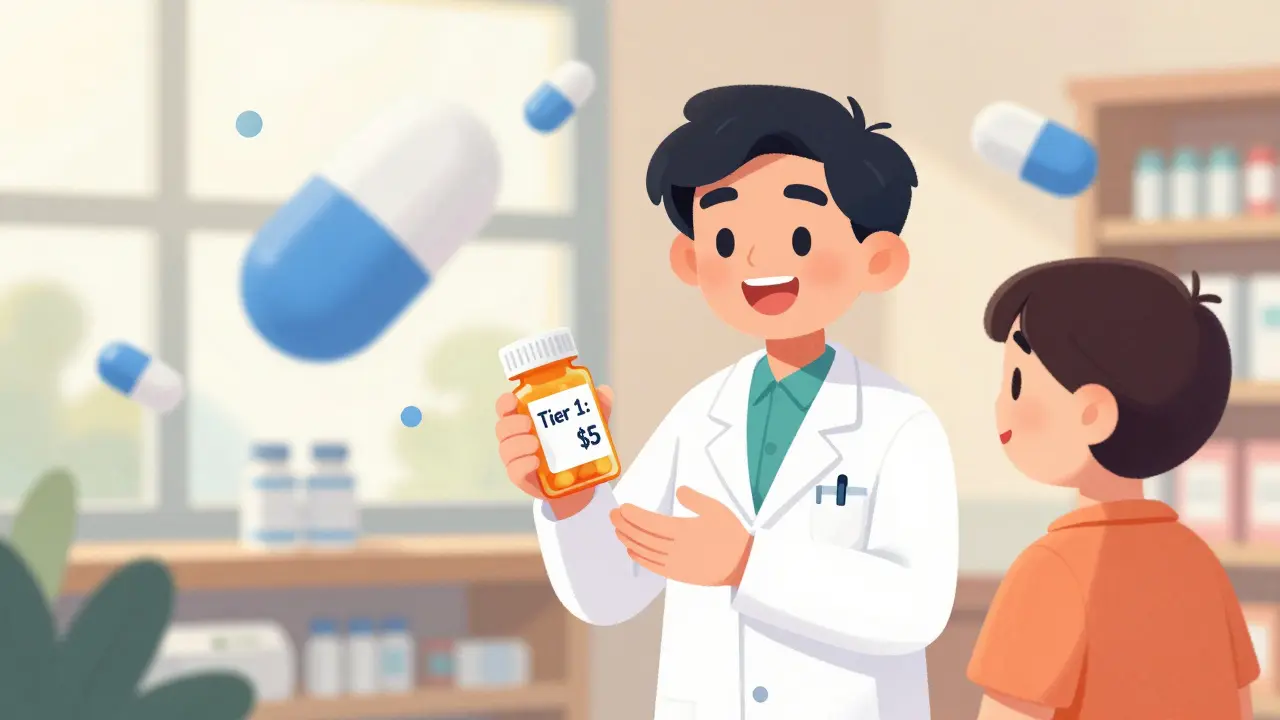
Ever filled a prescription and been shocked by the price - even though your insurance said it was covered? You’re not alone. The reason often lies in something called a formulary tier. These tiers decide how much you pay out of pocket for your meds, and they’re not always obvious until you’re at the pharmacy counter. Understanding how Tier 1, Tier 2, Tier 3, and non-formulary drugs work can save you hundreds - or even thousands - of dollars a year.
What Is a Formulary, Really?
A formulary is just a list of drugs your insurance plan agrees to cover. But it’s not a simple yes-or-no list. It’s broken into tiers, like levels in a game, where each level has a different price tag. The goal? Encourage you to pick cheaper, equally effective drugs - and save money for both you and your insurer. Most plans use three or four tiers. Some, especially for big employers or Medicare Part D, use five. The higher the tier, the more you pay. It’s not random. Drugs are placed based on cost, how well they work, whether a generic version exists, and how much the drugmaker pays the insurer in rebates.Tier 1: The Cheapest Option - Usually Generics
Tier 1 is where you want to be. This tier is mostly made up of generic drugs - the same active ingredients as brand names, but without the marketing costs. Think metformin for diabetes, lisinopril for high blood pressure, or atorvastatin for cholesterol. In commercial plans, you’ll typically pay $0 to $15 for a 30-day supply. Medicare Part D plans list Tier 1 as the lowest copayment tier, and for many seniors, that means $5 or less per prescription. The kicker? These drugs are usually the first choice for doctors because they’re proven, safe, and dirt cheap. If your doctor prescribes something brand new, ask: “Is there a generic in Tier 1 that works just as well?” You’d be surprised how often the answer is yes.Tier 2: Preferred Brand-Name Drugs
Tier 2 is where you’ll find brand-name drugs that your insurer has negotiated a good deal on. These aren’t generics, but the drugmaker agreed to give the plan a big discount - so you get a break too. Copays here usually range from $20 to $40 for a 30-day supply. Examples include popular meds like Synthroid (thyroid), Crestor (cholesterol), or Humira (for autoimmune conditions) - if your plan has negotiated a preferred rate. This tier is tricky because it’s not always clear why a drug is in Tier 2 instead of Tier 3. One plan might put Humira in Tier 2 because they got a rebate. Another plan might put it in Tier 3 because they didn’t. That’s why you can’t assume your friend’s plan works like yours.Tier 3: Non-Preferred Brand-Name Drugs - The Costly Middle Ground
Tier 3 is where things get expensive. These are brand-name drugs with no generic alternative - or ones the insurer doesn’t have a good deal on. They’re still covered, but you’re paying more for the privilege. Copays here jump to $50-$100 per 30-day supply. For some drugs, like certain cancer treatments or rare disease meds, you might pay even more. A 2022 CMS report showed that Medicare beneficiaries paid an average of $58.72 per Tier 3 prescription - nearly 50 times more than Tier 1. Doctors often prescribe Tier 3 drugs because they’re the only option for a condition. But before you accept it, ask: “Is there a Tier 2 alternative?” Or better yet: “Can I get an exception?” Many plans allow you to appeal if a Tier 3 drug is medically necessary and no cheaper option works.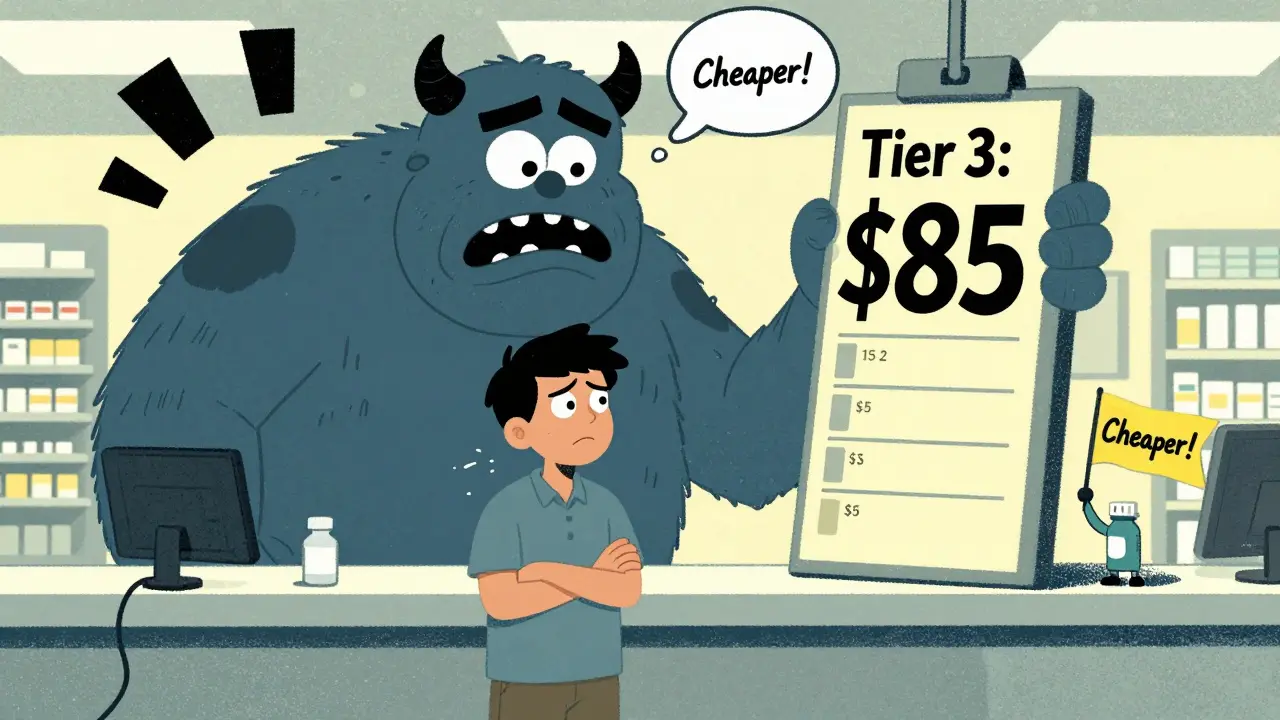
Tier 4 and 5: Specialty Drugs - The Real Cost Shockers
Some plans add Tier 4 and Tier 5. These are for high-cost specialty drugs - things like biologics for rheumatoid arthritis, gene therapies, or treatments for rare diseases like cystic fibrosis or spinal muscular atrophy. Here, you don’t pay a flat copay. You pay coinsurance - a percentage of the drug’s total cost. That could be 25%, 33%, or even up to 50%. A drug that costs $10,000 a month could leave you with a $5,000 bill. Medicare Part D has a special structure for these drugs, but commercial plans often lump them into Tier 4 or 5. The Patient Advocate Foundation found that 41% of patients delay or skip these meds because of the cost.What’s Non-Formulary? Not Covered - Unless You Fight
Non-formulary drugs aren’t on your plan’s list at all. That doesn’t mean they’re unsafe. It just means your insurer doesn’t have a deal with the maker. These could be newer drugs, off-label uses, or even older drugs that got replaced by generics. If your doctor prescribes a non-formulary drug, you’ll pay the full retail price - sometimes hundreds or thousands per month. But here’s the catch: you can usually request an exception. Your doctor fills out a form explaining why you need this specific drug - maybe because you had side effects from all the alternatives, or it’s the only one that works for your condition. If approved, the drug moves to a covered tier, and your costs drop dramatically. A 2022 case documented by the Medicare Rights Center showed a patient saved $97 a month after getting an exception for a Tier 3 drug to be covered at Tier 2 prices.Why Do Tiers Change - And Why Is It So Confusing?
Formularies aren’t set in stone. Plans can change tiers quarterly. A drug you paid $15 for in January might jump to Tier 3 in April - with no warning. Why? Drugmakers renegotiate rebates. New generics hit the market. Insurers cut deals with PBMs (Pharmacy Benefit Managers) like CVS Caremark or Express Scripts - the middlemen who manage most formularies. A 2022 KFF survey found that 43% of commercial plan members had at least one drug moved to a higher tier without notice. That’s not a glitch - it’s standard practice. The result? People get confused. A Reddit thread from late 2022 had nearly 300 comments from people asking, “Why is my drug suddenly more expensive?” Only 32% of plans clearly explain how drugs get assigned to tiers.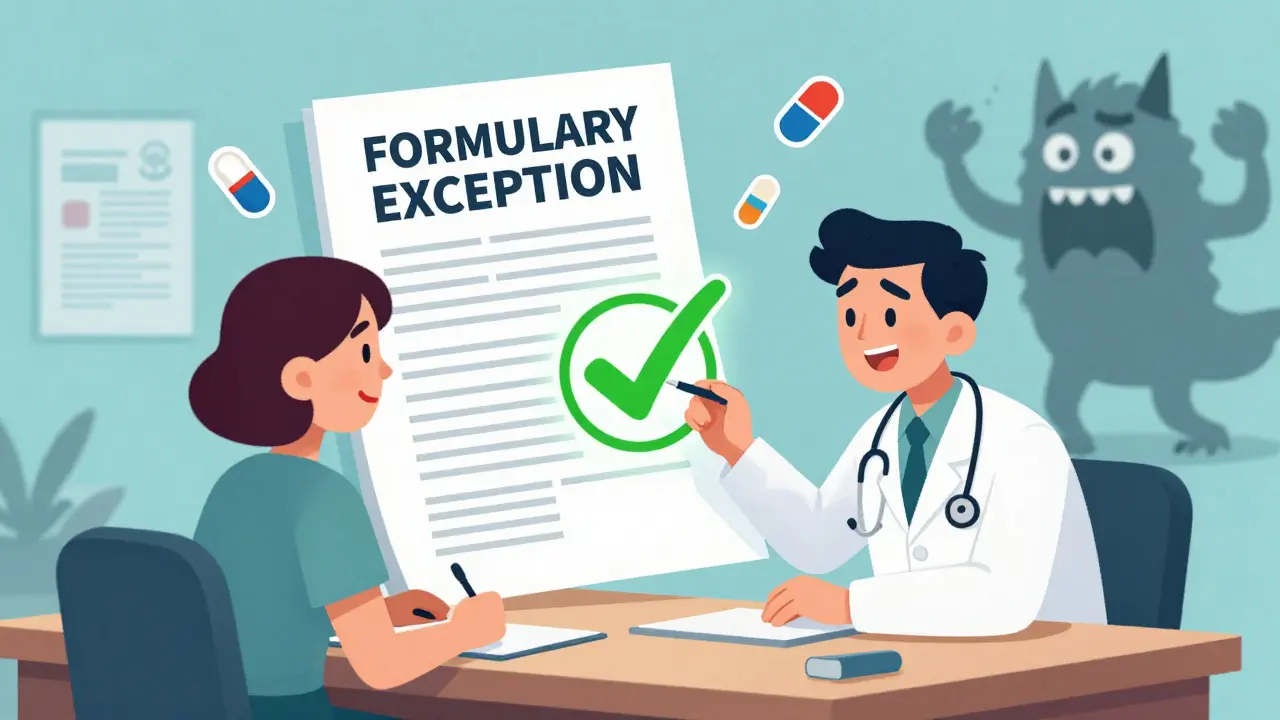
How to Find Out What Tier Your Drug Is In
Don’t guess. Don’t wait until you’re at the pharmacy. Do this before you fill any new prescription:- Check your plan’s website. Look for “Formulary” or “Drug List.”
- Download the full formulary document - it’s usually 100+ pages, but searchable.
- Use tools like Medicare’s Plan Finder or Humana’s Drug Cost Finder.
- Call your insurer. Ask: “What tier is [drug name] on my plan?”
- Ask your pharmacist. They have real-time access to your plan’s formulary.
What to Do If Your Drug Is Too Expensive
You have options - even if your drug is in Tier 3 or higher:- Ask your doctor for a generic or Tier 2 alternative.
- Request a formulary exception - your doctor writes a letter explaining medical necessity.
- Apply for patient assistance programs - drugmakers often offer free or discounted meds to those who qualify.
- Use GoodRx or SingleCare - these coupons can beat your insurance price.
- Switch plans during open enrollment - compare formularies before choosing.
Christina Widodo
So I just found out my insulin is Tier 4 and I pay 30% of $1,200 a month? That’s not coverage, that’s a hostage situation.
Alice Elanora Shepherd
Don’t panic - check if your pharmacy offers a GoodRx coupon first. I saved $87 last month on my metformin just by switching from insurance to the coupon. It’s not glamorous, but it’s legal. And yes, I made a spreadsheet. I have color-coded rows. I’m sorry.
gary ysturiz
Just because your plan moved your drug to a higher tier doesn’t mean you’re stuck. Call your insurer. Ask for an exception. Most of the time, they’ll move it back if your doctor writes a note. It takes five minutes. You’ve got this.
Amanda Eichstaedt
It’s wild how we treat healthcare like a game show where the prize is not going bankrupt. Tiered formularies sound smart on paper - encourage generics, save money - but the real winners are the middlemen who negotiate rebates no one sees. Meanwhile, people skip doses because they can’t afford the $75 copay on a drug that’s been around since 1987. We call this innovation? It’s just capitalism with a clipboard.
Sonal Guha
Anyone who still uses brand name drugs is just lazy. If you can’t afford generics, you shouldn’t be on meds. Simple math. Stop whining.
Alex Fortwengler
Did you know PBMs are owned by the same companies that make the drugs? That’s why your Tier 2 drug suddenly became Tier 4. It’s not a mistake - it’s a scam. The whole system is rigged. The government knows. They just don’t care. You’re being played.
TiM Vince
I used to think formularies were confusing. Then I worked at a pharmacy for three years. People cry in the parking lot over $45 copays. I’ve seen it. The system isn’t broken - it’s designed this way. The only way out is to know your options before you get there.
Jennifer Phelps
My doctor prescribed me a Tier 3 drug and I didn’t even know until I got the bill. I called my plan and they said it was moved last month. No email. No letter. Just a surprise bill. This is not transparency. This is betrayal.
Jessica Bnouzalim
PSA: Always ask your pharmacist if there’s a cheaper way. They know the tricks. I once got my $120 monthly drug for $18 by switching from insurance to a manufacturer coupon + GoodRx. I did a happy dance in the parking lot. 🙌
Monica Puglia
I made a little chart: Drug | Tier | Copay | Last Checked | Notes. I update it every time I get a new plan doc. It’s not sexy, but it’s saved me over $1,200 this year. You don’t need to be a genius - just organized. 💪
Audu ikhlas
Why do Americans whine so much about $50 pills? In Nigeria we pay 10x more for worse drugs and we don’t have insurance. You people have it easy. Stop complaining. Get a job. Or move.
Daniel Pate
The real issue isn’t tiers - it’s that drug pricing is completely unregulated. If a company can charge $50,000 for a drug that costs $500 to make and nobody stops them, then the tier system is just a distraction. We’re fixing the label, not the disease.
Jose Mecanico
I had to appeal for my RA drug to get it moved from Tier 3 to Tier 2. Took three weeks. My doctor wrote a 3-page letter. I got approved. It’s a pain, but it’s worth it. Don’t give up.
Windie Wilson
So let me get this straight - we have a system where your life-saving drug costs more because it’s newer… and the solution is to beg your doctor to prescribe something older? That’s not healthcare. That’s a time machine with a copay.
steve ker
Who even reads these formularies? I just pay what the pharmacy says. If it’s too much, I skip a dose. It’s not my fault the system is broken.