
Every year, thousands of children in the U.S. grow up with undiagnosed vision problems that could have been fixed easily-if only someone had looked. Pediatric vision screening isn’t just a quick check during a well-child visit. It’s a critical window to catch conditions like amblyopia (lazy eye) and strabismus (crossed eyes) before they become permanent. The truth? If you wait until a child says their vision is blurry, it’s often too late.
Why Screen So Early?
The human visual system develops rapidly in the first few years of life. By age 7, most of that development is complete. After that, the brain stops adapting to poor signals from one eye. If a child has a lazy eye or a significant refractive error like nearsightedness or astigmatism, the brain starts ignoring the weaker eye. Left untreated, this leads to permanent vision loss in that eye-even if the eye itself is healthy. Studies show that when amblyopia is caught before age 5, treatment works in 80-95% of cases. But if it’s found after age 8, success drops to just 10-50%. That’s not a small difference-it’s the difference between seeing clearly for life or living with one eye that never fully develops. Amblyopia affects 1.2% to 3.6% of all children. Strabismus affects nearly 2% to 3.4%. These aren’t rare. They’re common enough that every child needs screening, not just those who seem to have trouble.What Gets Screened and When?
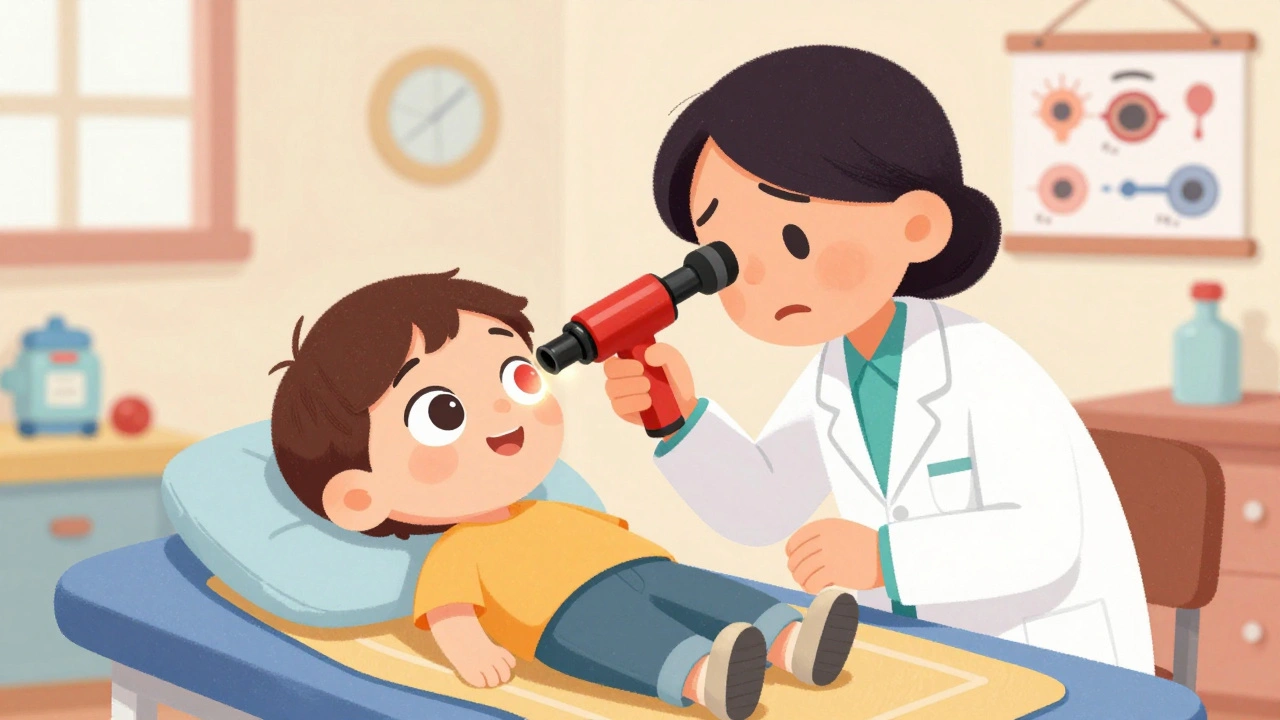
Screening isn’t one-size-fits-all. It changes as kids grow. For babies under 6 months, doctors check the red reflex. Using a small light tool called an ophthalmoscope, they shine light into each eye. A healthy eye reflects a red glow. If one eye looks dark or white, it could mean a cataract, retinoblastoma (a rare eye tumor), or other serious issue. This test takes seconds but can save a child’s sight-or life. From 6 months to 3 years, screening includes watching how the eyes move together, checking for droopy eyelids, and repeating the red reflex. No charts yet. Just observation. Starting at age 3, things get more structured. This is when visual acuity testing begins. Children are asked to identify shapes or letters from 10 feet away. The most common tools are:- LEA Symbols (circles, squares, apples, houses) for younger kids
- HOTV letters (H, O, T, V) for those who can name letters
- Sloan letters for kids 6 and older
- Age 3: Must read at least 4 out of 5 symbols on the 20/50 line
- Age 4: Must read 4 out of 5 on the 20/40 line
- Age 5+: Must read 4 out of 5 on the 20/32 line
Old School vs. New Tech
There are two main ways to screen: eye charts and machines. Eye charts are the classic method. They’re cheap, widely available, and trusted. But they require a child to understand what’s being asked and cooperate. About 1 in 5 three-year-olds just won’t play along. That’s not defiance-it’s development. They’re too young to sit still or understand the game. That’s where instrument-based screening comes in. Devices like the SureSight, Power Refractor, and the newer blinq™ scanner don’t need a child to say anything. They use light and sensors to measure how the eye focuses. In under a minute, they can detect nearsightedness, farsightedness, astigmatism, and eye misalignment. The blinq™ scanner, FDA-cleared in 2018, is especially promising. In a study of 200 children, it caught every single case of amblyopia or strabismus that needed treatment (100% sensitivity) and correctly said 91% of healthy eyes didn’t need intervention. That’s better than most eye chart tests. But here’s the catch: machines can flag kids who don’t need treatment. A small refractive error might show up on the screen but won’t affect vision. That leads to unnecessary referrals, which can cause stress and cost money. So many experts still recommend using eye charts for kids who can handle them-especially after age 5. The American Academy of Pediatrics says: use instrument-based screening for kids who can’t do eye charts, starting at age 1. But don’t replace chart testing entirely until more evidence shows it’s better across the board.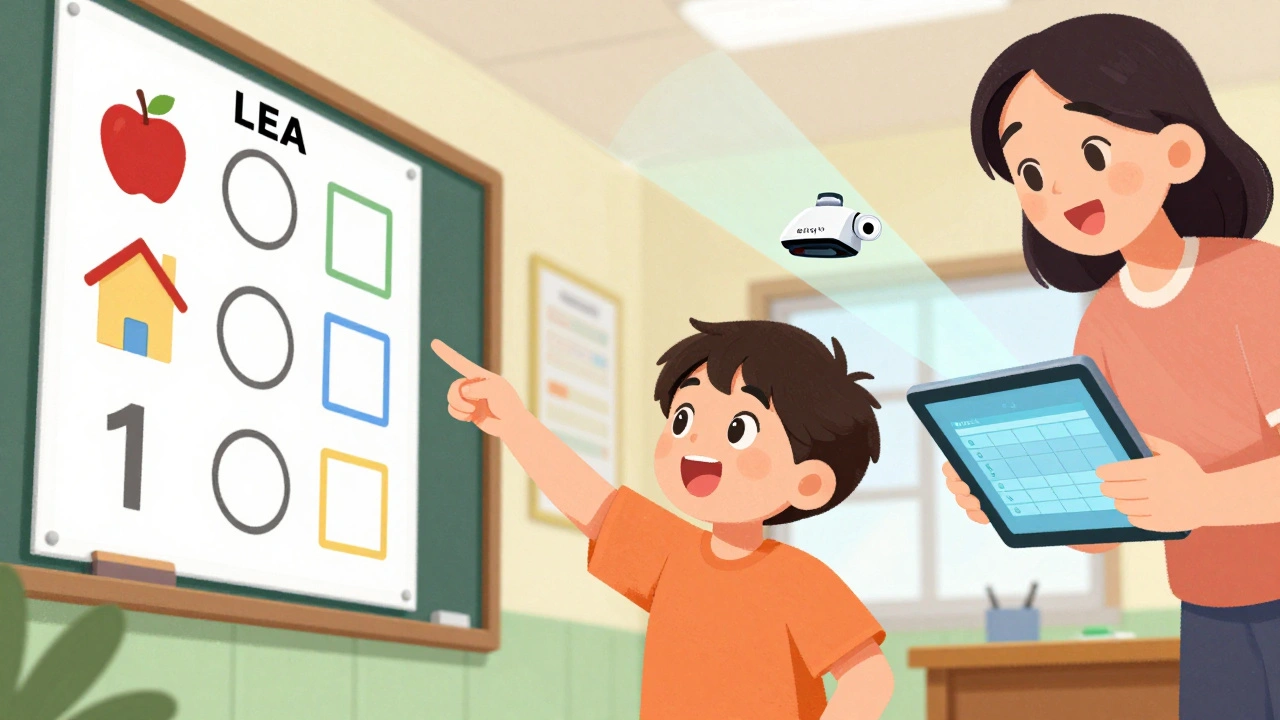
Who Does the Screening?
It’s not just pediatric ophthalmologists. In fact, most screenings happen in primary care offices, schools, and community clinics. Pediatricians, nurse practitioners, and even trained medical assistants can learn to do it. Training takes just 2-4 hours. The National Center for Children’s Vision and Eye Health (NCCVEH) offers free online modules used by over 15,000 providers since 2016. The key? Consistency. The chart must be at the child’s eye level. The room must be well-lit. The distance must be exactly 10 feet. One study found that 25% of screenings failed because the lighting was wrong. Another 20% had the wrong distance. These aren’t minor mistakes-they lead to false positives or missed cases.What Happens After a Positive Screen?
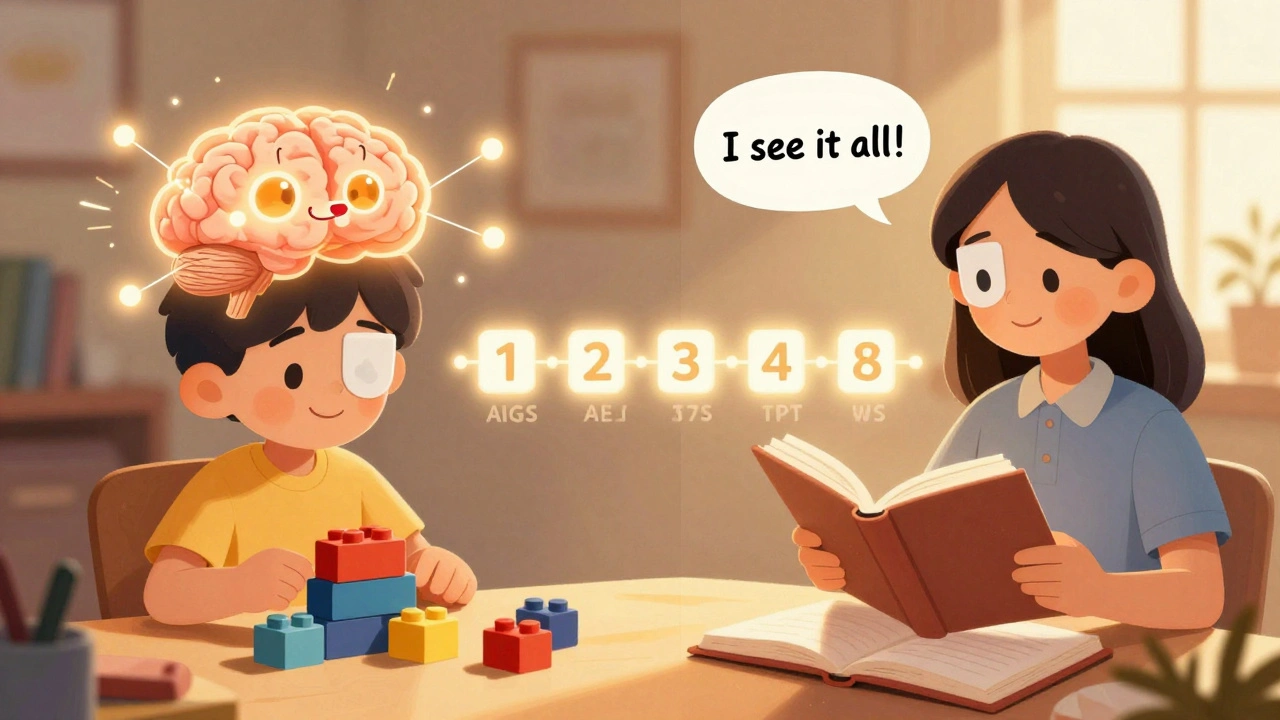
A failed screen doesn’t mean your child has a serious problem. But it does mean they need a full eye exam by a pediatric ophthalmologist or optometrist who specializes in kids. Common treatments include:- Patching-covering the stronger eye to force the weaker one to work
- Atropine drops-blurring the good eye temporarily
- Glasses-to correct refractive errors
- Surgery-for persistent strabismus
Barriers and Inequities
Despite how effective screening is, not all kids get it. Hispanic and Black children are 20-30% less likely to receive recommended vision screening than white children, according to national health surveys. Why? Access. Cost. Language barriers. Lack of provider training. In some states, school-entry screening is required. In others, it’s optional. Medicaid programs in 47 states cover vision screening as part of well-child visits-but not every family knows that. The National Eye Institute is now funding $2.5 million in research to improve screening in underserved communities. That’s progress. But it’s not enough.What’s Next?
The future of pediatric vision screening is moving younger. A 2022 study in JAMA Pediatrics showed that instrument-based screening works reliably as early as 9 months. That means we might soon be screening for vision problems before a child even talks. The American Academy of Pediatrics is expected to update its guidelines by 2025 to reflect this. If adopted, we could see vision screening added to newborn and 12-month well-child visits. And the economics? Clear. The U.S. Preventive Services Task Force found that for every dollar spent on pediatric vision screening, $3.70 is saved in lifetime costs-avoiding lost productivity, special education needs, and long-term care for preventable vision loss. That’s $1.2 billion saved every year.What Parents Should Do
You don’t need to wait for the doctor to bring it up. Ask:- "Is my child getting a vision screening today?"
- "What method are you using-chart or machine?"
- "What happens if the screen fails?"
How often should a child get a vision screening?
Children should be screened at least once between ages 3 and 5, according to the U.S. Preventive Services Task Force. Many pediatric guidelines, including the American Academy of Pediatrics, recommend screening at ages 3, 4, and 5, and again before starting school. If a child fails a screen, they need a full eye exam immediately. Even if they pass, follow-up screenings are important because vision can change quickly in early childhood.
Can a child fail a vision screening and still have normal vision?
Yes. A failed screen doesn’t always mean a vision problem. Some children don’t cooperate during testing, or a small refractive error may show up on an instrument but not affect daily function. That’s why a failed screen leads to a referral-not a diagnosis. A full eye exam by a pediatric eye specialist will confirm whether treatment is needed. False positives happen, but they’re far better than missing a real problem.
Are at-home vision tests reliable for kids?
No. At-home tests, like printable charts or phone apps, aren’t accurate enough for young children. They don’t account for lighting, distance, or proper occlusion of one eye. They also can’t detect conditions like amblyopia or strabismus reliably. These tools might catch obvious problems, but they miss the subtle ones that cause lifelong vision loss. Always rely on a professional screening using standardized tools and protocols.
Is vision screening covered by insurance?
Yes. Under the Affordable Care Act, pediatric vision screening is included as an essential health benefit. Most private insurance plans and all Medicaid programs in the U.S. cover screening as part of routine well-child visits. Some states also require school-based screenings. If you’re told there’s a cost, ask if it’s for the screening or for a follow-up eye exam-those are often billed separately.
What if my child refuses to cooperate during screening?
It’s common, especially in children under 4. Many providers use instrument-based screening devices like the blinq™ or SureSight for these cases-they don’t require the child to respond. If those aren’t available, the provider may try again at the next visit or refer the child for a full eye exam. Don’t assume a failed screen means your child has a problem. It just means the test couldn’t be completed reliably. Follow-up is key.
john damon
OMG this is so important 😭 I didn't know my kid's vision could just... fade away like that. My 4yo failed the screening last year and we thought it was just being a toddler. Turns out she had lazy eye. Patching for 3 months and now she sees like a hawk 🦅💖
matthew dendle
so u mean to tell me my kid needs to sit still for some stupid chart test at age 3 and if they cry or run away theyre labeled broken?? lmao. my nephew just screamed and kicked and they sent him for a full exam. turned out he had perfect vision. but now we have a 2k bill and a traumatized 3yo. thanks for the anxiety doc 😑
Jimmy Kärnfeldt
This post hit me right in the feels. I remember my little sister growing up with undiagnosed astigmatism-she’d squint at the TV, say she was fine, and we just thought she was tired. By the time she got glasses at 7, her brain had already started tuning out one eye. She’s 28 now and still has 20/40 vision in that eye. It’s not tragic, but it’s a quiet loss. That’s why I’m so glad we’re finally catching this stuff early. Every child deserves to see the world clearly. Even if they’re too young to say it.
And honestly? The tech like blinq™ gives me hope. No more forcing toddlers to play guessing games. Just a quick flash, and boom-you know. It’s not magic, it’s science. And science that saves sight? That’s the kind of progress I want to see more of.
Ariel Nichole
Such a great breakdown! I’m a preschool teacher and we do vision screenings every fall. I used to think it was just a formality, but now I realize how crucial it is. One little girl last year failed the chart test-she didn’t say anything, just kept pointing at the wrong shapes. Turned out she had a huge refractive error. Got glasses and now she’s the first one to raise her hand in class. So simple. So life-changing.
Also, big props to the blinq™ device. We got one last month and the kids love it. They think it’s a magic wand. No crying. No stress. Just beep and done.
Monica Evan
my cousin in texas had her 2yo screened with the machine thing and it flagged her for astigmatism but she passed the chart later. turned out the machine was right. the chart was wrong because she was tired and distracted. so yeah both matter. also-why do we still use 10 feet? my living room is 8 feet. do they really measure with a tape??
and can we talk about how black and hispanic families get left out? my friend’s kid missed screening for 2 years because the clinic didn’t have Spanish materials. just saying. this stuff should be accessible not lucky
Taylor Dressler
Let’s be clear: pediatric vision screening is one of the most cost-effective preventive interventions in all of medicine. The USPSTF data is rock solid-$3.70 saved for every $1 spent. That’s not a guess. That’s a meta-analysis of 17 studies.
And yes, false positives happen. But the harm of a false negative-permanent vision loss-is irreversible. The trade-off is not just acceptable, it’s ethically mandatory. If we can detect amblyopia before age 5 with 95% success, and we don’t, we’re failing children. Period.
Instrument-based screening isn’t replacing charts-it’s complementing them. Use the machine for kids under 4. Use the chart for kids who can cooperate. Train every nurse, PA, and med tech. Make it standard. It’s not optional. It’s medicine.
Aidan Stacey
My son was 3 when he failed. We thought it was just a phase. Then we got the referral. And then we got the patch. And then we got the tears. And the tantrums. And the 3am crying because he couldn’t see the moon through his window. But now? Now he sees the moon. He sees his dog’s face. He sees the stars.
That’s not a medical success. That’s a miracle. And it only happened because someone didn’t say ‘wait and see.’ They said ‘act now.’
If you’re reading this and your kid hasn’t been screened? Do it today. Don’t wait. Don’t hope. Just do it. Their future self is begging you.
Jean Claude de La Ronde
so we screen kids for vision but we dont screen parents for basic competence? like… if your kid can't even tell you what the shape is at age 3, maybe the problem isnt their eye… maybe its the fact that you think a chart is a game? we are putting tech in front of children to fix our inability to communicate. the real failure isnt the child's vision. its our expectation that a 2 year old should care about a letter test. maybe we should be screening parents for patience instead.
also the blinq™ thing looks like a sci fi toy. i love it. but also… why is it only available in rich suburbs? just saying