
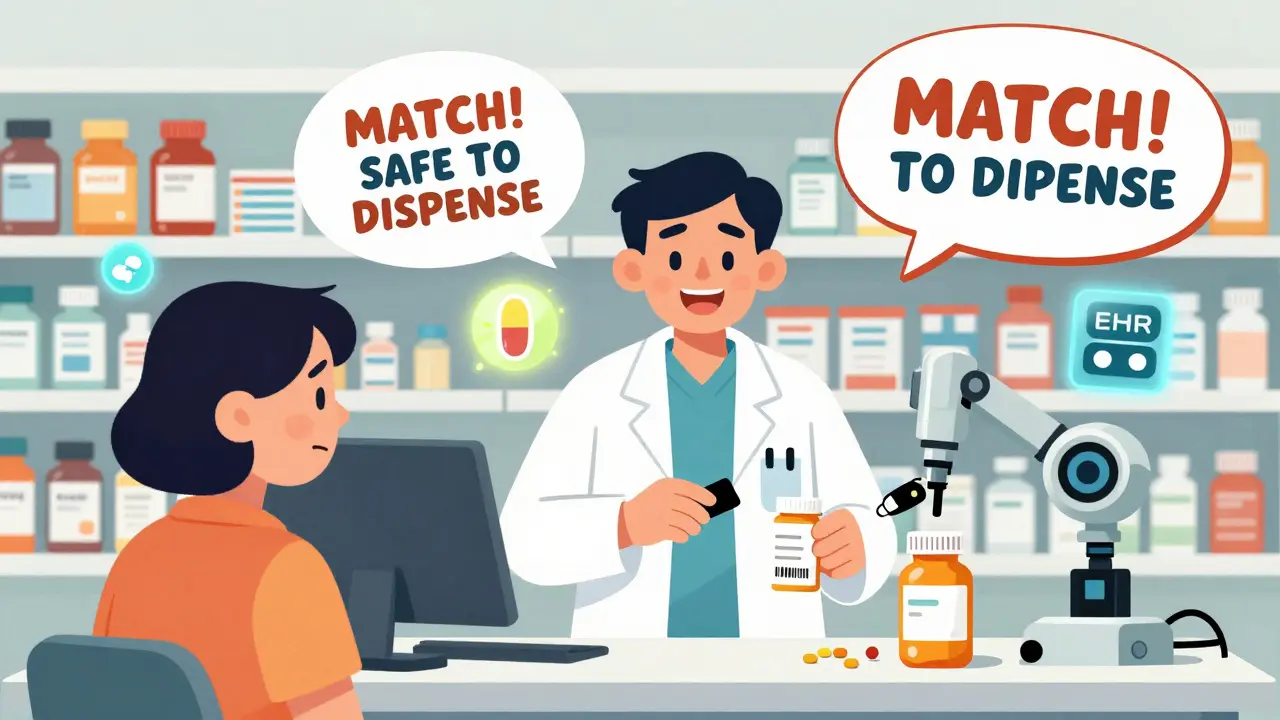
Every year, hundreds of thousands of medication errors happen in U.S. pharmacies. Many are small-wrong dosage, mislabeled bottle-but some are deadly. The pharmacy workflow is the backbone of safe medication delivery, and when it breaks down, patients pay the price. That’s why modern pharmacies don’t just rely on pharmacists to double-check everything. They use automated systems designed to catch mistakes before they leave the counter.
How Pharmacy Workflow Systems Prevent Errors
A pharmacy workflow isn’t just a list of steps. It’s a chain of decisions, checks, and actions that turn a doctor’s prescription into a patient’s medication. Without automation, this process relies on human memory, handwriting, and focus. And humans make mistakes. A tired pharmacist reading a scribbled script. A technician grabbing the wrong bottle from a crowded shelf. A missed drug interaction because the patient’s allergy wasn’t flagged. Modern pharmacy workflow systems stop these errors before they start. They use barcode scanning to confirm the right drug, right dose, right patient. They cross-check prescriptions against electronic health records to spot allergies or dangerous interactions. They even alert pharmacists if a medication is expired or running low in stock. One study found that technology-assisted workflows detect 14 times more errors than manual checks alone. That’s not just efficiency-it’s life-saving. These systems don’t replace pharmacists. They give pharmacists superpowers: real-time data, automated alerts, and fewer distractions so they can focus on complex cases instead of counting pills.Key Components of a Modern Pharmacy Workflow System
These systems aren’t magic. They’re built from specific, proven technologies working together.- Barcode verification: Every medication vial, pill bottle, and IV bag has a barcode. Before it’s handed to a patient, the system scans it and matches it to the electronic prescription. If it doesn’t match, the system stops everything.
- Electronic prescription processing: No more faxed or handwritten orders. Prescriptions come in digitally from doctors’ offices and clinics, reducing misinterpretation.
- Drug interaction checking: The system pulls up the patient’s full medication history and flags conflicts. For example, if a patient is on blood thinners and a new prescription is for an NSAID, the system warns the pharmacist immediately.
- Inventory management: The system tracks every pill and vial in real time. When stock runs low, it auto-orders more. It also alerts staff when medications are nearing expiration-critical for expensive or time-sensitive drugs.
- Integration with EHRs: The system talks to the hospital’s or clinic’s electronic health record (EHR) using HL7 standards. This means the pharmacist sees the patient’s lab results, diagnoses, and allergies-not just the prescription.
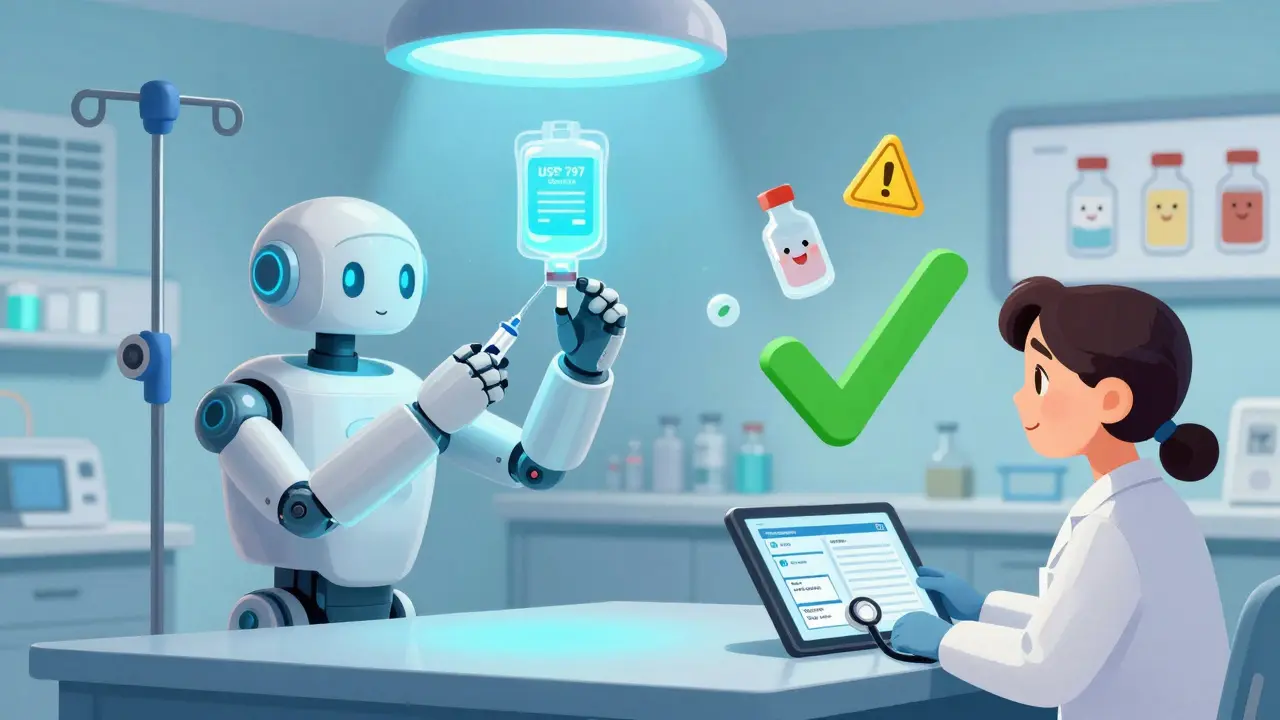
- Robotics for IV compounding: In hospitals, IV medications are mixed by robots in sterile rooms. These machines measure ingredients down to the microliter, reducing human error in complex mixtures.
These features aren’t optional anymore. They’re expected. The American Society of Health-System Pharmacists (ASHP) says any pharmacy handling IV medications should have automated systems in place. It’s not just best practice-it’s becoming a regulatory requirement.
Types of Pharmacy Workflow Systems
Not all systems are the same. The right one depends on the pharmacy’s size and focus.- Enterprise pharmacy systems (like Epic and Cerner) are built for large hospitals. They handle everything from inpatient orders to outpatient refills and integrate with dozens of other hospital systems.
- Specialized IV compounding systems (like Wolters Kluwer’s Simplifi+ IV Workflow Management) focus on sterile compounding. They track every step of the IV preparation process, from ingredient selection to final check, ensuring compliance with USP <797> and <800> standards.
- Workflow automation tools (like Cflow and KanBo) are lighter, cloud-based platforms used by independent pharmacies. They automate task assignments, track prescription fill times, and reduce bottlenecks without needing full hospital integration.
For example, a community pharmacy might use Cflow to automate refill requests and reduce customer wait times. A hospital IV pharmacy might use Simplifi+ to ensure every IV bag is prepared in a clean room with the right dose and labeled correctly. Both reduce errors-but in different ways.
Implementation Challenges and Real-World Results
Installing a new system sounds simple. Buy it, plug it in, train staff. But in reality, it takes 3 to 6 months to get it right. Many pharmacies hit roadblocks:- Staff resistance. Pharmacists and technicians are used to doing things a certain way. New systems feel like extra work at first.
- Training gaps. If staff aren’t properly trained, they might disable safety features or work around the system.
- Integration failures. If the system doesn’t talk cleanly to the EHR or billing software, data gets lost or duplicated.
But when done right, the results are clear. One 340B hospital saw a 70% drop in documentation errors after implementing an HL7 interface that gave pharmacists full control over the preparation process. Another pharmacy reduced medication errors by 85% within a year of installing barcode scanning and automated checks.
Users of systems like KanBo praise features like real-time task tracking and card-based workflows that make it easy to see which prescriptions are stuck in the queue. Pharmacists using Cflow report saving 10-15 hours a week on administrative tasks, with fewer calls from patients asking why their refill is late.
Cost, Compliance, and Future Trends
These systems aren’t cheap. Enterprise solutions cost between $50,000 and $250,000 a year. Smaller systems start around $10,000 annually. But the cost of not having them is higher. A single medication error can lead to lawsuits, regulatory fines, or worse-patient harm. The financial and reputational damage far outweighs the software cost. Compliance is non-negotiable. Systems must meet:- HIPAA for patient privacy
- USP <797> for sterile compounding
- USP <800> for hazardous drug handling
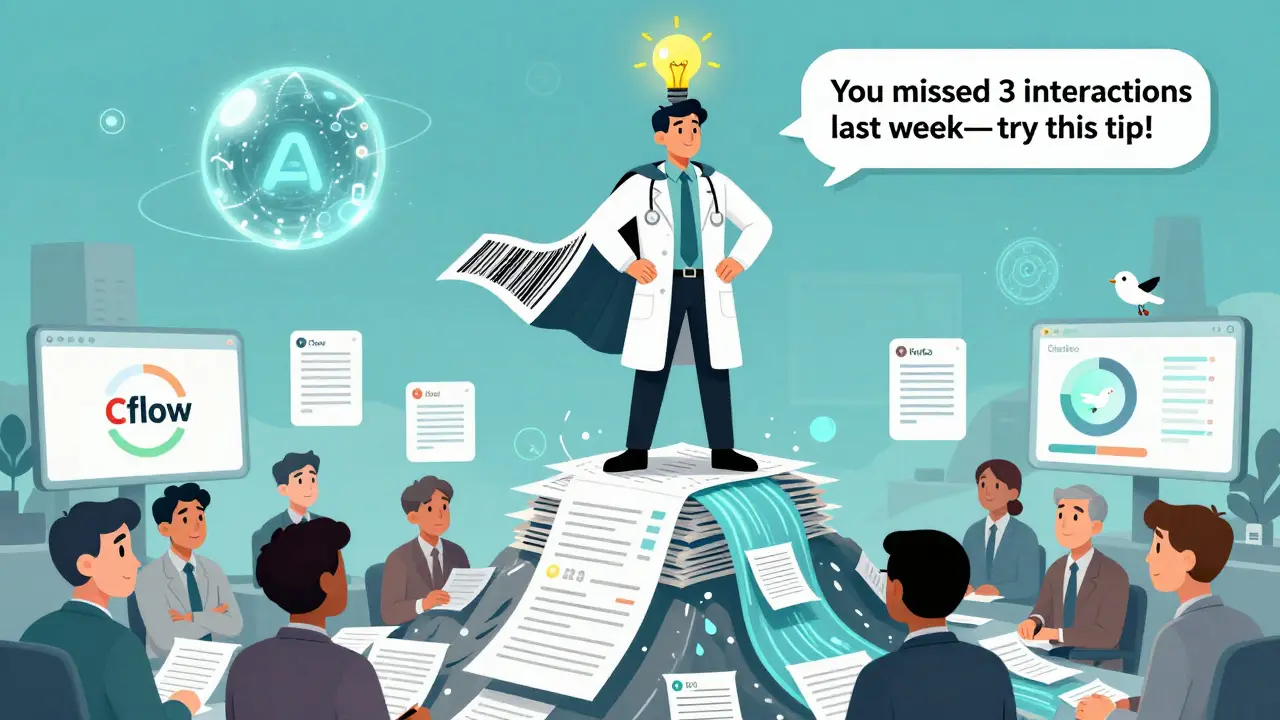
Looking ahead, the next wave of innovation includes AI-driven inventory forecasting and predictive error alerts. Imagine a system that notices a pharmacist consistently misses a certain type of interaction and offers real-time coaching. Or robots that learn from past compounding mistakes to improve accuracy.
Telehealth integration is also growing. As more prescriptions come from virtual visits, pharmacy systems need to handle digital orders just as securely and quickly as in-person ones.
What Pharmacists Need to Know
If you work in a pharmacy, your role is changing. You’re no longer just the person who fills bottles. You’re the safety officer, the data interpreter, the system manager. To succeed:- Learn your system inside and out-not just how to use it, but why each alert exists.
- Don’t override safety features just to save time. That’s how errors slip through.
- Track your metrics: prescription fill times, error rates, refill turnaround. Use the system’s reporting tools to show where improvements are needed.
- Advocate for training. If your team isn’t confident, errors will happen-even with the best technology.
Technology doesn’t eliminate human judgment. It enhances it. The best pharmacists today aren’t the ones who remember every drug interaction-they’re the ones who know how to use the system to catch what they might miss.
How do barcode systems prevent medication errors in pharmacies?
Barcode systems scan the medication and the patient’s wristband or prescription label at every step. If the drug, dose, or patient doesn’t match the electronic record, the system blocks the process and alerts the pharmacist. This stops 90% of dispensing errors caused by human misreads or mispicks.
Are pharmacy workflow systems only for hospitals?
No. While hospitals use advanced systems for IV compounding and inpatient orders, independent pharmacies use simpler, cloud-based tools to automate refills, track inventory, and reduce wait times. Systems like Cflow and Kissflow are designed specifically for community pharmacies with smaller budgets.
What’s the biggest mistake pharmacies make when adopting workflow systems?
The biggest mistake is thinking it’s just a software install. The real work is redesigning workflows and training staff. Many pharmacies buy the system, skip proper training, and then blame the software when errors continue. Success comes from changing how people work-not just what tools they use.
How do these systems help with regulatory compliance?
They automatically log every step of the process-who did what, when, and why. This creates an audit trail for USP <797>, <800>, and HIPAA. Systems flag expired drugs, enforce sterile techniques, and ensure only authorized staff access controlled substances. Compliance isn’t a checklist anymore-it’s built into the workflow.
Can AI really reduce pharmacy errors?
Yes. Early AI tools analyze patterns in past errors and flag high-risk prescriptions before they’re filled. For example, if a patient has had three errors in the last year, the system highlights their next prescription for extra review. Some systems even suggest alternative medications based on a patient’s history and allergies. AI doesn’t replace pharmacists-it helps them focus on the most critical cases.
Vinayak Naik
Man, I seen this in my cousin’s pharmacy in Delhi-barcode scanners, robots mixin’ IVs, the whole shebang. Used to take 45 mins to fill a script, now it’s 12. And no more ‘why did I get metformin instead of insulin?’ moments. Tech ain’t perfect, but it’s way better than guesswork and tired eyes.
Cam Jane
Yes. This. I’ve worked in three different pharmacies and the ones with automation? Less burnout, fewer calls from angry patients, and pharmacists actually get to talk to people instead of counting pills. It’s not magic-it’s just basic human decency wrapped in software.
Wesley Pereira
Oh wow, so now we’re paying $200K so pharmacists don’t have to read handwriting? Groundbreaking. Meanwhile, my grandma still gets her meds in a paper bag with a sticky note that says ‘take 2, not 4’. But hey, at least the robot got its coffee break.
Tom Swinton
I’ve been in this game for 22 years, and let me tell you-when I started, we had a chalkboard, a phone, and a prayer. Now? We’ve got systems that cross-check your meds against your last 17 prescriptions, your kidney function, your allergies, your cat’s name if it’s in the EHR-and they STILL don’t stop the guy who says ‘just give me the blue one, I know what I need.’ Technology doesn’t fix human arrogance. But it sure as hell slows it down.
And yes, training matters. I’ve seen tech get disabled because someone didn’t want to click ‘confirm’ five times. But that’s not the system’s fault-it’s the culture. We need to stop treating safety features like annoyances and start treating them like seatbelts. You don’t skip your seatbelt because it’s ‘slow’.
And the AI stuff? It’s coming. I saw a prototype last month that flagged a prescription because the patient had taken the same drug three times in six weeks-and the doc hadn’t updated the diagnosis. The system didn’t just alert the pharmacist-it sent a note to the prescriber with a link to the patient’s lab history. That’s not automation. That’s partnership.
And the cost? Yeah, it’s steep. But what’s the cost of a 78-year-old going to the ER because she got 10x her dose? Insurance won’t cover that. Neither will a funeral.
Stop thinking of this as an expense. Think of it as a liability shield. And if your pharmacy still uses faxed scripts? Please. Just… please. Let us help you.
Amy Le
So now we’re trusting machines to decide what medicine people get? Next they’ll be using algorithms to pick our doctors. What if the system glitches? What if it’s hacked? What if it’s owned by some corporation that wants to push cheaper drugs? This isn’t progress-it’s a slow-motion surrender of professional judgment.
Stuart Shield
My mate in Manchester said his shop got one of those cloud-based task trackers and suddenly the whole place felt less like a warzone and more like… I dunno, a team? They even started celebrating when a script got filled under 15 minutes. No one’s screaming. No one’s crying. Just quiet, efficient, competent work. It’s weird. But good weird.
Gabrielle Panchev
Wait-so you’re telling me that if a pharmacist makes a mistake, it’s not their fault? It’s the system’s fault? No, no, no. People need accountability. Not software. Software doesn’t have a soul. It doesn’t care if you die. Only humans care. And if you let machines do the thinking, you’re just training yourself to be useless.
Also, why are we letting tech companies dictate how medicine works? Who gave them the right? Who authorized this?
Dana Termini
My aunt’s pharmacy implemented barcode scanning last year. Before? 3-4 errors a month. After? One in six months. And the best part? The pharmacists are happier. Less frantic. More time to explain side effects. I didn’t think tech could make someone feel seen-but apparently, it can.
Pavan Vora
India is trying to catch up, but honestly, most pharmacies still use pen and paper… and hope. We have the talent, we have the need, but the investment? Not there. Still, I saw a startup in Bangalore using WhatsApp bots to send refill reminders with barcode links-simple, cheap, genius. Maybe the future isn’t expensive systems… it’s clever hacks.
Melanie Clark
They’re tracking everything. Every pill. Every scan. Every click. Who’s watching the watchers? Who’s auditing the audit trail? This isn’t safety-it’s surveillance. And who owns the data? Big Pharma? The government? The insurance company? You think your allergy info is safe? It’s not. It’s in a server somewhere being sold to advertisers who want to sell you ‘natural immune boosters’ because you took blood pressure meds.
Harshit Kansal
Bro, I used to work at a pharmacy where we had a ‘mistake jar’-every time someone messed up, they put a dollar in. We bought a pizza every Friday. Then they installed the barcode thing and the jar sat empty. We used the money for a team trip to the beach. Best decision ever.
Brian Anaz
Let’s be real. This is just another way for the government and big pharma to control what you take. You think they care about your safety? They care about liability. And profits. And control. Don’t be fooled. This isn’t progress. It’s control.