
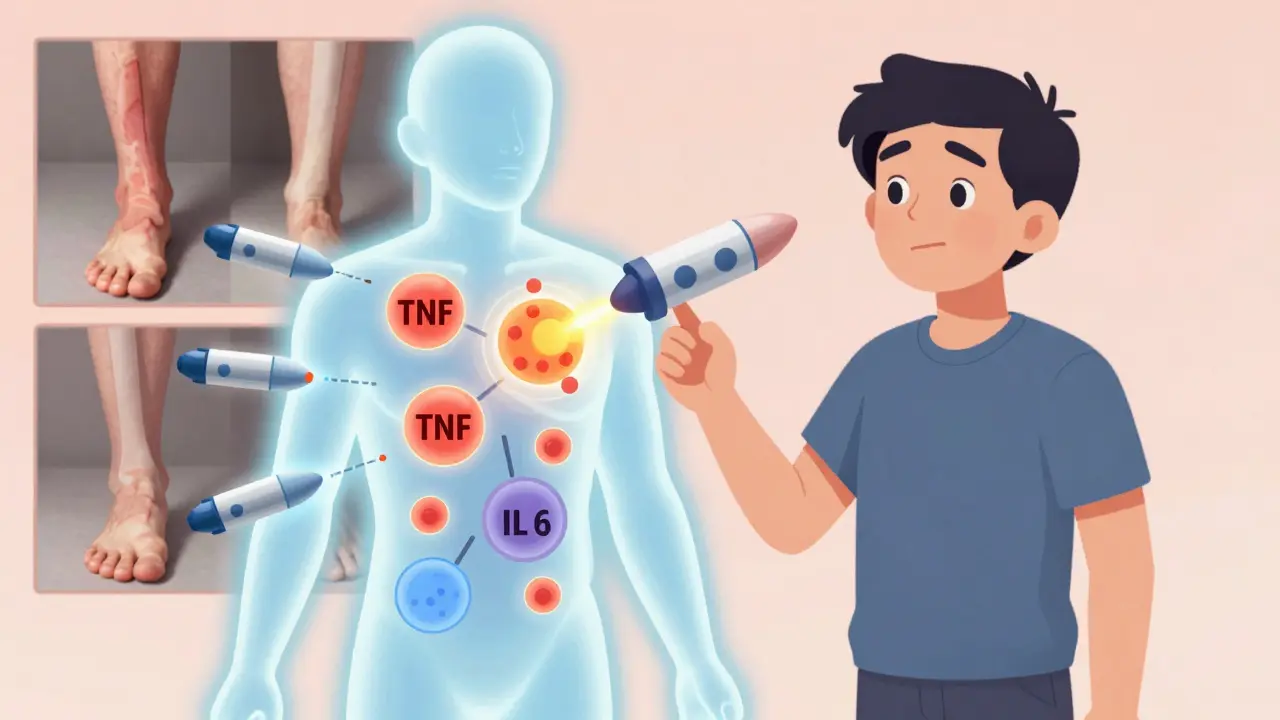
For many people living with rheumatoid arthritis (RA), the daily pain, stiffness, and swelling aren’t just inconvenient-they’re life-limiting. Before biologic DMARDs came along, RA was often a slow, relentless march toward joint destruction and disability. Today, that’s no longer the norm. With the right biologic therapy, disease remission is no longer a dream. It’s a realistic goal for a growing number of patients.
What Are Biologic DMARDs, Really?
Biologic DMARDs, or disease-modifying antirheumatic drugs, are not your grandfather’s arthritis pills. Unlike older drugs like methotrexate that broadly suppress the immune system, biologics are precision tools. They’re made from living cells and target very specific parts of the immune system that drive inflammation in RA. Think of them like smart missiles instead of a shotgun blast. They work by blocking key inflammatory signals. Some stop tumor necrosis factor (TNF), a major troublemaker in RA. Others block interleukin-6 (IL-6), T-cells, or B-cells. Each one has a different target, which means not every biologic works for every person. The first one approved was etanercept (Enbrel) in 1998. Since then, nearly a dozen others have joined the list, including adalimumab (Humira), infliximab (Remicade), rituximab (Rituxan), and tocilizumab (Actemra). Even newer drugs like tofacitinib (Xeljanz) and upadacitinib (Rinvoq) fall into this category, even though they’re taken as pills instead of injections.Why Do Doctors Prescribe Biologics?
Most RA patients start with methotrexate. It’s cheap, well-studied, and works for many. But if after 3 to 6 months your symptoms haven’t improved enough, or if joint damage is still progressing on X-rays, your rheumatologist will likely consider a biologic. According to the American College of Rheumatology, biologics are reserved for patients who don’t respond adequately to conventional drugs-not as a first choice. The goal isn’t just to reduce pain. It’s to stop the disease in its tracks. Biologics are the only class of drugs proven to slow or even halt joint damage visible on imaging. That’s huge. Without them, many patients end up with deformed hands, damaged knees, or even the need for joint replacements. With them, some people go years without a single flare.How Effective Are They at Achieving Remission?
Let’s talk numbers. In clinical trials, about 5% to 15% of patients on methotrexate alone achieve remission. With biologics, that jumps to 20% to 50%. That’s not a small difference-it’s transformative. Real-world data backs this up. A 2022 review in Exploration Medicine found that adalimumab, etanercept, and golimumab were 19% more effective than infliximab in reducing RA activity. Even more telling: non-TNF biologics like rituximab and tocilizumab often outperform TNF blockers in certain patient groups. Why? Because RA isn’t one disease. It’s many. Some people have inflammation driven by B-cells. Others by IL-6. Match the drug to the mechanism, and the results are far better. One case study from the Arthritis National Research Foundation described a patient with 15 years of severe RA who achieved full remission within 8 weeks of starting tocilizumab. That’s not rare anymore. It’s becoming routine for the right patient.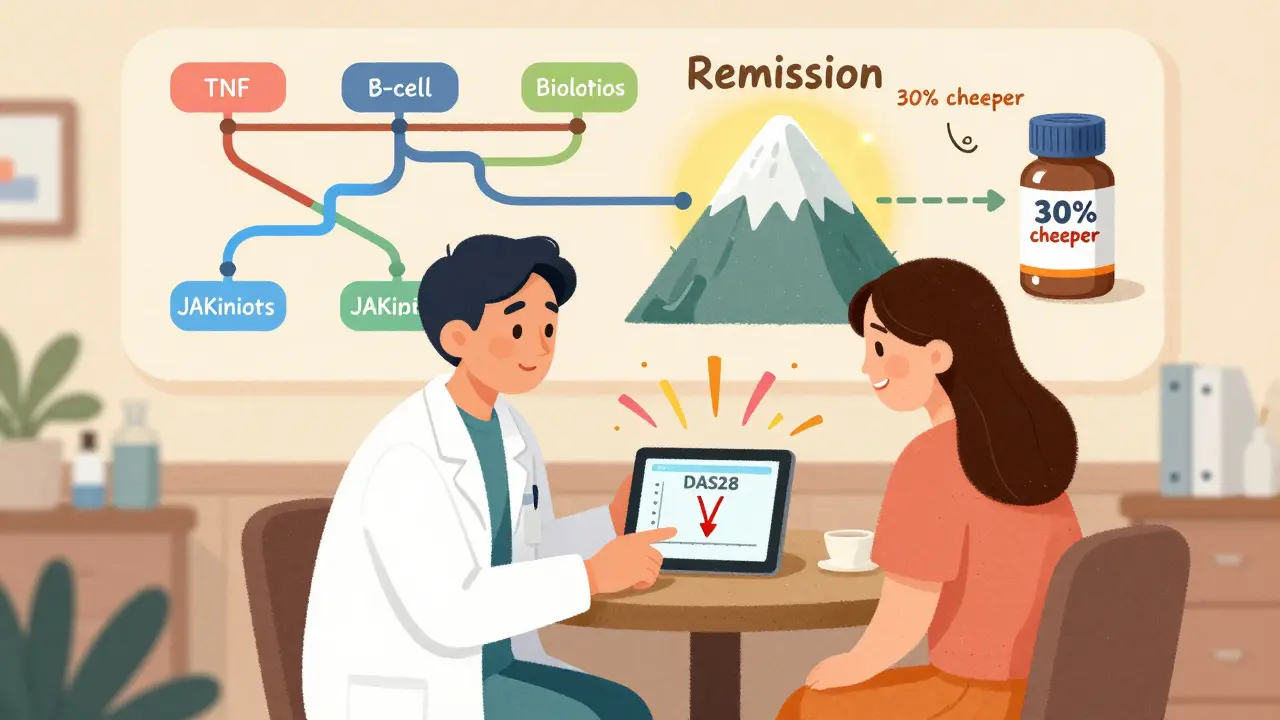
Which Biologics Work Best?
There’s no single “best” biologic. It depends on your body, your disease pattern, and even your biomarkers.- TNF inhibitors (etanercept, adalimumab, infliximab): Fast-acting, good for general inflammation. Adalimumab has the highest patient satisfaction ratings on Drugs.com at 4.2/5.
- IL-6 blockers (tocilizumab): Excellent for patients with high CRP levels or systemic symptoms like fatigue and fever.
- B-cell depleters (rituximab): Best for those with high B-cell activity. But if your synovial tissue shows low B-cell signatures? Only 12% respond.
- T-cell modulators (abatacept): Slower to work but very safe long-term. Good for patients with infection risks.
- JAK inhibitors (tofacitinib, upadacitinib): Oral options with strong remission rates. Upadacitinib actually beat adalimumab head-to-head in a 2021 NEJM trial.
Cost, Access, and the Rise of Biosimilars
Yes, biologics are expensive. In the U.S., the annual cost can run $50,000 to $70,000. That’s why many patients delay treatment or skip doses. But here’s the good news: biosimilars are changing the game. Biosimilars are near-identical copies of originator biologics. Since 2016, they’ve been approved for most TNF inhibitors. In the U.S., they now make up 35% of TNF inhibitor prescriptions. They cost 15% to 30% less. A Reddit thread from March 2023 showed patients using biosimilars saved 27% on out-of-pocket costs. Insurance still fights it. Getting approval can take 7 to 14 days. Some pharmacies require prior authorization, step therapy, or even proof that methotrexate failed. Patient assistance programs from manufacturers cover 40% to 100% of costs for qualifying individuals. Don’t assume you can’t afford it-ask your rheumatologist’s office. They have teams dedicated to helping with this.Side Effects and Risks
Biologics aren’t risk-free. Because they dampen parts of your immune system, you’re more vulnerable to infections. Tuberculosis, pneumonia, and even fungal infections can become serious. That’s why everyone gets screened for TB before starting. Common side effects include injection site reactions (redness, swelling, itching), headaches, and nausea. About 45% of adverse event reports mention this. More serious risks include increased risk of lymphoma (rare) and heart failure (in patients with existing heart disease). A 2010 meta-analysis found patients on anakinra, infliximab, and adalimumab were 1.5 to 2.2 times more likely to stop treatment due to side effects than those on placebo. But etanercept, abatacept, and rituximab showed no significant increase. That’s why matching the drug to the patient matters.
What Does Treatment Look Like in Real Life?
Most biologics are injected under the skin. Some, like infliximab, require IV infusions every few weeks. Learning to self-inject takes time. The Arthritis Foundation says 75% of patients master it after two training sessions with a nurse. Many use apps like MyRApath to track symptoms, doses, and side effects. You’ll also need regular blood tests to check liver function, blood counts, and infection markers. DAS28 scores-based on joint swelling, pain levels, and blood markers-are used every 3 to 6 months to measure progress. If your score drops below 2.6, you’re in remission. Some patients feel better in days. Others take 3 to 6 months. Patience is key. And if you don’t respond? Don’t give up. Switching to a different biologic or adding a JAK inhibitor can still lead to remission.What’s Next for RA Treatment?
The future is personal. Researchers are now analyzing synovial tissue (from joint fluid or biopsies) to predict which biologic will work best for you. Early data shows this could cut trial-and-error by half. Longer-acting biologics are coming too. A twice-yearly injection of tocilizumab is in Phase III trials. That’s a game-changer for adherence. Biosimilars will keep growing. By 2027, they’re projected to make up 60% of the biologic RA market. That means more access, lower costs, and more people reaching remission.Can You Really Achieve Remission?
Yes. But it takes the right drug, the right timing, and the right support. Remission doesn’t mean you’re cured. It means your disease is quiet. No swelling. No pain. No joint damage. You can work, play, and live without RA holding you back. The biggest mistake? Waiting too long. The longer RA goes untreated, the more damage it does. Biologics work best when started early in the disease course. If you’re on methotrexate and still hurting, talk to your rheumatologist. Don’t wait for your joints to break. It’s no longer about managing RA. It’s about silencing it.Can biologic DMARDs cure rheumatoid arthritis?
No, biologic DMARDs cannot cure rheumatoid arthritis. They don’t eliminate the disease from your body. But they can suppress the immune response enough to put RA into remission-meaning no active inflammation, no joint damage progression, and minimal or no symptoms. Many patients stay in remission for years while on treatment. Stopping the drug often leads to flare-ups, so most continue therapy indefinitely.
How long does it take for biologics to start working?
It varies. TNF inhibitors like adalimumab or etanercept often start reducing pain and swelling within 2 to 4 weeks. Non-TNF biologics like rituximab or abatacept can take 3 to 6 months to show full effect. JAK inhibitors like upadacitinib may work faster, sometimes within 2 weeks. Patience is important-don’t switch drugs too soon unless you’re having serious side effects.
Are biosimilars as effective as the original biologics?
Yes. Biosimilars are highly similar to their originator drugs in structure, function, and clinical outcomes. Regulatory agencies like the FDA and EMA require them to show no meaningful differences in safety or effectiveness. A 2023 IQVIA report found biosimilars perform just as well in real-world use. Many patients switch without any loss of symptom control. The main difference is cost-not effectiveness.
Can I stop taking my biologic if I feel better?
Most rheumatologists advise against stopping biologics even if you’re in remission. Stopping increases the chance of flare-ups by 60% to 80% within a year. Some studies are testing tapering strategies, but these are still experimental. If you’re doing well, continue your treatment. Remission is maintained, not achieved once and forgotten.
What happens if a biologic stops working?
Secondary non-response is common-about 40% of patients experience it after 12 to 24 months. This doesn’t mean failure. It means your disease has changed. Your rheumatologist will likely switch you to a biologic with a different mechanism of action. For example, if you were on a TNF inhibitor, you might move to an IL-6 blocker or a JAK inhibitor. Many patients achieve remission after switching.
Do I need to avoid certain foods or vaccines while on biologics?
You should avoid live vaccines (like MMR, varicella, or nasal flu) while on biologics because they can cause infection. Inactivated vaccines (flu shot, pneumonia, COVID-19) are safe and recommended. There’s no proven need to avoid specific foods, but some patients report fewer flares when avoiding processed sugars or saturated fats. Always discuss changes with your doctor. Good hygiene and avoiding sick people are more important than diet.
Alex Brad
Biologics changed my life. No more morning stiffness. No more painkillers. Just normal days. I started on adalimumab after methotrexate failed. Two months in, I could hold my coffee without wincing. That’s the goal: not just less pain, but no pain.
Renee Jackson
It is imperative to recognize that biologic DMARDs represent a paradigm shift in the management of rheumatoid arthritis. The data supporting their efficacy in achieving clinical remission is not merely statistically significant-it is transformative. Early intervention remains the cornerstone of preserving long-term joint integrity and functional capacity.
RacRac Rachel
I started on tocilizumab last year and now I’m hiking weekends 🥾 I didn’t think remission was possible-turns out, it just needed the right match. My CRP dropped from 18 to 0.6 in 10 weeks. If you’re still on methotrexate and hurting? Talk to your doc. Seriously. Don’t wait. 💪
Jane Ryan Ryder
So we pay $70k a year so some pharma exec can buy a third yacht? Yeah right. My cousin’s on a biosimilar and she’s fine. Guess who’s not paying $500 a month? Me. You want remission? Get off the brand-name gravy train.
Diane Croft
I’m from rural Iowa. My rheumatologist didn’t even mention biologics until my wrists were buckling. Don’t let anyone tell you it’s not worth it. If you’re still in pain after 6 months of methotrexate, you’re not being stubborn-you’re being smart to ask for more.
Deborah Dennis
I read this entire thing. And yet... where's the data on long-term mortality? You mention lymphoma risk, but you don't quantify it. And you gloss over the fact that 40% of patients lose response? That’s not remission-that’s a temporary fix. What about quality of life over 10 years? Hmm?
Pankaj Gupta
In India, access is still a huge barrier. But biosimilars are changing everything. My sister started on a biosimilar last year-same results as her original Humira, but 60% cheaper. The science is solid. The system isn’t. We need global equity in treatment access, not just American anecdotes.
Aisling Maguire
I switched from etanercept to upadacitinib because I was tired of needles. Two weeks in, I was cooking again. No more pain. No more fatigue. And now I just take a little pill. Best decision I ever made. Don’t let fear of injections hold you back-there’s an option for you.
Megan Nayak
Remission? Or just suppression? You’re not curing anything-you’re just quieting the immune system with a sledgehammer. What’s the cost to your microbiome? Your T-cell memory? Your long-term immune surveillance? This isn’t medicine. It’s chemical silence. And we’re calling it a win?
Tildi Fletes
DAS28 score below 2.6 = remission. That’s the gold standard. But I’ve seen patients with scores of 1.8 still report morning stiffness. Biomarkers don’t capture everything. Patient-reported outcomes matter just as much. Always ask: How does this feel? Not just what does the lab say?
Siri Elena
Oh, so now we’re calling a $70k/year drug a miracle? Cute. My cousin’s on a biosimilar and she’s doing great. Meanwhile, the original brand still charges $60k because ‘patents’. The system is broken. The science? Solid. The profit motive? Not so much.
Divya Mallick
In India, we don’t even have access to biosimilars in rural clinics. The entire biologic pipeline is designed for Western markets. You talk about remission like it’s universal. Meanwhile, millions of us are still on NSAIDs and prayer. This isn’t science-it’s privilege wrapped in jargon. TNF inhibitors? More like TNF: ‘Too New For Us’.
Matt Alexander
Methotrexate didn’t work for me. Tried two biologics. Third one worked. Took 8 months. Now I’m in remission. No pain. No flares. No joint damage on my last X-ray. It’s not magic. It’s medicine. And it works if you stick with it.