

Fournier's Gangrene Symptom Checker
Critical Symptoms to Watch For
- Sudden severe pain or tenderness in genital area
- Swelling, redness, or warmth spreading rapidly
- Skin discoloration (purple, bruised) or blisters
- Fever, chills, or feeling extremely unwell
- Foul odor from the affected area
- Difficulty urinating or pain when urinating
EMERGENCY ALERT
You may have symptoms of Fournier's gangrene. This is a medical emergency.
Every hour of delay increases your risk of death by approximately 9%. Go to the nearest emergency room immediately. Do not wait for an appointment.
Call emergency services now and tell them: "I'm on an SGLT2 inhibitor and suspect Fournier's gangrene."
No Urgent Symptoms Detected
Based on your responses, no immediate emergency symptoms are present. However:
- Continue monitoring for sudden pain, swelling, or skin changes
- Keep blood sugar under control (HbA1c < 7% recommended)
- Report any new symptoms to your doctor immediately
When you're managing type 2 diabetes, taking a medication like canagliflozin, dapagliflozin, or empagliflozin can feel like a win. These drugs - known as SGLT2 inhibitors - help lower blood sugar by making your kidneys flush out excess glucose through urine. But there’s a rare, dangerous side effect few people talk about: Fournier’s gangrene.
This isn’t a common problem. But when it happens, it moves fast. And if you don’t act immediately, it can kill you.
What Exactly Is Fournier’s Gangrene?
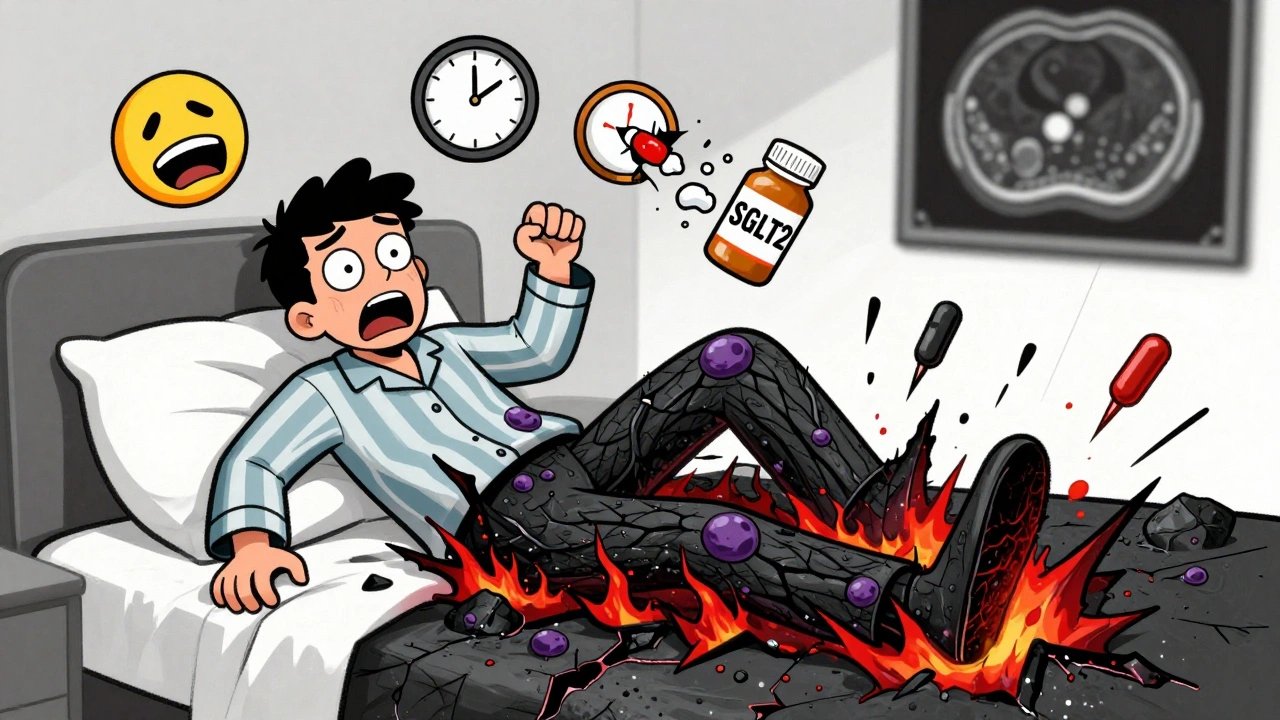
Fournier’s gangrene is a rare but deadly infection that eats away at the skin and tissue around your genitals, perineum, or anus. It’s a form of necrotizing fasciitis - the so-called "flesh-eating bacteria" - but it’s localized to the genital area. It doesn’t start as a rash or a pimple. It starts with pain. Then swelling. Then redness. Then fever. And within hours, the tissue turns black as it dies.
It mostly affects men, but not exclusively. About one in three reported cases in Europe involved women. And while it’s rare - roughly 1 in 10,000 people taking SGLT2 inhibitors might get it - the death rate is between 4% and 8%. That’s higher than many cancers. And the biggest risk factor? Delay in treatment. Every hour you wait increases your chance of dying by about 9%.
Why Do SGLT2 Inhibitors Raise the Risk?
SGLT2 inhibitors work by blocking glucose reabsorption in your kidneys. That means more sugar ends up in your urine. Sounds harmless, right? But sugar in urine is like pouring honey into a bacterial buffet.
That extra glucose creates a perfect environment for bacteria - especially E. coli, Klebsiella, and anaerobes - to multiply. These bugs don’t just sit there. They invade the skin, break down tissue, and spread through the fascia (the layer under your skin) at terrifying speed. Some research also suggests the sugar may weaken local tissue defenses and alter immune responses, making it easier for infection to take hold.
And here’s the kicker: almost all reported cases happened in people with poorly controlled diabetes. High blood sugar already weakens your immune system. Add SGLT2 inhibitors? You’re stacking the deck.
Early Warning Signs: Don’t Wait for the Worst
If you’re on an SGLT2 inhibitor, you need to know the red flags - and act the moment you see them. These aren’t vague symptoms like "I feel off." They’re specific, physical changes you can see and feel:
- Sudden, severe pain or tenderness in your genitals, scrotum, penis, or around your anus
- Swelling, redness, or warmth in the same area - often spreading quickly
- Skin that looks bruised, purple, or has blisters
- Fever, chills, or feeling extremely unwell
- A foul smell coming from the area
- Difficulty urinating or pain when you do
These signs don’t wait. They don’t improve with rest or OTC painkillers. If you notice even one of these, especially if you’ve had recent genital infections (like yeast or UTIs), don’t wait for your doctor’s appointment. Don’t text your friend. Don’t Google it. Go to the emergency room - now.
What Happens If You Ignore It?
People often think, "It’s just a bad rash," or "I’ll wait until morning." That’s how deaths happen.
By the time the skin turns black or you’re in septic shock, it’s too late for simple treatment. Surgery becomes the only option - and it’s brutal. Surgeons have to cut out dead tissue, sometimes removing entire sections of skin, muscle, or even parts of the penis or scrotum. Some patients need multiple operations. Others don’t survive.
Studies show that if treatment starts within 24 hours, survival rates jump. After 48 hours, the odds drop sharply. In one case, a man waited three days because he thought it was a yeast infection. He died.
What Should You Do If You Suspect Fournier’s Gangrene?
There’s only one correct response:
- Stop taking your SGLT2 inhibitor immediately - don’t wait for a doctor’s order.
- Go to the nearest emergency room. Tell them you’re on an SGLT2 inhibitor and suspect Fournier’s gangrene.
- Insist on immediate evaluation by a surgeon and infectious disease specialist.
- Expect blood tests, imaging (like a CT scan), and likely surgery within hours.
Doctors need to know you’re on an SGLT2 inhibitor. That changes everything. It tells them to think fast, act faster, and consider this diagnosis even if the symptoms seem mild at first.
Should You Stop Taking Your SGLT2 Inhibitor?
No - not unless you have symptoms.
The benefits of these drugs are real. They lower your risk of heart failure, kidney disease, and death from cardiovascular causes. For many people, they’re life-saving. The risk of Fournier’s gangrene is extremely low - about 1.9 cases per 100,000 patient-years in the UK. That’s less than being struck by lightning.
But risk isn’t about averages. It’s about you. If you have:
- HbA1c over 9%
- History of recurrent genital yeast infections or UTIs
- Obesity or poor hygiene
- Immune system problems (like from steroids or autoimmune disease)
…then you’re at higher risk. Talk to your doctor. They might switch you to another medication - like a GLP-1 agonist - or tighten your diabetes control first.
What’s Being Done About It?
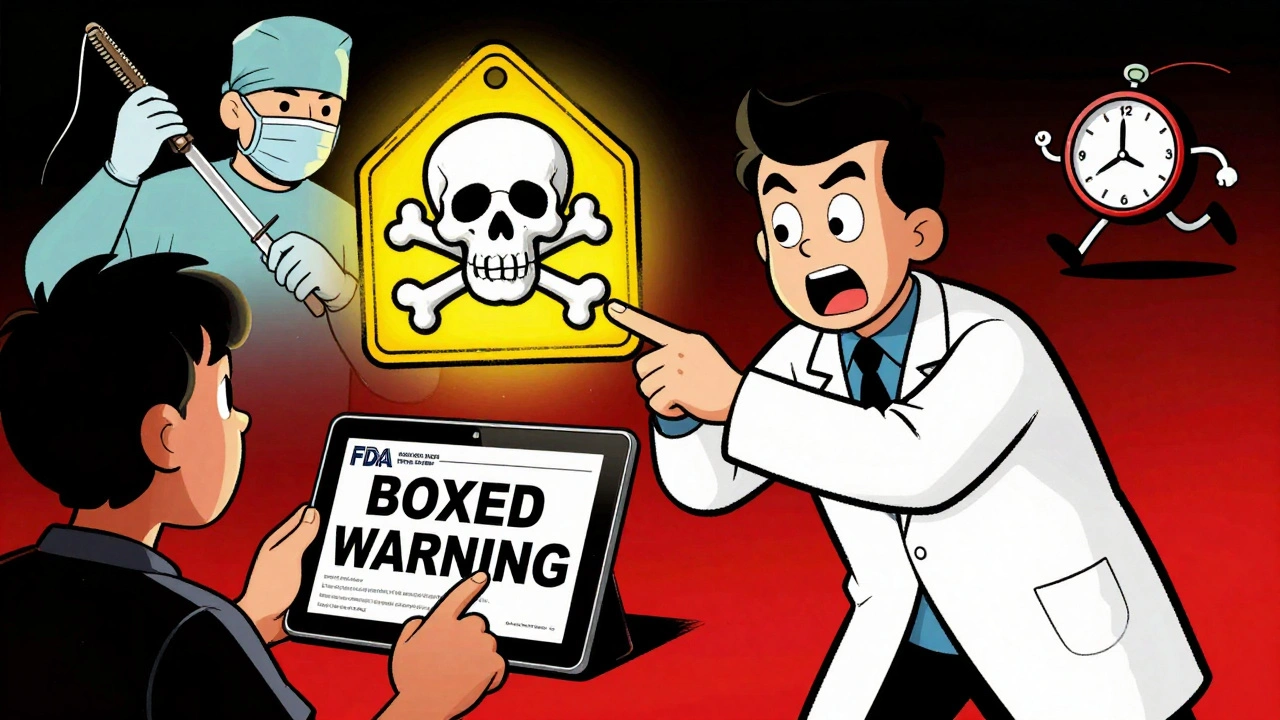
Regulators didn’t ignore this. In 2018, the U.S. FDA added a boxed warning - the strongest possible - to all SGLT2 inhibitor labels. The European Medicines Agency and the UK’s MHRA did the same. These aren’t footnotes. They’re bold, urgent alerts.
Since then, more cases have been reported - not because the drugs are getting worse, but because doctors are learning to recognize them. The FDA’s database now has over 50 confirmed cases. That’s still rare, but it’s enough to demand attention.
Researchers are now working on risk tools - trying to predict who’s most likely to develop this. In the future, doctors might check your history of genital infections before prescribing SGLT2 inhibitors. But for now, awareness is the best defense.
Bottom Line: Knowledge Saves Lives
SGLT2 inhibitors are powerful tools. But like any powerful tool, they come with risks you must understand. You don’t need to fear them. But you do need to be ready.
If you’re on one of these drugs:
- Know the warning signs - and don’t dismiss them.
- Act immediately if you see pain, swelling, or redness in your genital area.
- Tell every doctor you see that you’re on an SGLT2 inhibitor.
- Keep your blood sugar under control - it’s your first line of defense.
Most people take these medications safely for years. But for the few who develop Fournier’s gangrene, the difference between life and death comes down to one thing: how fast they act.
Can women get Fournier’s gangrene from SGLT2 inhibitors?
Yes. While most cases occur in men, about one-third of reported cases in Europe involved women. SGLT2 inhibitors can cause genital infections and tissue damage in anyone, regardless of gender. Women should watch for pain, swelling, or redness around the vulva or perineum and seek emergency care if symptoms appear.
How long after starting an SGLT2 inhibitor can Fournier’s gangrene develop?
Cases have been reported as early as a few weeks after starting the drug, but most occur after several months or even years. There’s no safe time window - the risk remains as long as you’re taking the medication. That’s why ongoing awareness is critical, not just during the first month.
Are all SGLT2 inhibitors equally risky?
Yes. The FDA and other agencies treat this as a class-wide risk. All approved SGLT2 inhibitors - canagliflozin, dapagliflozin, empagliflozin, and ertugliflozin - carry the same warning. There’s no evidence that one is safer than another for this specific complication.
If I’ve had a yeast infection before, am I at higher risk?
Absolutely. A history of recurrent genital yeast infections or urinary tract infections while on an SGLT2 inhibitor is a strong warning sign. It means your body is already struggling to manage the sugar in your urine. Talk to your doctor about switching medications or improving your diabetes control before the infection becomes life-threatening.
Should I stop taking my SGLT2 inhibitor if I’m worried?
Only if you have symptoms. Stopping the drug without medical advice can raise your blood sugar and increase your risk of heart or kidney problems. The benefits usually outweigh the risks. Focus on knowing the signs and acting fast - not on stopping the medication unless instructed by a doctor.
What happens if I go to the ER but they don’t believe me?
Insist. Say clearly: "I’m on an SGLT2 inhibitor and I think I have Fournier’s gangrene." Bring a printed copy of the FDA warning if you have one. If they dismiss you, ask for a surgical consult or go to another ER. This condition kills quickly. Your life depends on being taken seriously.
Rich Paul
sogt2 inhibitors are basically sugar bombs for your junk zone. i got a yeast infection after 3 weeks on dapagliflozin and thought it was just a fluke. turns out my pee was basically a gatorade for e. coli. never thought i'd be googling 'fournier's gangrene' at 2am but here we are.
Delaine Kiara
okay but like… why is no one talking about how the pharma companies knew this was coming? they had the data. they had the case reports. they still pushed it like it was a miracle drug. and now we’re paying the price with our genitals. 🤡
Ruth Witte
THIS IS SO IMPORTANT 🙏
if you're on one of these meds and feel ANYTHING weird down there-GO TO THE ER. NOW. don't wait. don't text your mom. don't 'wait and see.' your life is worth more than your pride. i'm sending you all virtual hugs and urgent care directions 💪❤️
Katherine Rodgers
so let me get this straight. we’re being told to fear a 1 in 10k risk but ignore the fact that these drugs increase UTIs by 300%? classic. also why are we still letting corporations decide what gets a boxed warning and what gets buried in the appendix?
Lauren Dare
the term 'flesh-eating bacteria' is misleading. it’s not the bacteria eating flesh-it’s the necrotizing fasciitis caused by synergistic polymicrobial invasion in a hyperglycemic environment. also, your immune system is already compromised if you’re on an SGLT2i with HbA1c >9%. this isn’t a drug failure-it’s a metabolic failure.
Gilbert Lacasandile
my doc put me on empagliflozin for heart protection. i’ve been on it for 2 years, no issues. but i read this and now i’m scared to pee. maybe i’ll just ask for a GLP-1 instead… they seem safer? 🤷♂️
Lola Bchoudi
you’re not alone. if you’ve had recurrent yeast infections on an SGLT2i, that’s your body screaming. don’t wait for necrosis. talk to your endo. switch to semaglutide. your kidneys will thank you, your genital tissue will thank you, and your future self will thank you. you got this 💪
Morgan Tait
they’ve been hiding this since 2013. the FDA knew. the WHO knew. the drug reps knew. it’s all part of the Great Blood Sugar Conspiracy. They want us dependent. They want us in the hospital. They want you to forget your insulin. They’re using your urine as a test tube. 🕵️♂️💀
Darcie Streeter-Oxland
It is regrettable that the dissemination of clinical safety information remains insufficiently prioritized within contemporary pharmaceutical marketing frameworks. The temporal latency between adverse event recognition and regulatory response is both statistically and ethically indefensible.
Christian Landry
my buddy got this last year. said it felt like someone stabbed him with a hot knife. went to the ER, they thought it was a UTI. he had to wait 8 hours. by then, half his scrotum was dead. had to have a full reconstruction. now he’s on metformin and says he’d rather die than go back on those drugs. 🤢
Maria Elisha
eh. i’ve been on canagliflozin for 4 years. never had a problem. stop scaring people.
Angela R. Cartes
of course it’s rare. it’s not like you’re gonna get it unless you’re a diabetic mess with zero hygiene. like… why are we even discussing this? if you can’t control your sugar, maybe you shouldn’t be on anything.
Lisa Whitesel
stop taking the meds if you're scared. no one forced you. your body your problem. i'm on it and fine. you're just weak
Larry Lieberman
so if i get a yeast infection on this, does that mean i’m one step away from losing my junk? 😳
Courtney Black
we live in a world where a pill that flushes sugar out of your body is considered medical progress… but the cost is a slow, silent rot in the most intimate part of you. we call it innovation. it’s just evolution with a prescription pad. we didn’t evolve to handle this kind of metabolic arrogance.