
Medication Tinnitus Risk Checker
This tool helps you identify which of your medications may cause tinnitus based on the latest medical research. Enter the medications you're taking to get personalized risk assessment and next steps.
Your Medications
Based on Sound Relief 2025 review data
Recommended next steps
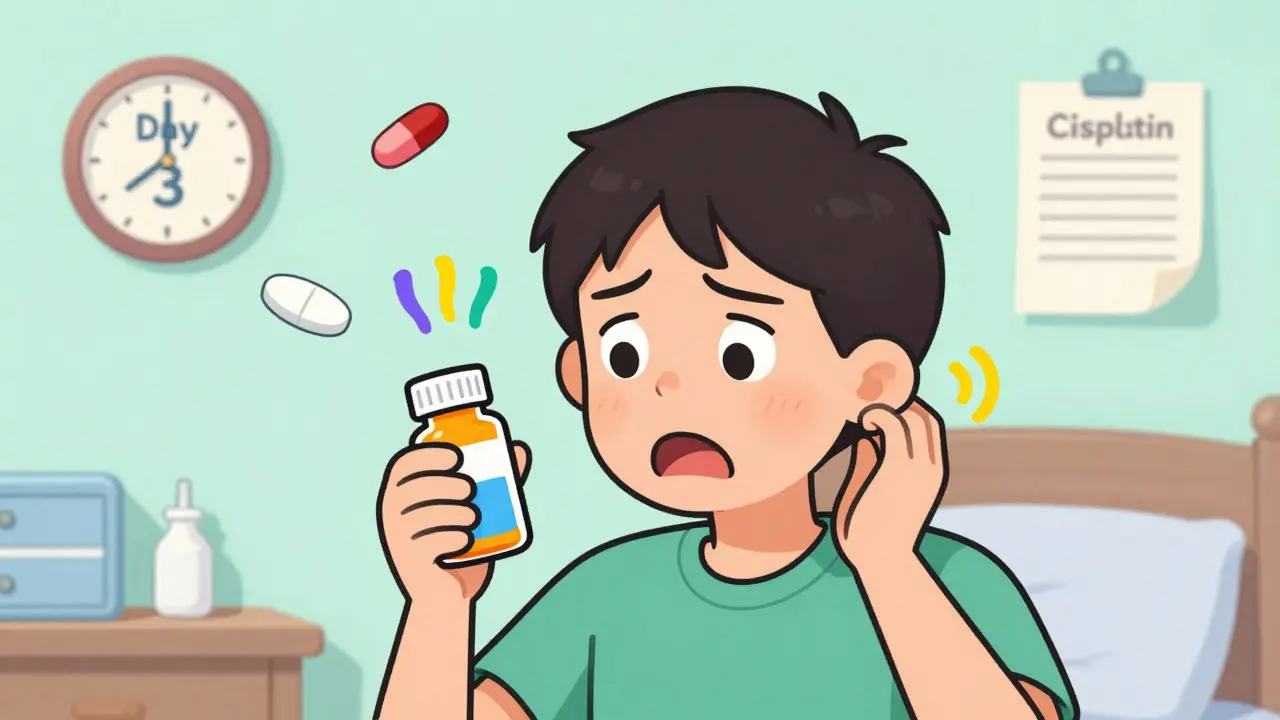
Many people notice a ringing, buzzing, or hissing in their ears after starting a new medication. It’s not just in their head-it’s a real side effect called medication-induced tinnitus. And while it’s often temporary, it can also be a warning sign of lasting damage. The good news? You don’t have to live with it. Knowing which drugs cause it, how to spot it early, and what to do next can protect your hearing.
What Exactly Is Medication-Induced Tinnitus?
Tinnitus isn’t a disease. It’s a symptom: hearing sounds that aren’t there. For some, it’s a quiet ring. For others, it’s a loud buzz that won’t quit. When it starts after taking a new pill, injection, or even an over-the-counter painkiller, it’s likely caused by ototoxicity-meaning the drug is harming your inner ear. The inner ear has tiny hair cells that turn sound waves into electrical signals your brain understands. Some medications interfere with these cells or the nerves that carry signals to your brain. The result? Your brain gets confused and creates noise where there should be none. More than 600 prescription and over-the-counter drugs are known to cause or worsen tinnitus, according to Sound Relief’s 2025 review. That includes common meds you might not suspect, like aspirin, ibuprofen, and even some antidepressants.Which Medications Are Most Likely to Cause Ringing in the Ears?
Not all drugs carry the same risk. Some are high-risk, others are rare. Here’s what actually matters:- Aminoglycoside antibiotics (like gentamicin and tobramycin): These are among the most dangerous. Used for serious infections, they can cause permanent hearing loss in up to 25% of patients on long-term IV treatment. Topical versions (ear drops, creams) are much safer.
- Chemotherapy drugs (especially cisplatin): Between 30% and 70% of patients on cisplatin develop hearing damage. It usually starts with high-pitched sounds you can’t hear anymore-like birds chirping or a phone ringing-before affecting speech.
- Loop diuretics (like furosemide): Often used for heart failure or kidney issues. Tinnitus can appear within hours of a high dose and may last days after stopping.
- High-dose aspirin and NSAIDs: You need to take a lot to trigger it-usually over 4,000 mg of aspirin daily. That’s more than 12 regular tablets. Modern headache doses (325-650 mg) rarely cause issues. But some people are unusually sensitive-even low doses can trigger ringing.
- Quinine: Found in some malaria treatments and tonic water. Can cause tinnitus within 1-3 days. Usually goes away in 1-2 weeks after stopping.
- Isotretinoin (Accutane): Used for severe acne. About 5% of users report tinnitus, though the manufacturer claims less than 1%. Still, it’s listed as a known side effect.
- Antidepressants: Rare, but documented. SSRIs like sertraline (Zoloft) have been linked to tinnitus onset or worsening. Some people report it starting when they stop the drug, not when they start it.
- Benzodiazepines (like Xanax or Valium): Tinnitus is more common after long-term use-usually six months or more.
Is the Ringing Permanent?
It depends on the drug and how long you’ve been taking it. About 60% of medication-induced tinnitus cases reverse once you stop the drug. That’s the good news. For example:- Someone on high-dose ibuprofen for back pain notices ringing after 3 days. They stop the pills. The noise fades in a week.
- A patient on furosemide for fluid retention develops tinnitus after two weeks. Their doctor lowers the dose. Symptoms improve.
- Aminoglycosides can permanently destroy inner ear hair cells. Once gone, they don’t grow back.
- Cisplatin often leads to lasting hearing loss, especially in higher doses or with repeated use.
Why Does This Happen? The Science Behind the Noise
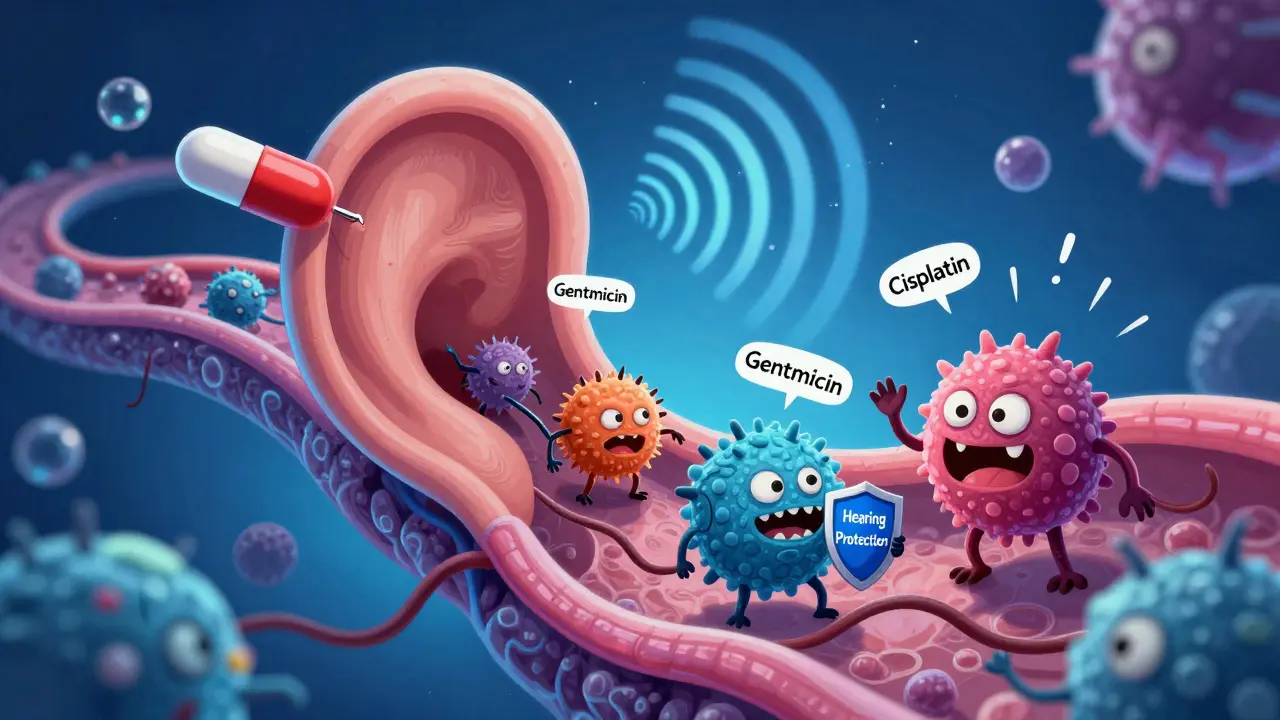
Scientists still don’t fully understand how every drug causes tinnitus. But we know the basics: - Some drugs build up in the fluid around the inner ear and disrupt the electrical signals from hair cells to the brain. - Others reduce blood flow to the cochlea, starving the cells of oxygen. - A few interfere with potassium channels in the inner ear, which are critical for turning sound into nerve signals. It’s not always about dose. Some people have genetic traits that make them more sensitive. That’s why two people on the same drug can have totally different outcomes. Research is now looking at genetic testing to identify who’s at higher risk before prescribing ototoxic drugs. Early results show promise-especially in cancer patients who need cisplatin.What Should You Do If You Notice Ringing After Starting a New Medication?
Do not stop your medication on your own. That can be dangerous. Instead:- Write down when the ringing started and how loud it is (scale of 1-10).
- Check if you’ve taken any new pills, including supplements or OTC painkillers.
- Call your doctor. Say: “I started [medication name] on [date], and now I have ringing in my ears.”
- Ask: “Could this be a side effect? Is there a safer alternative?”
- If your doctor agrees it’s likely the drug, they may reduce your dose, switch you to another medication, or schedule a hearing test.
Can You Manage the Ringing If You Can’t Stop the Drug?
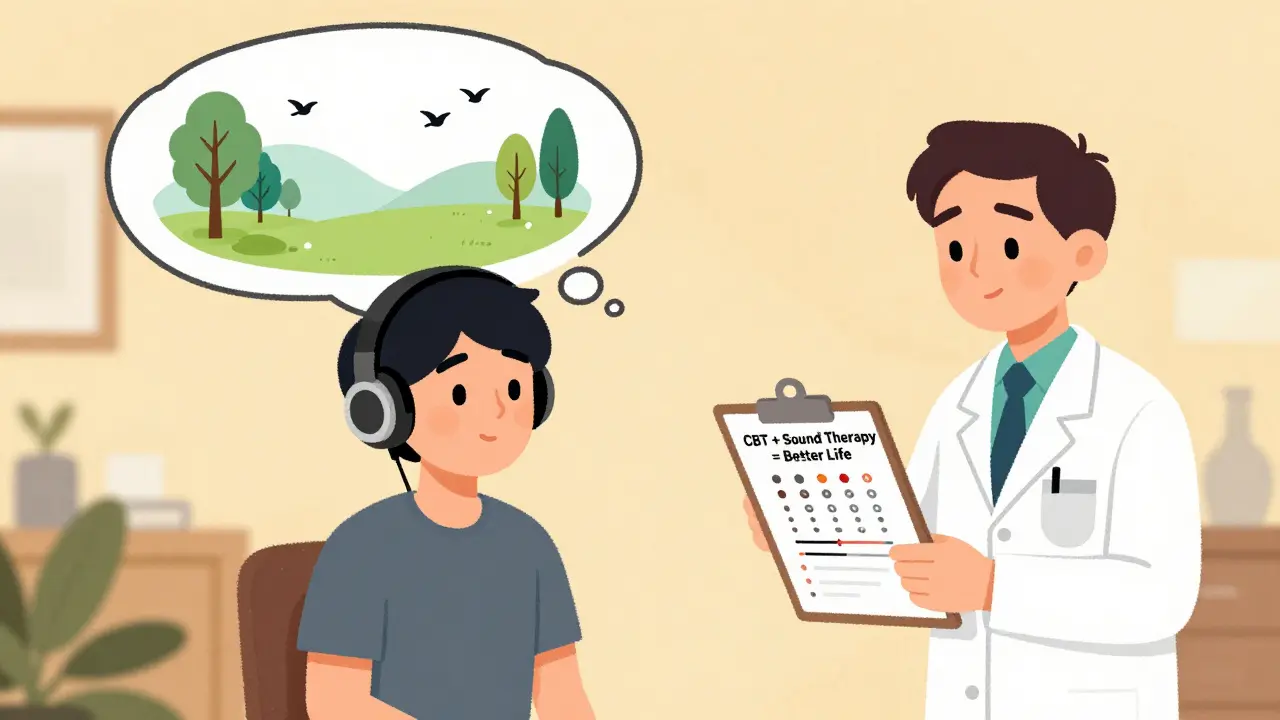
Sometimes, you can’t stop the medication. Maybe it’s saving your life-like chemotherapy or an antibiotic for a severe infection. In those cases, managing the tinnitus becomes the goal. Two proven approaches help:- Sound therapy: Using background noise-like a fan, white noise machine, or soft music-to mask the ringing. Studies show it reduces the brain’s focus on the noise in 60-70% of cases.
- Cognitive behavioral therapy (CBT): Helps you change how you react to the sound. Instead of panicking when you hear it, you learn to notice it without distress. CBT has helped 60-70% of patients improve their quality of life.
How to Prevent It Before It Starts
Prevention is always better than treatment:- Ask your doctor: “Is this drug known to affect hearing?” before starting any new prescription.
- Keep a list of all meds you take-including supplements-and share it with every provider.
- Don’t take high-dose NSAIDs for long periods without medical supervision.
- If you’re on a high-risk drug, ask about hearing monitoring. Many hospitals now do baseline and weekly tests for patients on cisplatin or gentamicin.
- Report any hearing changes immediately-even if they seem minor.
What’s Being Done to Fix This?
The problem is growing. Over 50 million Americans have tinnitus, and 5-10% of those cases are linked to medications. That’s millions of people dealing with noise that shouldn’t be there. Researchers are working on solutions:- The NIH is funding $12.5 million in research to find “otoprotective” drugs-medications that shield the ear without reducing the effectiveness of the main treatment.
- Hospitals are expanding hearing monitoring programs. In 2018, only 45% of major hospitals did regular checks. Now it’s 68%.
- Pharmaceutical companies are under pressure to label ototoxic risks more clearly. The FDA updated labeling for several antibiotics in 2023 to require hearing monitoring warnings.
Roisin Kelly
Of course Big Pharma doesn’t want you to know this. They’d rather you stay deaf and keep buying pills. I’ve been ringing since my last antibiotic - no one cares until you can’t hear your own kid crying.
Malvina Tomja
This is why you shouldn’t trust doctors who haven’t read the full FDA insert. They’re trained to ignore side effects. I’ve seen patients lose hearing after a single dose of ibuprofen. It’s not rare - it’s covered up.
Samuel Mendoza
Actually, aspirin doesn’t cause tinnitus at normal doses. You’re just one of those people who blames meds for everything. My grandma took 800mg daily for 40 years and still hears birds.
michelle Brownsea
I’m sorry, but this article is dangerously incomplete. You mention 600+ ototoxic drugs - yet you don’t list the top 10 offenders by incidence rate? You don’t cite the actual studies? You don’t even define ‘high-dose’ beyond vague numbers? This is not education - it’s lazy clickbait with a medical veneer. And where’s the data on cumulative exposure? Or drug interactions? Or pediatric vulnerability? You’ve given people a checklist, not a framework. That’s irresponsible.
Glenda Marínez Granados
So… we’re all just supposed to sit here and let Big Pharma turn us into human hearing test dummies? 🤡 I took Zoloft for 3 years and now I hear my fridge humming in stereo. My doctor said ‘it’s stress.’ My fridge doesn’t hum. I do.
MARILYN ONEILL
I used to think tinnitus was just old people being dramatic. Then I took Accutane. Now I hear a jet engine in my left ear 24/7. I’m 28. I’m not old. I’m ruined. And no one will admit the drug did this.
Steve Hesketh
Hey - I just want to say thank you for writing this. My brother is on cisplatin right now, and we didn’t know to ask for hearing tests. We just found out he lost 30% of his high-frequency hearing. We’re getting him into sound therapy now. You’re helping people like us. Don’t stop sharing this.
shubham rathee
I think the government is hiding the truth about ototoxicity because they want us dependent on meds. Also the WHO is controlled by pharma. I read this on a forum in 2019 and now I’m 100% sure. I stopped all meds and now I’m fine. No more ringing. No more doctors. Freedom.
Kevin Narvaes
I’ve had tinnitus since I was 19. Took a bunch of stuff. Stopped everything. Still there. Probably just my brain being weird. Maybe I’m just anxious. Or maybe I’m a ghost. Who knows.
Dee Monroe
You know, I think this whole issue ties into something deeper - the modern human’s alienation from their own body. We’ve outsourced our health to pills and professionals, and now when our bodies scream - through ringing, through fatigue, through pain - we don’t know how to listen anymore. We just reach for another pill. The tinnitus isn’t just in the ear - it’s in our culture. We’ve forgotten how to be vulnerable. How to pause. How to ask: ‘What is this trying to tell me?’ Maybe the sound isn’t the enemy. Maybe it’s the wake-up call we’ve been too busy to hear.
Sangeeta Isaac
I started ringing after my first dose of Advil for cramps. I thought I was losing my mind. Then I Googled it. Turned out I’m one of those weirdos who’s hypersensitive. Took me 6 months to convince my doc it wasn’t ‘just anxiety.’ Now I take Tylenol and a tiny bit of CBD. Still hear it sometimes but it’s like background noise now. Like a radio left on in another room. You get used to it. Kinda.
Alex Carletti Gouvea
This is why America needs to stop importing cheap drugs from India and China. Our meds are contaminated. That’s why people get tinnitus. We need American-made pharmaceuticals. Period.
Philip Williams
Thank you for compiling this comprehensive overview. I would like to suggest that future iterations include a section on pharmacogenomic screening protocols currently in use at academic medical centers. There is emerging evidence that CYP2D6 and SLCO1B1 polymorphisms may influence individual susceptibility to ototoxicity. This could be a critical frontier for personalized medicine.
Ben McKibbin
I’ve been living with this for 12 years. Started after a high-dose antibiotic for pneumonia. I thought I was doomed. Then I found sound therapy and CBT. It didn’t vanish - but it stopped ruling my life. I still hear it. But now I hear music too. And birds. And my daughter laughing. That’s what matters. Don’t give up. There’s life after the ringing - it just looks different.
lokesh prasanth
Cisplatin bad. Aspirin fine. Doctors clueless. You need genetic test. Or just stop all pills. Life better without meds