

The Subtle Warning Signs
One of the scariest things about type 2 diabetes is that it doesn't usually announce itself with a bang. Instead, it whispers. Many people live with it for years without knowing, which is why nearly 27% of adults with the condition remain undiagnosed. Common red flags include what doctors call polydipsia and polyuria-basically, excessive thirst and frequent urination. When your blood sugar is too high, your kidneys work overtime to filter the excess glucose, pulling water from your tissues and leaving you dehydrated. You might also notice:- Chronic fatigue: Since your cells can't get the glucose they need for energy, you feel drained regardless of how much you sleep.
- Blurred vision: High glucose levels can cause the lenses of your eyes to swell, distorting your sight.
- Slow-healing wounds: High blood sugar impairs blood flow and affects the body's ability to heal, meaning a small scratch on your foot could take weeks to close.
- Acanthosis nigricans: This is a visible clinical marker where dark, velvety patches of skin appear around the neck or armpits, often signaling severe insulin resistance.
Why Does This Happen? The Root Causes
It's a common misconception that type 2 diabetes is caused solely by eating too many sweets. In reality, it's a complex tug-of-war between your genes and your environment. The core issue is insulin resistance is a state where muscle, fat, and liver cells stop responding properly to insulin, forcing the pancreas to overwork itself . For a while, your pancreas can compensate by pumping out two to three times the normal amount of insulin. But eventually, the pancreatic beta-cells wear out. Research shows that by the time someone is diagnosed, these cells may have already declined by 50%. Risk factors aren't equal for everyone. While a BMI over 30 significantly increases risk, genetics play a massive role-accounting for 40% to 70% of your susceptibility. If a parent has it, your risk jumps by 40%. There are also stark disparities based on ethnicity; for example, Native American and African American populations show significantly higher prevalence rates compared to non-Hispanic White populations, often due to a mix of genetic predisposition and socioeconomic stressors.
The Domino Effect: Potential Complications
When blood glucose stays high for too long, it acts like shards of glass in your bloodstream, damaging the walls of your arteries and nerves. This is why the condition is so dangerous if unmanaged.| System Affected | Common Complication | Key Statistic/Risk |
|---|---|---|
| Cardiovascular | Heart Attack & Stroke | 2-4x higher risk than non-diabetics |
| Neurological | Diabetic Neuropathy | Affects 60-70% of patients after 10 years |
| Renal | Kidney Failure | Causes 44% of new dialysis cases |
| Ocular | Diabetic Retinopathy | Causes 17,000 new cases of blindness annually (US) |
Modern Management Strategies
Management has evolved from simply "avoiding sugar" to a high-tech, personalized approach. The gold standard for measuring long-term control is the HbA1c test is a blood test that measures the average blood sugar levels over the past three months . For most adults, the target is typically below 7.0%, though doctors may loosen this for older adults to avoid dangerous drops in blood sugar (hypoglycemia). Here is the typical escalation path for treatment:- Lifestyle First: A structured weight loss plan can be incredibly powerful. Losing just 7% of your body weight has been shown to reduce the risk of progression by 58% in high-risk individuals.
- First-Line Medication: Metformin is the most common first-line medication that lowers glucose production in the liver and improves insulin sensitivity . It's reliable and can reduce HbA1c by up to 2.0%.
- Advanced Therapies: If Metformin isn't enough, doctors now use GLP-1 receptor agonists (like those in the Ozempic family) or SGLT2 inhibitors. These aren't just for glucose; they offer significant protection for the heart and kidneys.
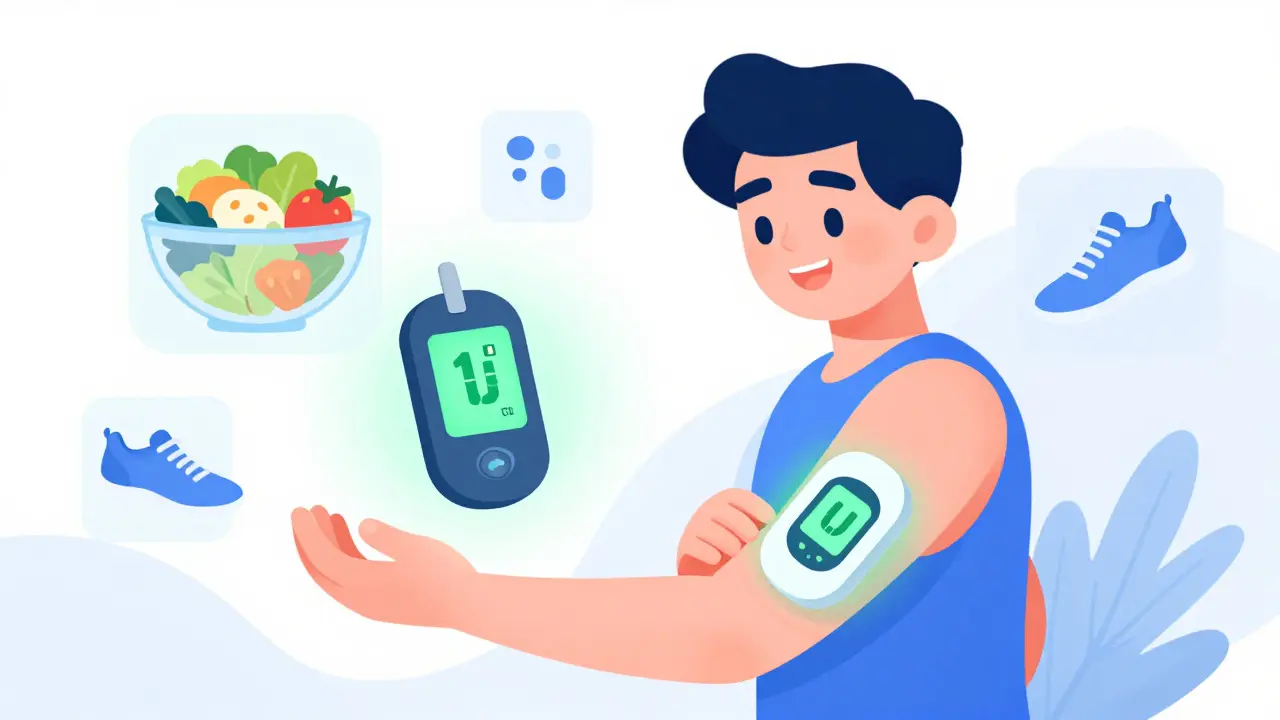
- Integrated Tech: Continuous Glucose Monitors (CGMs) are wearable sensors that track glucose levels in real-time, eliminating the need for frequent finger-prick tests . These tools allow patients to see exactly how a slice of pizza or a 20-minute walk affects their levels instantly.
Can You Actually Reverse It?
For a long time, we were told that type 2 diabetes is a lifelong one-way street. Recent evidence suggests that's not entirely true. The concept of "remission"-where blood sugar stays in a healthy range without medication-is becoming a reality for some. The DIALECT trial showed that nearly 46% of participants with a shorter duration of the disease achieved remission through a very strict, structured weight management program. This usually involves a period of total diet replacement (around 800 calories a day) followed by a careful reintroduction of food. It's an intense process, but it proves that if you can significantly reduce the fat stored in the liver and pancreas, the body can sometimes "reset" its ability to handle insulin.The Future: Precision Medicine
We are moving away from the one-size-fits-all approach. New dual-agonist drugs like tirzepatide are showing massive results, with some patients losing up to 15% of their body weight while seeing dramatic drops in HbA1c. We're also seeing the rise of hybrid closed-loop systems-essentially an "artificial pancreas"-that automatically adjust insulin delivery based on CGM readings. While these were once only for type 1 diabetes, they are now entering the type 2 space, helping people spend more time in the "green zone" (70-180 mg/dL) and less time in dangerous highs or lows.What is the difference between Type 1 and Type 2 diabetes?
Type 1 diabetes is an autoimmune condition where the body attacks its own insulin-producing cells, meaning the person produces little to no insulin. Type 2 diabetes is primarily characterized by insulin resistance, where the body produces insulin but cannot use it effectively. While Type 1 usually appears in childhood, Type 2 is more common in adults, though it is increasingly diagnosed in youth due to obesity.
Can lifestyle changes alone cure diabetes?
While "cure" is a strong word, clinical remission is possible. Through significant weight loss and dietary changes, some people can lower their HbA1c to non-diabetic levels without medication. However, this requires long-term maintenance, as the genetic predisposition remains, and weight regain can trigger the return of the condition.
Why do I feel more tired when my blood sugar is high?
Insulin acts like a key that lets glucose enter your cells to be used for energy. When you have insulin resistance, the "lock" is broken. Even if there is plenty of sugar in your bloodstream, it can't get into your cells. Your body is essentially starving in the midst of plenty, which manifests as profound fatigue.
Is it true that some people have no symptoms at all?
Yes. Roughly 15-20% of people with type 2 diabetes show no obvious symptoms at the time of diagnosis. Because the body adapts to rising glucose levels over years, the "new normal" feels fine until a complication, like a kidney issue or a heart event, forces a medical screening.
What are the most dangerous signs of a blood sugar spike?
Extreme thirst, frequent urination, and blurred vision are common. However, if you experience fruity-smelling breath, nausea, or confusion, it could indicate a medical emergency. You should seek immediate care if you notice sudden, severe changes in your mental clarity or breathing patterns.
Write a comment