
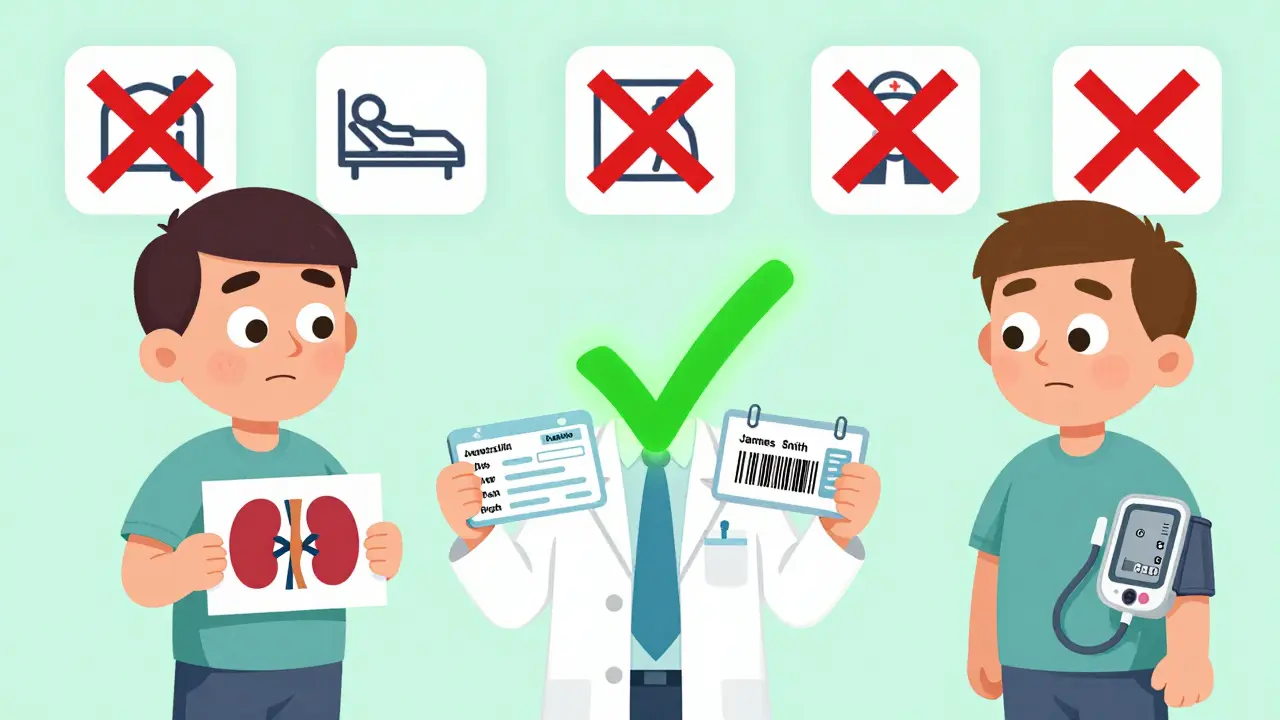
Every year, thousands of patients in the U.S. get the wrong medication-not because a pharmacist made a mistake with the dose, but because they were confused with someone else. This isn’t rare. It’s systemic. And it starts with a simple failure: using only one identifier to confirm who the patient is. In pharmacies, where pills are dispensed by the hundreds each day, the fix isn’t complicated. It’s using two patient identifiers-every single time.
Why Two Identifiers? It’s Not Just a Rule, It’s a Lifesaver
The Joint Commission made this mandatory in 2003. Not as a suggestion. Not as a best practice. As a safety goal: NPSG.01.01.01. And for good reason. A 2020 study in JMIR Medical Informatics found that up to 10% of serious drug interaction alerts go unnoticed because patient records are mixed up. That’s about 6,000 people a year getting a medication they shouldn’t-maybe because they’re allergic, or because it clashes with another drug they’re already taking. Think about it: two patients named James Smith, both born in 1978, both taking blood pressure meds. One has kidney disease. The other doesn’t. If you only check the name, you might give the wrong one a drug that could land them in the hospital. But if you check name and date of birth? You catch it. That’s the power of two identifiers.What Counts as a Valid Identifier?
Not everything you think works, actually does. The Joint Commission is clear: room number is not acceptable. Neither is a hospital unit, a nurse’s name, or a generic label like "Patient in Bed 3." Those can change. They’re not tied to the person. Valid identifiers are personal, permanent, and unique to the individual:- Full legal name
- Date of birth
- Assigned medical record number
- Phone number (if consistently used and documented)
- Address (in some systems, if verified)
Manual Verification Isn’t Enough
You’ve probably seen it: a pharmacist asks, "What’s your name?" The patient says, "Linda Carter." Then, "When were you born?" "March 12, 1965." The pharmacist nods, grabs the bottle, and hands it over. Sounds fine. But here’s the problem: humans forget. Humans get tired. Humans get rushed. A 2023 survey by the American Society of Health-System Pharmacists (ASHP) found that 63% of pharmacists admitted to occasionally cutting corners on verification-especially during peak hours. In community pharmacies, 42% said they often verify identity verbally, with no documentation. That’s a liability. If something goes wrong, there’s no proof you did the check. And it’s not just about forgetting. A 2024 case from Altera Health showed a woman with chronic fatigue was being prescribed two similar antidepressants because two separate doctors created duplicate records under her first and middle names. Neither system linked them. No one caught it-until she collapsed.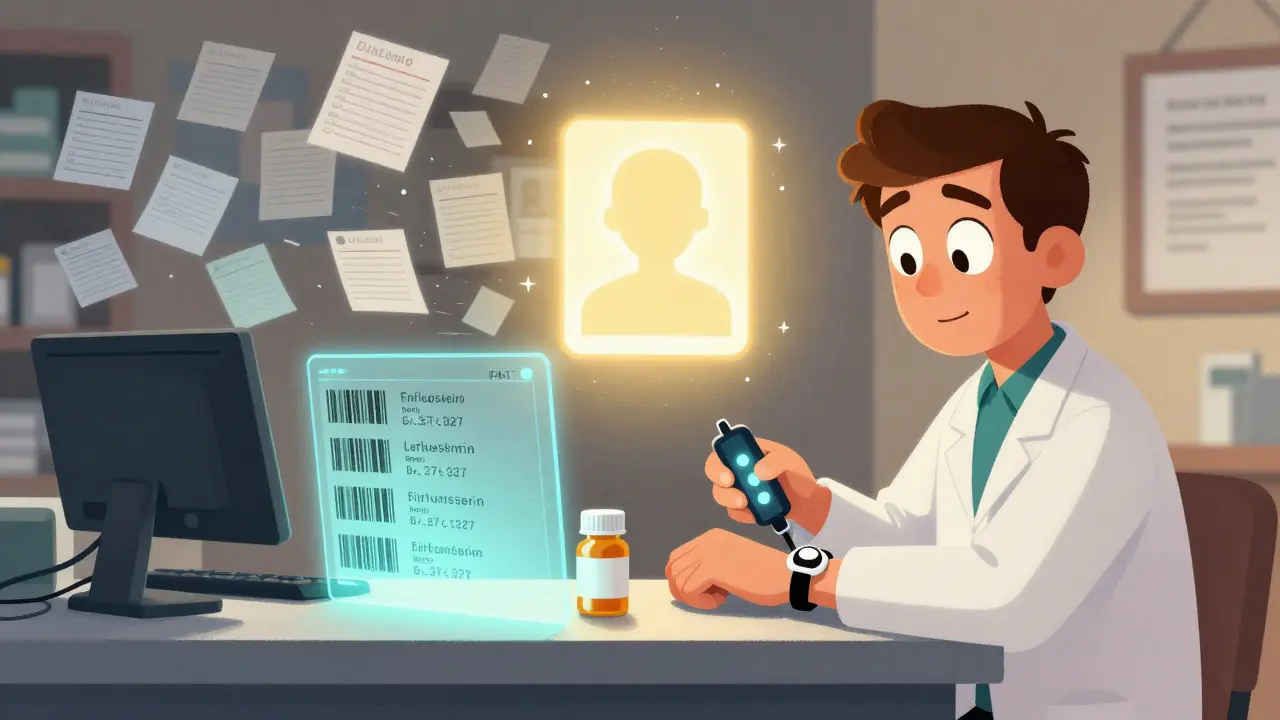
Technology Makes It Reliable
The real game-changer isn’t asking more questions. It’s using technology to remove human error. Barcode scanning at the point of dispensing has been shown to reduce medication errors reaching patients by 75%, according to a 2012 study in the Journal of Patient Safety. How? The pharmacist scans the patient’s wristband (with their name and medical record number) and the medication’s barcode. If they don’t match, the system stops the process. No guesswork. No memory. Even better? Biometric systems like palm-vein scanners. Imprivata’s system, used in hospitals across the U.S., matches patients to records with 94% accuracy. Compare that to hospitals without enterprise master patient index (EMPI) systems, where match rates are as low as 17%. That’s a fivefold difference. EMPI systems act like a central hub. They tie together every record a patient has-across ER visits, specialists, labs, and pharmacies. Without it, duplicate records are inevitable. And duplicate records mean misidentification.Double-Checking by Two People? Doesn’t Work
You might think, "Why not have two pharmacists check each prescription?" It sounds safer. But a 2020 review in BMJ Quality & Safety found no solid evidence that having two people verify a medication reduces errors. Why? Because if both are relying on the same flawed system-like verbal confirmation without documentation-they’re both wrong in the same way. The real solution isn’t more people. It’s better tools. A barcode system that forces verification doesn’t need a second person. It just needs to work.What Happens When You Don’t Follow the Rule?
The Joint Commission doesn’t just write rules. They enforce them. In 2023, non-compliance with the two-identifier rule was the third most common violation in hospital surveys. And the consequences aren’t theoretical. Hospitals that fail to meet this standard risk losing accreditation. No accreditation? No Medicare or Medicaid payments. That’s financial suicide for most facilities. Plus, there’s the human cost. A 2023 ECRI report ranked patient misidentification as one of the top 10 threats to patient safety. It leads to wrong drugs, wrong doses, wrong transfusions, even infants sent home with the wrong family. Dr. James P. Bagian, former head of the VA’s Center for Patient Safety, put it bluntly: "The two-identifier requirement is one of the most fundamental yet frequently violated safety protocols in healthcare. Pharmacy settings are especially high-risk because the consequences are irreversible."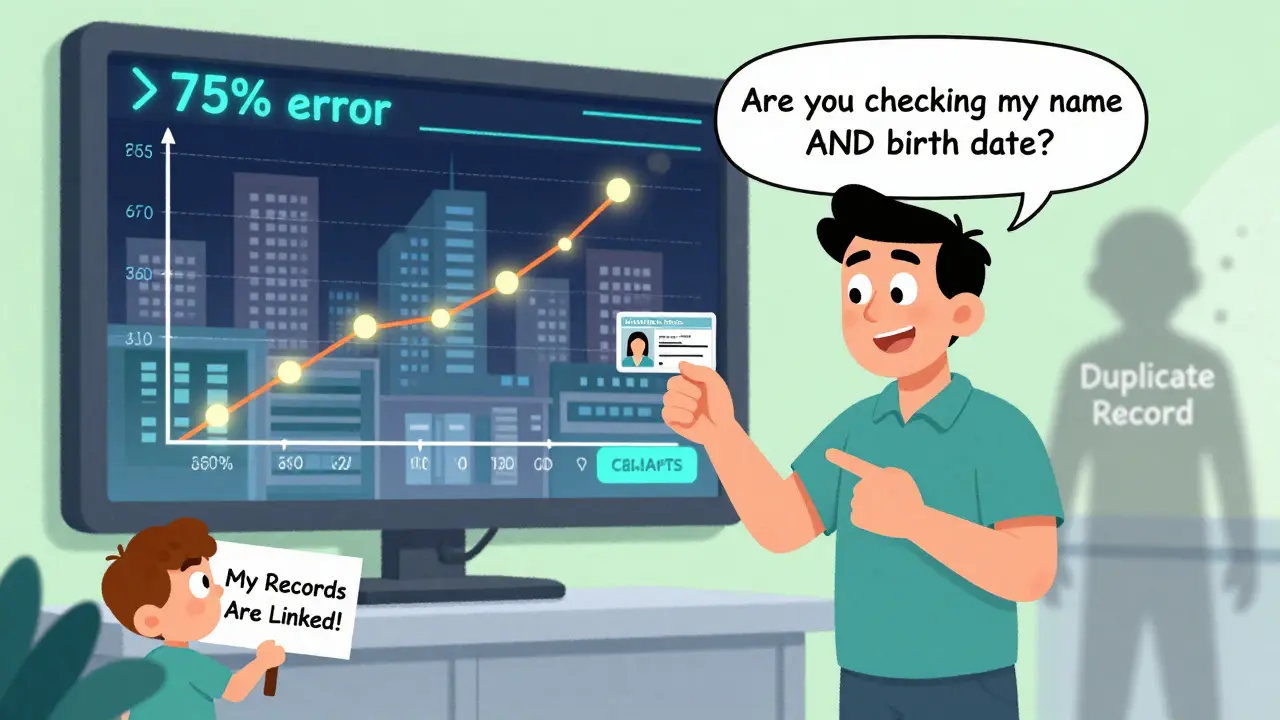
How to Implement This Right
If you’re setting this up in your pharmacy, don’t just hand out a policy. Build it into your workflow. Here’s what works:- Start with policy: Define exactly which two identifiers you’ll use. Write it down. Make it clear.
- Train everyone: Not just pharmacists. Techs, nurses, front desk staff-all of them handle patient info at some point.
- Pilot first: Test the system in one area for 4-6 weeks. See where it breaks.
- Go full tech: Invest in barcode scanning. Even a basic system cuts errors dramatically.
- Document every check: If you don’t record it, it didn’t happen. The Joint Commission found that 37% of non-compliant facilities didn’t document verification.
The Future Is Unique Identifiers
Right now, every hospital, pharmacy, and clinic uses its own system. That’s why duplicate records exist. That’s why patients get misidentified. The Office of the National Coordinator for Health IT (ONC) is testing a national, voluntary patient identifier system-starting in January 2025. It won’t be perfect. Privacy concerns are real. But the potential? Huge. A 2020 study estimated that using a unique identifier could uncover up to 9.7% more dangerous drug interactions than current systems. That’s thousands of preventable emergencies. Until then, the best tool we have is simple: two identifiers. Every time. No exceptions.What If You’re a Patient?
You’re not powerless. If you’re picking up a prescription, don’t just hand over your name. Say it clearly. Confirm your birth date. Ask: "Are you checking my name and date of birth against the label?" If they don’t, politely insist. Your life depends on it. And if you’ve been to multiple doctors or hospitals, ask if your records are linked. Duplicate records are a silent killer. You have the right to know if yours are accurate.What are the two patient identifiers required in pharmacies?
The two patient identifiers must be specific to the individual and not easily confused. Acceptable identifiers include the patient’s full name, date of birth, assigned medical record number, or phone number. Room numbers, bed numbers, or location-based labels are not acceptable because they are not unique to the person.
Why can’t pharmacies use room number or bed number as an identifier?
Room and bed numbers change frequently and are tied to location, not identity. A patient might move rooms, or two patients could be assigned to the same room at different times. Relying on these increases the risk of giving medication to the wrong person. The Joint Commission explicitly prohibits their use as identifiers because they don’t reliably link to the individual.
Is double-checking by two pharmacists more effective than using two identifiers?
No. A 2020 systematic review in BMJ Quality & Safety found no strong evidence that having two staff members verify a medication reduces errors. If both are relying on the same flawed method-like verbal confirmation without documentation-they’re likely to miss the same mistake. Technology-based verification, like barcode scanning, is far more reliable because it removes human judgment from the equation.
How do barcode systems reduce medication errors in pharmacies?
Barcode systems link the patient’s ID wristband (with name and medical record number) to the medication’s barcode. When the pharmacist scans both, the system checks if they match. If they don’t, the system alerts the pharmacist before dispensing. Studies show this reduces medication errors reaching patients by up to 75%, because it prevents human error and forces verification every time.
What happens if a pharmacy doesn’t use two patient identifiers?
Non-compliance with the two-identifier rule is one of the top three violations cited by The Joint Commission during hospital surveys. Pharmacies and hospitals that fail to follow this rule risk losing accreditation, which can lead to loss of Medicare and Medicaid reimbursement. Beyond financial penalties, the human cost includes preventable medication errors, hospitalizations, and even deaths.
Can patients do anything to help prevent misidentification?
Yes. Patients should always confirm their full name and date of birth when picking up prescriptions. Ask the pharmacist: "Are you checking both my name and date of birth against the label?" If you’ve been to multiple providers, ask if your records are linked across systems. Duplicate records are a hidden danger-your life may depend on them being accurate.
Vanessa Barber
Two identifiers? Sure. But let's be real-most pharmacies don't even scan the wristband. They just ask and nod. I've seen it. The system's broken, and no amount of policy changes fixes laziness.
Laura Rice
OMG YES. I had a friend almost get the wrong chemo because the pharmacist only checked the name. She had to yell, 'MY BIRTHDAY IS JANUARY 3RD, NOT FEBRUARY!' and the whole pharmacy froze. This isn't bureaucracy-it's survival. Please, everyone, ask for the DOB. It's not rude, it's life-saving. 💔
Janet King
The use of two patient identifiers is a standard established by The Joint Commission to reduce preventable adverse events. The identifiers must be unique, stable, and verifiable. Room number, bed number, and location-based labels are excluded because they are transient and unreliable. Compliance is mandatory for accreditation and patient safety.
Stacy Thomes
BARCODES ARE THE ANSWER. Stop relying on humans to remember things. Humans forget. Machines don't. If your pharmacy doesn't have barcode scanning, demand it. Your life is worth more than a $500 scanner. I've seen people die because someone got lazy. Don't be that person.
Dawson Taylor
The root issue is fragmentation. The two-identifier rule is a symptom of a larger problem: healthcare lacks a unified identity system. Until we have a national patient ID, we're patching a dam with duct tape.
Susannah Green
Wait-so you're saying room numbers aren't acceptable? That's wild. I've been to pharmacies where they just say, 'The lady in the green sweater?' And they hand over the meds. I've also seen pharmacists who double-check everything, write it down, and even ask for insurance info. Why is there such a gap? It's not about rules-it's about culture.
Kerry Moore
The evidence is clear: technology-driven verification reduces error rates significantly. However, implementation requires systemic investment and staff buy-in. Without training and consistent enforcement, even the best tools fail. The human element remains critical-not as a backup, but as a steward of the system.
Sue Stone
I just pick up my mom's meds every week. They never ask for DOB. I always say it anyway. I don't want to be that kid who has to explain why her mom got the wrong pills.