

Antidepressant Weight Gain Calculator
Antidepressant Weight Gain Risk Calculator
See your estimated risk based on your medication and get evidence-based management strategies.
Estimated Weight Change
Management Strategies
It’s not just in your head - if you’ve gained weight since starting an antidepressant, you’re not alone. About 55-65% of people on long-term antidepressant treatment experience noticeable weight gain. For many, this isn’t just about clothes fitting tighter. It’s about feeling worse, more anxious, or even quitting medication because the side effect feels worse than the depression itself.
Here’s the truth: antidepressants help. They lift mood, reduce panic, and bring back the ability to sleep, eat, and function. But for some, that improvement comes with a hidden cost: a slow, steady climb on the scale. The good news? Not all antidepressants do this, and there are real, science-backed ways to manage it - without giving up your treatment.
Which Antidepressants Are Most Likely to Cause Weight Gain?
Not all antidepressants are created equal when it comes to weight. Some may help you lose a few pounds at first. Others? They quietly change how your body stores fat, craves sugar, or burns energy.
Research shows the biggest culprits are older medications and a few newer ones:
- Amitriptyline - a tricyclic antidepressant (TCA). Known for strong sedative effects, it also increases appetite and slows metabolism.
- Nortriptyline - similar to amitriptyline, but slightly less sedating. Still, weight gain is common.
- Mirtazapine - often prescribed for sleep and appetite issues. Ironically, it’s used to help underweight patients gain weight. That’s why it’s one of the top offenders.
- Paroxetine - an SSRI that’s more likely than others to cause weight gain over time.
- Citalopram and Trimipramine - also linked to moderate to significant weight increases.
- Phenelzine - an MAOI, rarely used now but still carries high risk.
On the flip side, bupropion (Wellbutrin) stands out. It’s the only commonly prescribed antidepressant that, in most cases, leads to little or no weight gain - and sometimes even weight loss. In a 2024 Harvard study, people on bupropion lost 0.25 pounds at six months. By 24 months, they gained just 1.2 pounds on average. Compare that to escitalopram (Lexapro), where users gained 3.6 pounds over the same period. That’s a 200% difference.
SSRIs like sertraline and fluoxetine? They often cause a small amount of weight loss early on, as appetite drops. But after a year or more, serotonin receptors in the brain adjust. That’s when cravings for carbs and sugary foods kick in. The result? Slow, steady weight gain.
Why Do Antidepressants Make You Gain Weight?
It’s not just about eating more. It’s about how your body changes under the influence of these drugs.
Antidepressants work by boosting brain chemicals like serotonin and norepinephrine. But they don’t just affect mood. They also mess with appetite, hunger hormones, and how your body handles sugar and fat.
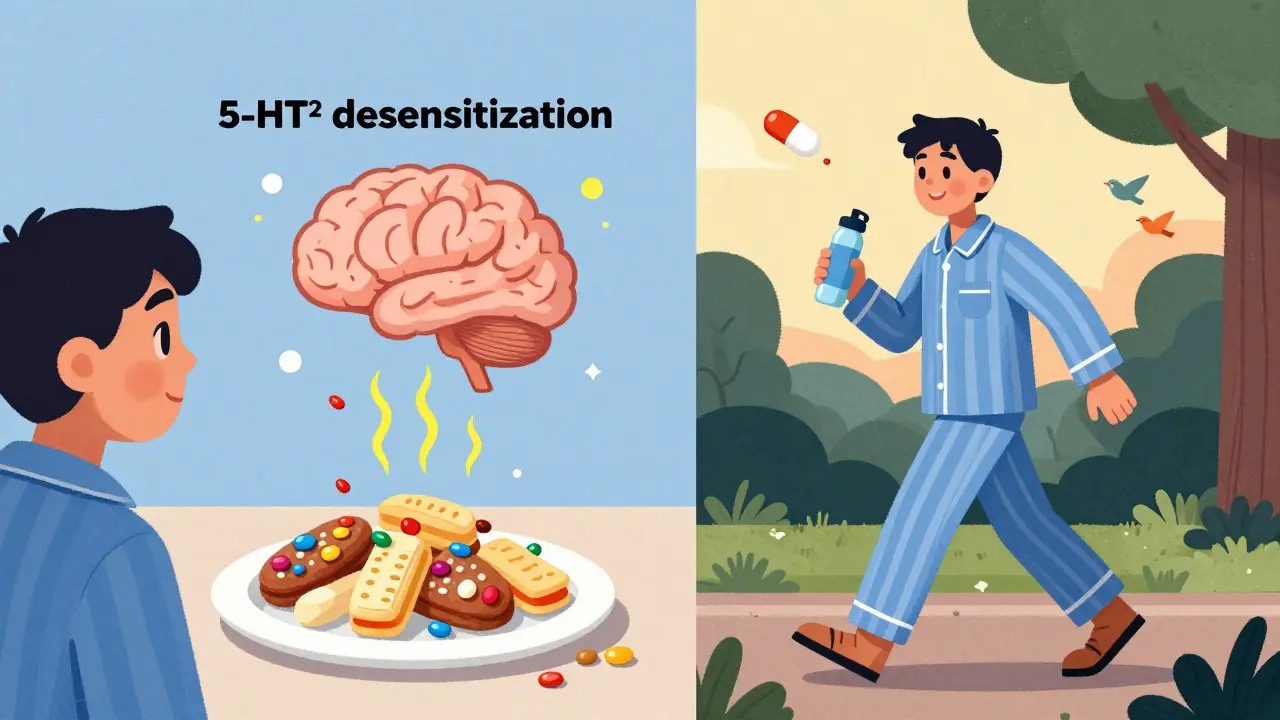
- 5-HT2 receptor desensitization - Long-term use of SSRIs and TCAs causes your brain to become less responsive to serotonin. This triggers cravings for carbohydrates - think pasta, bread, cookies - because your brain thinks it needs more fuel.
- Dopamine and histamine effects - Medications like mirtazapine and TCAs block histamine receptors. This increases appetite and makes you feel sleepy, reducing activity. Dopamine suppression also reduces motivation to move.
- Insulin resistance - Some antidepressants interfere with how your body uses insulin. That means more sugar stays in your blood, gets stored as fat, and triggers hunger signals.
- Leptin and ghrelin imbalance - Leptin tells your brain you’re full. Ghrelin tells you you’re hungry. Antidepressants can lower leptin and raise ghrelin. Result? You feel hungry even after eating.
- Genetic factors - Your liver processes these drugs differently based on genes like CYP2C19. Some people metabolize them slowly, leading to higher drug levels and stronger side effects - including weight gain.
And here’s something startling: research suggests the combination of long-term antidepressant use, stress, and a high-fat diet can cause metabolic changes that stick around even after you stop taking the drug. That means weight gain isn’t always temporary.
Is It the Medication - or Just Feeling Better?
It’s not always the pill. Sometimes, the weight gain has nothing to do with chemistry.
Many people start antidepressants because they’re too depressed to eat. Their appetite vanishes. They lose weight. When the medication works, they start eating again. They sleep better. They move more. They feel like themselves. And suddenly, they’re gaining weight - not because the drug made them hungry, but because they’re no longer sick.
That’s why it’s so hard to pin down. A person might gain 5 pounds after six months. Is it the drug? Or is it just that they finally had a good meal for the first time in months? The answer? Often, both.
Dr. Roy Perlis from Harvard Medical School puts it simply: "Weight gain is common among antidepressant users, even if the amounts gained on average are modest." The key is knowing your baseline. If you lost weight from depression, some gain is normal. If you were at a healthy weight and gained 8 pounds in a year? That’s likely the medication.
How to Manage Weight Gain Without Stopping Your Medication
You don’t have to choose between mental health and your waistline. Here’s what actually works.
1. Talk to Your Doctor About Switching
If you’re gaining weight and it’s affecting your mental health (or your confidence), ask about switching to a different antidepressant. Bupropion is the top choice for people concerned about weight. Studies show it’s just as effective for depression as SSRIs - but with far less metabolic impact.
Other options? Fluoxetine (Prozac) has a lower risk of weight gain than paroxetine or citalopram. Venlafaxine (Effexor) also tends to be neutral. Don’t switch on your own. Work with your provider. Tapering off too fast can trigger withdrawal or relapse.
2. Consider Adding Metformin or GLP-1 Agonists
Metformin - a common diabetes drug - is now being used off-label to counteract antidepressant-induced weight gain. It improves insulin sensitivity, reduces cravings, and helps burn fat. A 2023 review found people taking metformin alongside antidepressants lost 3-5 pounds over six months without changing diet or exercise.
Even more promising? GLP-1 receptor agonists like semaglutide (Wegovy) and tirzepatide (Zepbound). These drugs, originally for obesity and diabetes, are now being studied in people on antidepressants. Early trials show 5-7% average weight loss in just 6 months - even while staying on their antidepressant.
3. Move More - Even a Little
Antidepressants can make you tired. But even 20 minutes of walking a day can help. Physical activity boosts serotonin naturally, improves insulin sensitivity, and reduces stress - all of which help fight weight gain.
You don’t need to run a marathon. Try: daily walks, stretching, gardening, or dancing while cooking. Small, consistent movement adds up.
4. Eat Smart - Not Just Less
Cravings for carbs? That’s your brain trying to compensate. Instead of fighting it, outsmart it.
- Swap white bread, pasta, and sugary snacks for whole grains, legumes, and vegetables.
- Include protein with every meal - eggs, chicken, tofu, beans. Protein keeps you full longer.
- Don’t skip meals. Low blood sugar triggers binge eating.
- Limit alcohol. It’s empty calories and lowers inhibitions around food.
Also, avoid crash diets. They stress your body and can make depression worse. Focus on steady, sustainable changes.
5. Track Your Progress
Keep a simple log: weight, mood, appetite, energy. Use a free app or a notebook. Seeing patterns helps you and your doctor make smarter choices.
Example: If you notice your cravings spike every time you take paroxetine at night, that’s a clue. Maybe switching to morning dosing helps. Or maybe it’s time to consider a different drug.
What Not to Do
Don’t quit your antidepressant because you’re gaining weight. That’s one of the biggest mistakes people make. Studies show that stopping antidepressants increases the risk of depression returning by 30-50%. And once depression comes back, your appetite, sleep, and energy plummet - making weight gain even harder to reverse.
Also, don’t blame yourself. This isn’t about willpower. It’s biology. You didn’t fail. Your body is responding to a powerful drug - and that’s normal.

When to Seek Help
If you’ve gained more than 5% of your body weight in 6-12 months while on an antidepressant - especially if you’re also feeling more tired, hungrier, or less motivated - talk to your doctor. Ask about:
- Switching to bupropion
- Adding metformin
- Getting blood tests for insulin and thyroid function
- Referral to a dietitian who understands mental health medications
And if you’re struggling with body image, anxiety, or shame about your weight? Talk to a therapist. Mental health isn’t just about mood - it’s about how you feel in your own skin.
Looking Ahead
Researchers are now studying how to design antidepressants that don’t mess with metabolism. Some new drugs in development target mood without touching serotonin receptors linked to hunger.
In the meantime, the best tool you have is information. Knowing which drugs cause weight gain. Knowing how to manage it. Knowing you don’t have to choose between feeling better and staying healthy.
Antidepressants save lives. They don’t have to cost you your health - if you know how to work with them.
Emma Nicolls
Finally someone says it out loud 😭 I was terrified to tell my psychiatrist I was gaining weight but I felt like a failure
Rex Regum
Oh wow so now we’re blaming antidepressants for weight gain? Next you’ll tell me caffeine makes you fat because you drink it while scrolling TikTok. People gain weight because they stop moving and start eating like they’re on vacation. Not because of some magic pill. Get off your couch and go for a walk. It’s not rocket science.
Jimmy V
Rex, you’re missing the point. This isn’t about laziness. It’s neurochemistry. SSRIs desensitize 5-HT2 receptors → carb cravings → insulin spikes → fat storage. It’s a biological cascade. You can’t out-willpower this. That’s why metformin works - it fixes the insulin dysregulation. Not because people are weak. Because biology is real.
Kandace Bennett
OMG YES I switched from paroxetine to bupropion and lost 12 lbs in 3 months 🙌 I was so ashamed of my body but now I feel like ME again! Also I started dancing while making dinner and now I’m obsessed. Life is better when you’re not constantly hungry 😘
Tim Schulz
Wow. Just wow. A 2024 Harvard study? And you didn’t cite the DOI? How amateur. Also, Wegovy? On antidepressants? That’s like putting a turbocharger on a Prius. You’re not helping people. You’re enabling pharmaceutical greed. 🤡
Richard Harris
i read this whole thing and felt seen. i was on mirtazapine for 2 years. gained 18lbs. felt like a monster. switched to sertraline. lost 6lbs naturally. just needed to know it wasnt me. thank you
Jinesh Jain
Interesting. In India, many doctors avoid prescribing mirtazapine for this exact reason. But we don't have access to bupropion or metformin off-label. Most just tell people to 'eat less'. Not helpful.
Sabrina Sanches
I just want to say thank you for writing this. I’ve been on citalopram for 18 months. I gained 10 pounds. I thought I was weak. I thought I was failing. I didn’t know it was the medicine. I didn’t know it was normal. I didn’t know I could switch. I didn’t know metformin was an option. Thank you. Thank you. Thank you.
douglas martinez
As a clinician who specializes in psychopharmacology, I want to emphasize that weight gain is a multifactorial phenomenon. While medication plays a significant role, behavioral changes associated with improved mood are equally important. A comprehensive approach - including nutritional counseling, physical activity, and medication review - yields the best long-term outcomes. Do not discontinue treatment without medical supervision.