
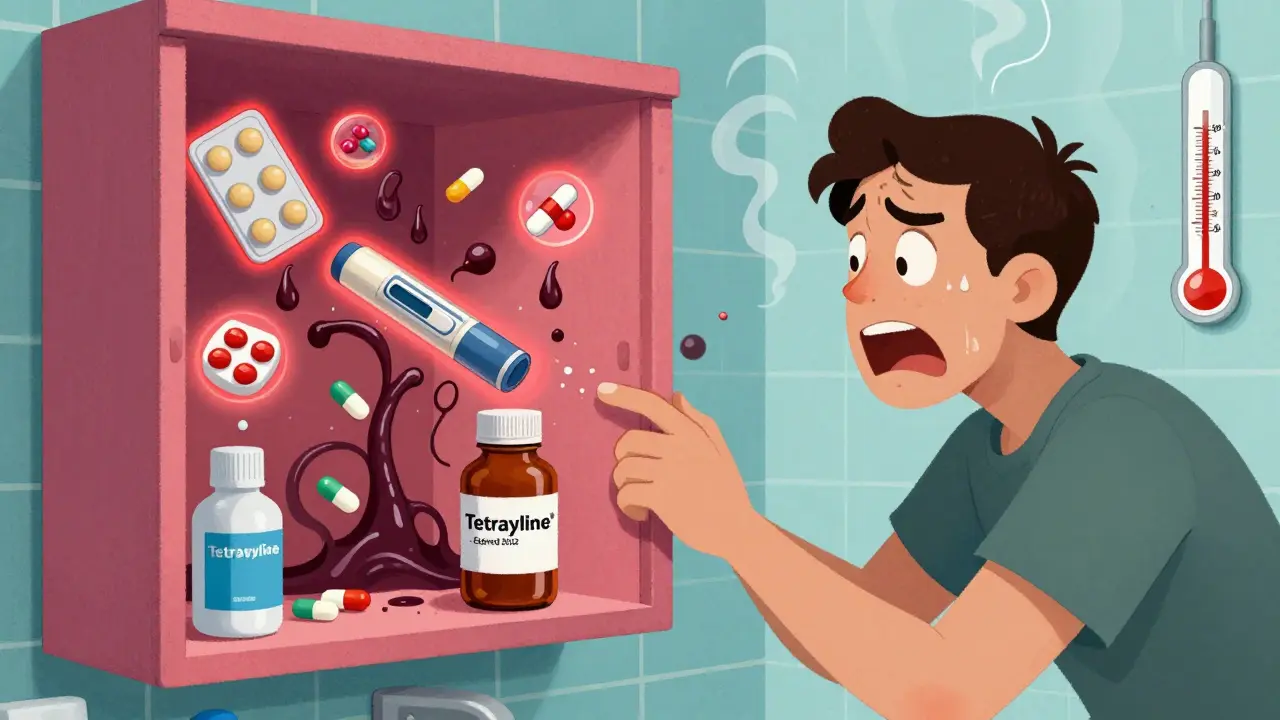
Most people assume that if a pill is past its expiration date, it’s just weak-maybe it won’t work as well, but it won’t hurt you. That’s not always true. While the vast majority of expired medications don’t turn poisonous, expired medications can become dangerous under specific conditions. And for some drugs, taking them even a few months past their date isn’t just risky-it could be life-threatening.
What Does an Expiration Date Actually Mean?
The expiration date on your medicine isn’t just a marketing tactic or a way for drug companies to make you buy more. It’s the last day the manufacturer guarantees the drug will work as intended and remain safe to use, based on strict stability testing. This requirement became law in the U.S. in 1979, and since then, the FDA has tested over 100 medications under its Shelf Life Extension Program (SLEP). The results? About 90% of those drugs stayed effective for years after their labeled expiration-some up to 15 years-when stored properly in cool, dry places. But here’s the catch: that 90% doesn’t include all drugs. Certain medications break down in ways that create harmful byproducts. And if you store them in a hot, humid bathroom or leave them in a hot car, they degrade faster. The expiration date isn’t a hard stop for safety-it’s a safety net. Once you go past it, you’re on your own.Medications That Can Turn Toxic
Not all expired drugs are created equal. Some are fine. Others? Not even close. Tetracycline is the most famous example. In 1963, three patients developed severe kidney damage after taking expired tetracycline. The drug broke down into epitetracycline and anhydro-4-epitetracycline-compounds that are toxic to the kidneys. While this happened with old, poorly stored pills from decades ago, it proved that chemical breakdown isn’t just theoretical. Modern formulations are more stable, but the risk hasn’t been fully ruled out. Nitroglycerin, used for chest pain, is another critical case. It’s unstable by nature. Even when stored correctly, it loses potency fast. After expiration, it can drop to half its strength within three months. If you’re having a heart attack and your nitroglycerin tablet doesn’t work because it’s expired, you’re not just out of luck-you’re in danger. A 2019 study from the Cleveland Clinic found that expired nitroglycerin often fails to relieve symptoms when you need it most. Insulin is another high-risk drug. Once past its expiration, insulin starts forming clumps and fibrils. That means your body absorbs less of it. Studies show a 20-30% drop in potency per year after expiration. For someone with Type 1 diabetes, that’s not a minor inconvenience-it’s a medical emergency waiting to happen. Even if you feel fine, your blood sugar could spike dangerously. Liquid antibiotics like amoxicillin-clavulanate are risky too. Unlike pills, liquids don’t just lose strength-they can grow bacteria. Once opened, they’re only good for 14 days, even if the bottle says otherwise. After that, the preservatives break down. Taking a contaminated liquid antibiotic can cause severe diarrhea, vomiting, or even a dangerous infection like C. diff. EpiPens are life-saving devices for people with severe allergies. But epinephrine degrades quickly. A 2017 study in the Annals of Internal Medicine found that after one year past expiration, EpiPens lose up to 85% of their potency. If you’re having anaphylaxis and your EpiPen doesn’t deliver enough epinephrine, you could die. Eye drops and insulin pens also become unsafe after their expiration or after being opened for more than 28 days. The preservatives that keep them sterile wear off. Bacteria can grow inside the bottle-and if you put that into your eye or inject it, you risk serious infection.What’s Safe? What’s Not
The good news? Most pills are fine. Solid medications-like blood pressure pills, antidepressants, antihistamines, and even aspirin-stay stable for years if kept dry and cool. The FDA’s SLEP program found that many of these retain 70-90% of their potency 10-15 years past expiration. But aspirin is a weird exception. Over time, it breaks down into acetic acid (vinegar) and salicylic acid. That’s not toxic, but it can irritate your stomach. One 2021 study found that after two years past expiration, aspirin was 50% more likely to cause gastric upset. If you’re taking it daily for heart health, that’s a problem. Here’s a simple rule: If it’s a solid pill or capsule and it looks normal-no cracks, discoloration, or strange smell-it’s probably safe to use for a year or two past the date, especially if it’s been stored in a cool, dry drawer. But if it’s a liquid, injectable, or emergency drug, don’t risk it.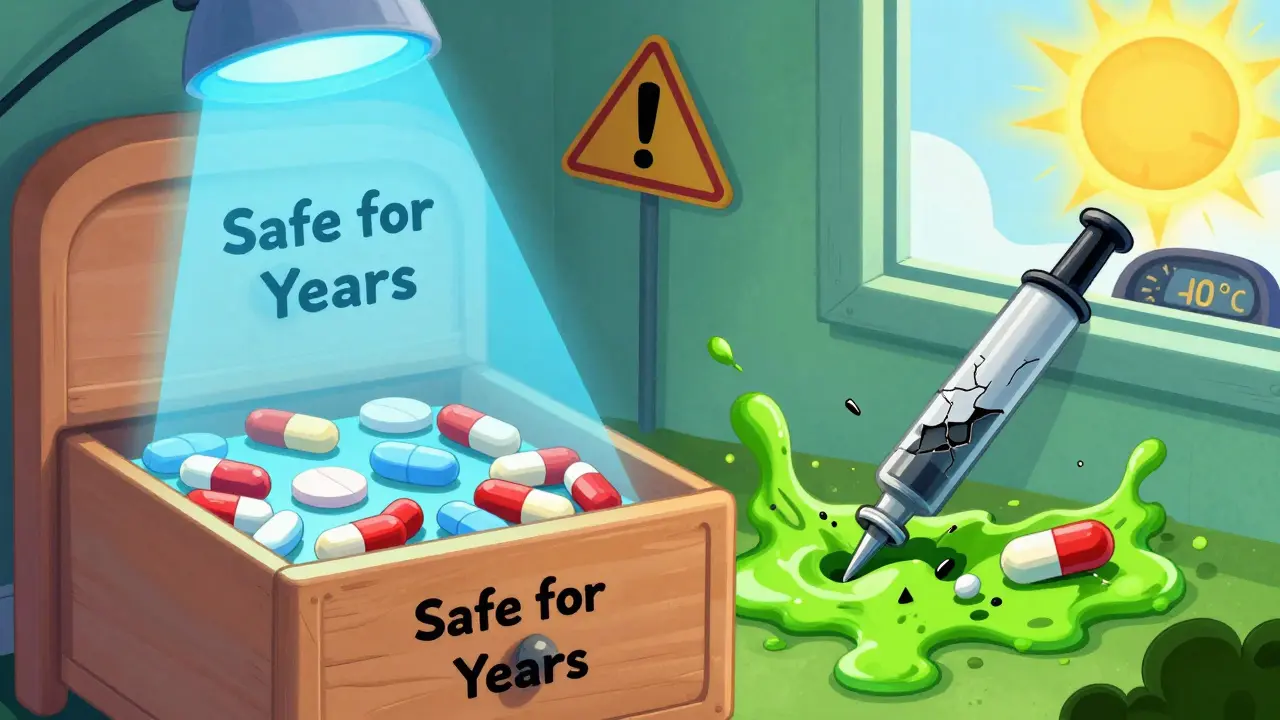
Storage Matters More Than You Think
Your medicine’s shelf life isn’t just about the date on the bottle. It’s about where you keep it. The FDA says “cool, dry place” means 15-25°C (59-77°F) with 35-45% humidity. Most bathrooms? They’re 32°C (90°F) and 80% humidity. That’s a drug degradation factory. Storing pills in the bathroom is like leaving them in an oven. Insulin? It lasts 12 months if refrigerated. At room temperature? Only 6-8 weeks. Nitroglycerin? Keep it in its original glass bottle with amber tinting. Plastic containers? They let air in. The drug breaks down faster. If you live in a hot climate like Perth, where summer temperatures regularly hit 40°C, storing medications in your car, on a windowsill, or even in a bedroom without air conditioning can ruin them in weeks.What Happens If You Take Expired Medicine?
Most people who take expired pills don’t get sick. That’s why so many think it’s harmless. But here’s what usually happens:- You take an expired allergy pill. It doesn’t stop your sneezing. You think it’s not working, so you take more. Now you’ve overdosed on a drug that’s already weak.
- You use expired insulin. Your blood sugar spikes. You end up in the hospital.
- You use expired nitroglycerin during chest pain. It doesn’t help. You delay calling 911. You have a heart attack.
- You give your child expired liquid antibiotics. They get diarrhea and dehydration because the drug is contaminated.
What Do Experts Really Say?
There’s a big gap between what regulators say and what scientists find. The FDA, CDC, and DEA all warn against using any expired medication. Their stance is simple: “Don’t risk it.” They point to over 36,000 emergency visits each year from kids accidentally taking meds. That’s valid. But they’re not talking about adults who knowingly use an old antibiotic. Meanwhile, the Institute for Safe Medication Practices says: “The vast majority of expired medications pose no toxicity risk.” Dr. Peter J. Embi from the NIH testified that the current system wastes $3.5 billion a year in unnecessary drug disposal. The American College of Medical Toxicology says there have been only two documented cases of toxicity from expired drugs in the last 60 years. So who’s right? Both. Most meds are safe. A few are deadly. You need to know the difference.What Should You Do?
Here’s your practical guide:- Don’t use expired insulin, EpiPens, nitroglycerin, liquid antibiotics, or eye drops.
- Check the look and smell of pills. If they’re cracked, discolored, sticky, or smell like vinegar (aspirin), toss them.
- Store meds properly-in a cool, dry place, away from sunlight. A bedroom drawer is better than a bathroom cabinet.
- Don’t rely on memory. Write the date you opened a bottle on the label. Most liquid meds expire 14 days after opening, no matter what the bottle says.
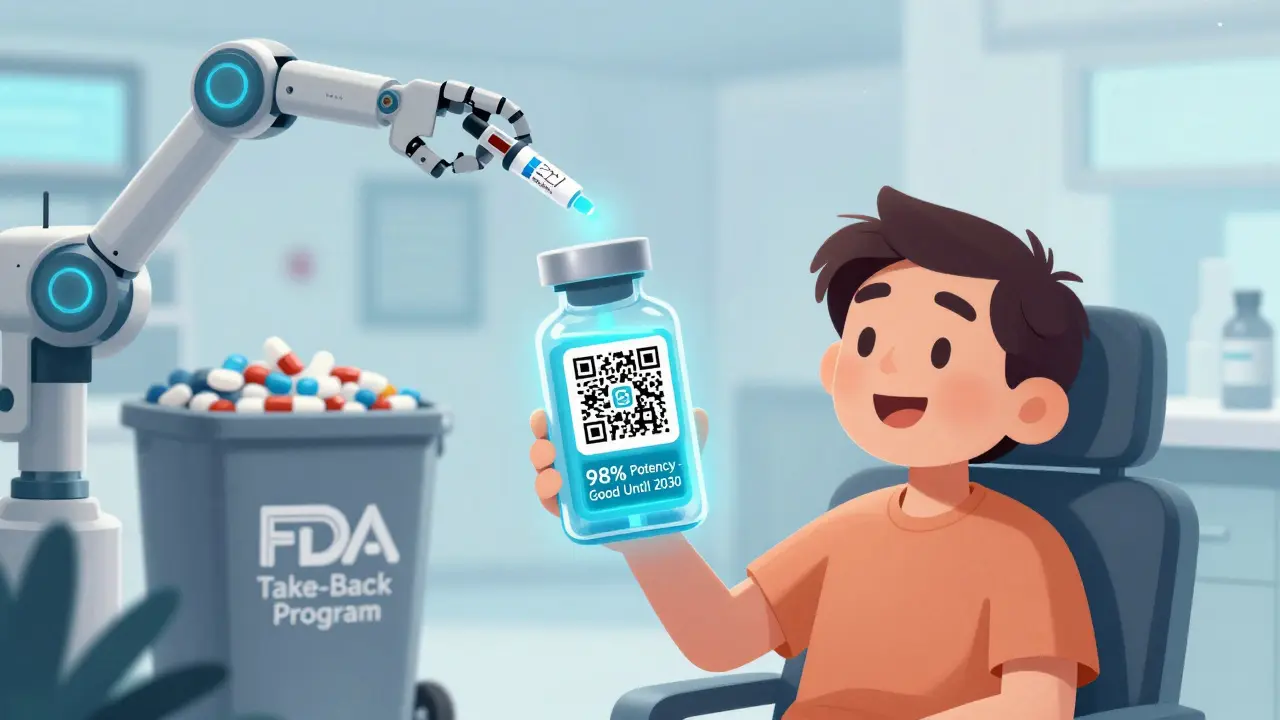
- Dispose of expired drugs safely. Use a pharmacy take-back program. Don’t flush them or throw them in the trash. The DEA collected over 930,000 pounds of unused meds in 2023-use those drop-off sites.
What’s Changing?
The system is starting to catch up with science. In 2024, the FDA launched a pilot program to extend expiration dates for 20 critical medications based on real-time stability data. Companies like Pfizer and Merck are investing hundreds of millions in smart packaging that tracks a drug’s actual condition-not just a printed date. By 2027, your insulin pen might have a chip that tells you if it’s still good. Your pills might come with QR codes that link to real-time stability reports. Until then, use common sense. Most expired pills won’t kill you. But some will. And you don’t need to be the one who finds out the hard way.Is it safe to take expired painkillers like ibuprofen or acetaminophen?
For most people, yes-if they’re stored properly and look normal. Solid painkillers like ibuprofen and acetaminophen typically retain 80-90% of their potency for years past expiration. The main risk isn’t toxicity, but reduced effectiveness. If you take expired ibuprofen for a headache and it doesn’t work, you might take more, increasing your risk of stomach or liver damage. Always check for discoloration or odd smells before using.
Can expired antibiotics cause antibiotic resistance?
Not directly. But taking a weakened antibiotic can fail to kill all the bacteria, letting the strongest ones survive and multiply. That’s how resistance starts. If you use expired antibiotics to treat an infection, you might not fully clear it-and then you’ll need a stronger drug later. It’s not the expiration itself that causes resistance-it’s the incomplete treatment.
What should I do if I accidentally took expired medicine?
If it’s a common pill like an antihistamine or painkiller and you feel fine, you’re likely okay. Monitor for symptoms like nausea, dizziness, or unusual fatigue. If you took insulin, nitroglycerin, an EpiPen, or a liquid antibiotic, seek medical help immediately-even if you feel fine. Toxicity isn’t always immediate. Call Poison Control (1-800-222-1222 in the U.S.) or your local emergency number.
Why do drug companies set such short expiration dates?
Manufacturers test stability for a limited time-usually 2-3 years-because that’s what regulators require for approval. Extending testing to 10+ years is expensive and not mandatory. So they set conservative dates to avoid liability. The FDA’s own data shows most drugs last longer, but companies aren’t required to prove it. That’s why the same drug sold in Japan has a much shorter expiration than in the U.S.-it’s a regulatory difference, not a scientific one.
Can I extend the life of my medications by storing them in the fridge?
Only for specific drugs. Insulin, some liquid antibiotics, and nitroglycerin benefit from refrigeration. But most pills don’t need it-and moisture from the fridge can actually damage them. Never refrigerate unless the label says to. For most medications, a cool, dry drawer is better than a humid fridge.
Donna Peplinskie
Wow, this post really opened my eyes-I had no idea that storing meds in the bathroom was basically a science experiment in degradation. I just thought it was convenient. Now I’m moving all my pills to a drawer. Thanks for the clarity.
Phoebe McKenzie
You people are idiots for even thinking about taking expired meds. This isn’t ‘maybe it’ll work’-it’s a gamble with your life. If you can’t afford new prescriptions, get help. Don’t turn your medicine cabinet into a biohazard zone. I’m not being dramatic-I’ve seen people die from this.
gerard najera
Stability ≠ safety. That’s the core truth here.
Liam George
Did you know the FDA and Big Pharma have been hiding the truth about expiration dates for decades? The Shelf Life Extension Program was created to cover up how much money they lose when people don’t replace pills. They don’t want you to know that your $200 insulin could last 15 years. The real danger isn’t the expired drug-it’s the system that profits from your fear.
Richard Thomas
It’s fascinating how we treat medicine as both sacred and disposable. We trust the expiration date like it’s a divine mandate, yet we also casually toss out perfectly good pills because the label says ‘do not use after 2022.’ The truth is, we’ve outsourced our judgment to corporations and regulators, and now we’re terrified of making our own decisions-even when the science says it’s safe. I’ve kept amoxicillin past its date for three years in a sealed container. It worked fine. But I also know someone who took expired nitroglycerin and nearly died. So the answer isn’t ‘always safe’ or ‘always dangerous.’ It’s ‘know your drugs, know your storage, know your risk.’
sharad vyas
In India, we often use medicines past expiry because of cost. But we also check-color, smell, texture. If it looks strange, we don’t take it. Maybe the real issue isn’t the date, but access. Still, for EpiPens or insulin? Never. Life is not a gamble.
Dusty Weeks
just took some expired advil for my headache 🤷♂️💊 it worked… kinda? maybe i’m lucky? or maybe i’m dumb idk
Austin Mac-Anabraba
Let’s be precise: the expiration date is not a warranty of efficacy, nor a guarantee of toxicity. It is a manufacturer’s liability-bound statistical projection under controlled conditions. The FDA’s SLEP data, while robust, is not universally applied because regulatory frameworks are not designed for longitudinal stability analysis-they are designed for profit cycles and risk mitigation. The fact that tetracycline toxicity was documented in 1963 does not imply modern formulations are similarly dangerous; it implies that chemical degradation pathways must be monitored, not ignored. To conflate ‘some drugs are dangerous’ with ‘all expired drugs are dangerous’ is a logical fallacy. The distinction between solid oral dosage forms and biologics is not merely technical-it is existential. The real failure is not in the pill-it is in the cultural abandonment of pharmaceutical literacy.
Sally Denham-Vaughan
My grandma used to say, ‘If it looks weird, don’t swallow it.’ She never read the FDA guidelines, but she knew more than most of us. I keep all my meds in a sealed container in the back of my closet-no bathroom, no sun, no humidity. And I always write the opening date on the bottle. Simple. Smart. Safe.
Paul Ong
Don’t panic but don’t be lazy. Check your meds. Store them right. Toss the risky ones. Keep the rest. Done.
Andy Heinlein
just found my old epi pen from 2021 in my bag 😳 i’m gonna head to the pharmacy right now-no way i’m risking it. thanks for the wake up call!! 💪
Bill Medley
While the majority of expired pharmaceuticals retain chemical integrity under optimal storage conditions, the potential for catastrophic failure in life-sustaining medications necessitates a precautionary principle in public health policy. The ethical imperative to prevent harm outweighs the economic argument for extended use.
Ann Romine
I’ve been wondering-why don’t more pharmacies offer free expiration date checks? Like, you bring in your old meds, they test potency with a simple kit, and tell you if it’s still viable? Seems like a no-brainer for community health.